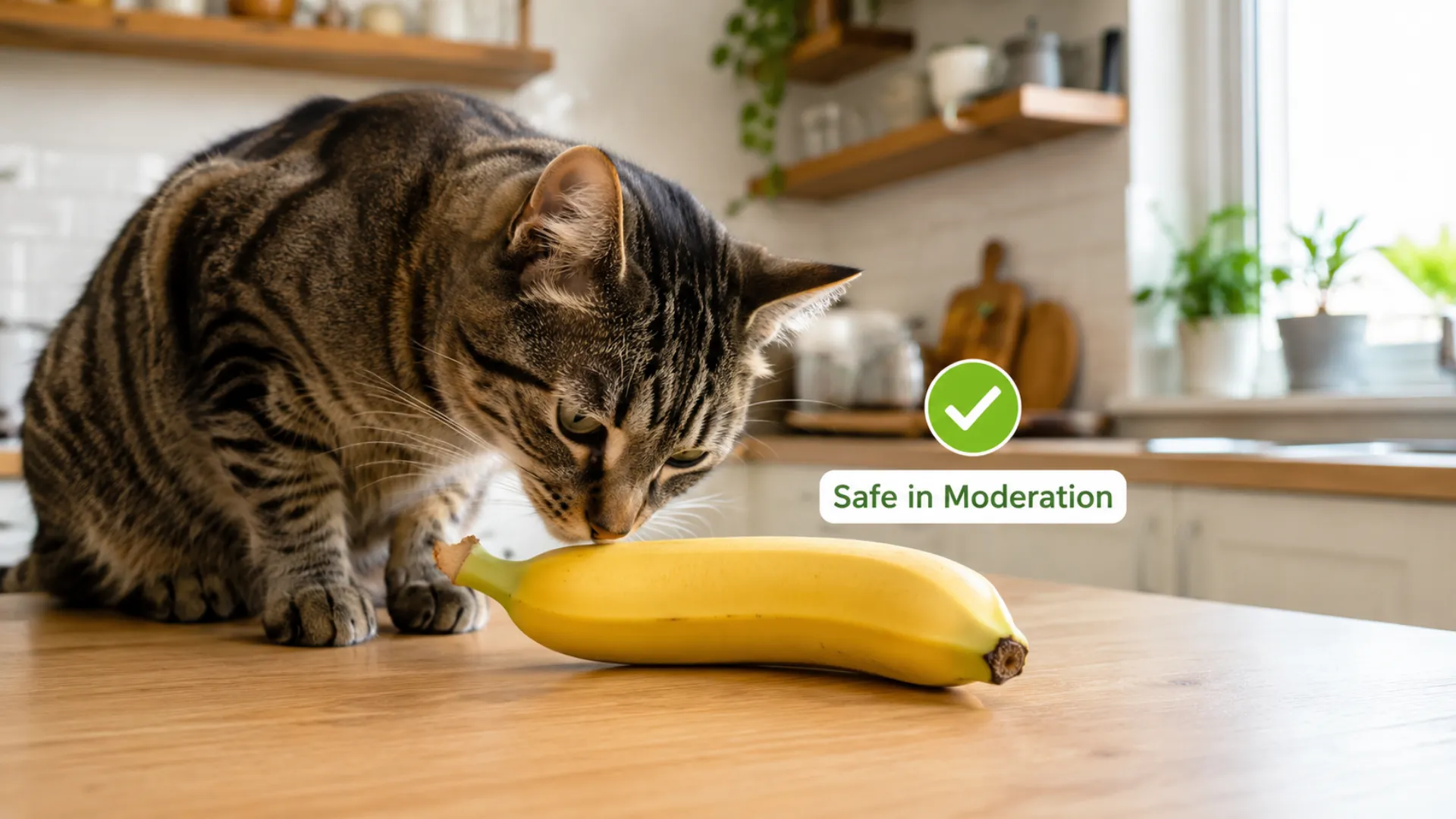
If your cat has ever sniffed at your banana or batted one off the counter, you’ve probably wondered if it’s actually okay for them to eat. The short answer is yes, bananas are safe for cats in small amounts, but they’re not something your cat needs. Cats are obligate carnivores, which means their bodies are built to run on meat, not fruit.
So while a tiny taste of banana won’t hurt most cats, it’s really just an occasional treat, not a nutritional add-on. Below, we’ll cover everything from the benefits and risks to exactly how much banana is safe, plus what to do if your cat overdoes it.
Can Cats Eat Bananas? The Quick Answer
Yes, bananas are safe for cats to eat in moderation. They’re not toxic, and a small bite here and there generally won’t cause any harm. That said, bananas are high in natural sugar and fiber, and too much can lead to an upset stomach. Most cats also don’t show much interest in fruit to begin with, since their taste buds aren’t wired to detect sweetness the way ours are. Bottom line: banana is fine as an occasional nibble, but it shouldn’t be a regular part of your cat’s diet.
Are Bananas Safe for Cats?
Why Bananas Are Not Toxic
Bananas don’t contain any compounds that are known to be harmful to cats. Unlike foods such as grapes or onions, there’s nothing in a plain banana that poses a direct toxicity risk. As long as it’s served fresh, plain, and without any added ingredients, a small piece is generally considered safe.
Why Moderation Matters
Even though bananas aren’t toxic, that doesn’t mean they’re harmless in large amounts. Bananas are naturally high in sugar, which isn’t something a cat’s digestive system is designed to process in large quantities. They’re also fairly calorie-dense for such a small serving, and the fiber content can be tough on a sensitive stomach. This is why moderation is the key word here.
Do Bananas Offer Any Health Benefits for Cats?
Nutrients Found in Bananas
Bananas do contain some nutrients that sound beneficial on paper, including:
- Potassium
- Vitamin B6
- Vitamin C
- Fiber
- Magnesium
Why Cats Don’t Need Fruit
The catch is that cats don’t actually need these nutrients from fruit. As obligate carnivores, cats get everything they require from animal protein, and a complete, balanced cat food is already formulated to meet those needs. Bananas might offer a few vitamins, but they should never be seen as a substitute for a proper cat food diet.
Risks of Feeding Bananas to Cats
Digestive Upset
Too much banana can lead to vomiting, diarrhea, constipation, or gas. Cats’ digestive systems simply aren’t built to process large amounts of fruit, so even a well-meaning treat can backfire if you overdo it.
Too Much Sugar
Bananas are naturally sweet, and that sugar adds up quickly for a small animal. Regularly feeding banana can contribute to weight gain, and over time, excess sugar and unnecessary calories can raise concerns around diabetes, especially in cats that are already overweight or sedentary.
Choking Hazard
Large chunks of banana can be a choking hazard, particularly for kittens or cats that tend to gulp their food. Always cut banana into small, manageable pieces before offering it.
Individual Food Sensitivities
Some cats may have a sensitivity or, rarely, an allergic reaction to banana. Watch for signs like itching, swelling, or unusual digestive upset after your cat tries it for the first time, and stop feeding it if anything seems off.
How Much Banana Can Cats Eat?
Recommended Portion Sizes
Portion size should scale with your cat’s age and size:
- Kittens: Best to avoid banana altogether, since their digestive systems are still developing.
- Adult cats: A tiny piece, no bigger than a pea or small cube, is plenty.
- Senior cats: Even smaller portions are recommended, since older cats can be more prone to digestive sensitivity.
How Often Can Cats Eat Bananas?
Banana should only ever be an occasional treat, not a daily habit. A good rule of thumb is one to two small pieces, once or twice a week at most. Treats, including banana, should make up only a small fraction of your cat’s overall diet.
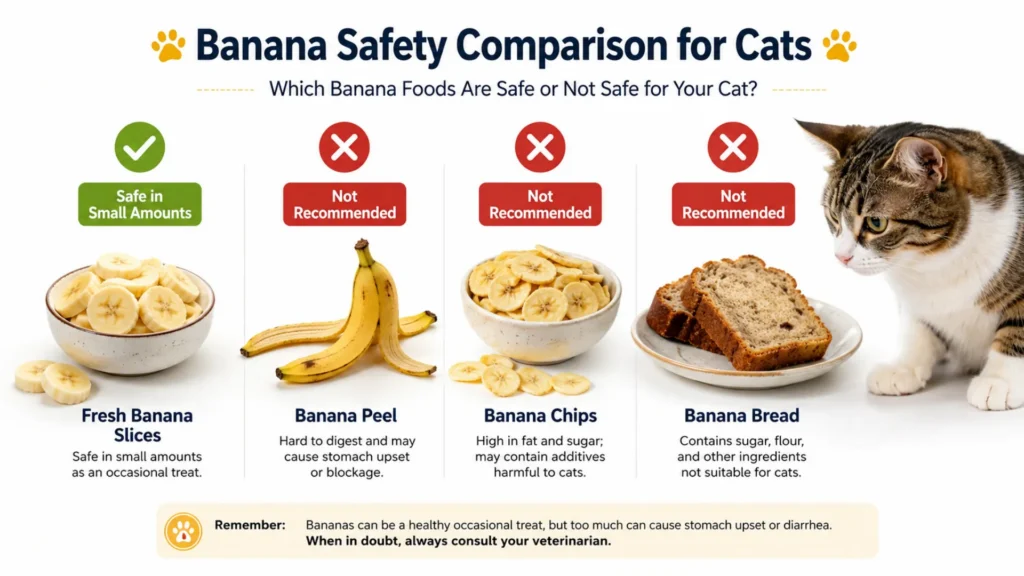
Can Cats Eat Banana Peels, Banana Chips, or Banana Bread?
Banana Peels
Banana peels are tough and fibrous, making them difficult for cats to digest. They also pose a choking risk, so it’s best to avoid feeding peels altogether.
Banana Chips
Banana chips, especially store-bought ones, often contain added sugar and oil. These extra ingredients make them a poor choice for cats and something to steer clear of.
Banana Bread
Banana bread is a definite no. It typically contains sugar, butter, and sometimes chocolate, raisins, xylitol, or nuts, all of which can be unsafe or even dangerous for cats.
How to Safely Feed Banana to Your Cat

If you’d like to offer your cat a taste of banana, follow these steps:
- Choose a ripe, fresh banana.
- Remove the peel completely.
- Cut the banana into tiny, bite-sized pieces.
- Offer just a small amount the first time.
- Watch your cat closely for any signs of digestive upset.
- Stop feeding banana immediately if you notice any adverse reaction.
Signs Your Cat Ate Too Much Banana
If your cat has had more banana than it should, keep an eye out for:
- Vomiting
- Diarrhea
- Constipation
- Stomach discomfort
- Reduced appetite
If these symptoms persist for more than a day, or seem severe, it’s a good idea to contact your veterinarian.
Safe Fruits Cats Can Eat Instead
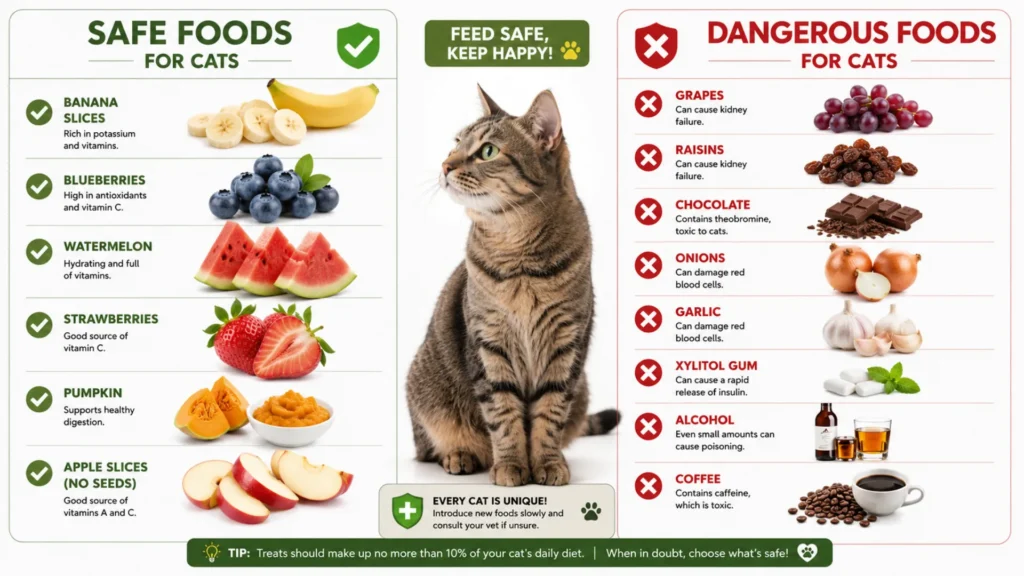
If you’re looking for other fruity treat options, these are generally considered safe in moderation:
- Blueberries
- Strawberries
- Watermelon (seedless)
- Apples (without seeds)
- Cantaloupe
- Pumpkin (plain)
As with bananas, moderation is key for all of these.
Foods Cats Should Never Eat
Some foods go beyond just being unnecessary and are actually toxic to cats. Always keep these away from your cat:
- Chocolate
- Grapes
- Raisins
- Onions
- Garlic
- Xylitol
- Alcohol
- Caffeine
- Raw bread dough
These foods can cause serious harm and should never be given to cats under any circumstances.
Frequently Asked Questions
Why do some cats like bananas? Cats can’t actually taste sweetness the way humans do, so their interest is likely more about the texture or smell of banana rather than its flavor.
Can kittens eat bananas? It’s best to avoid giving banana to kittens, since their digestive systems are still developing and more sensitive to new foods.
Can cats eat bananas every day? No, banana should only be an occasional treat, not something offered daily.
Are bananas good for overweight cats? Not really. The natural sugar and calories in banana aren’t ideal for cats that are already overweight, so it’s best to limit or avoid it.
What should I do if my cat eats a whole banana? Monitor your cat closely for digestive upset, and contact your veterinarian if symptoms like vomiting or diarrhea don’t go away.
Final Verdict
Bananas aren’t toxic to cats, but they’re not a necessary part of a cat’s diet either. If you want to share a small piece as an occasional treat, that’s generally fine, but it should stay rare and in tiny amounts. Cats thrive on high-quality, animal-based cat food, and that should always be the foundation of their diet. If your cat shows any unusual symptoms after eating banana, it’s best to check in with your veterinarian.