
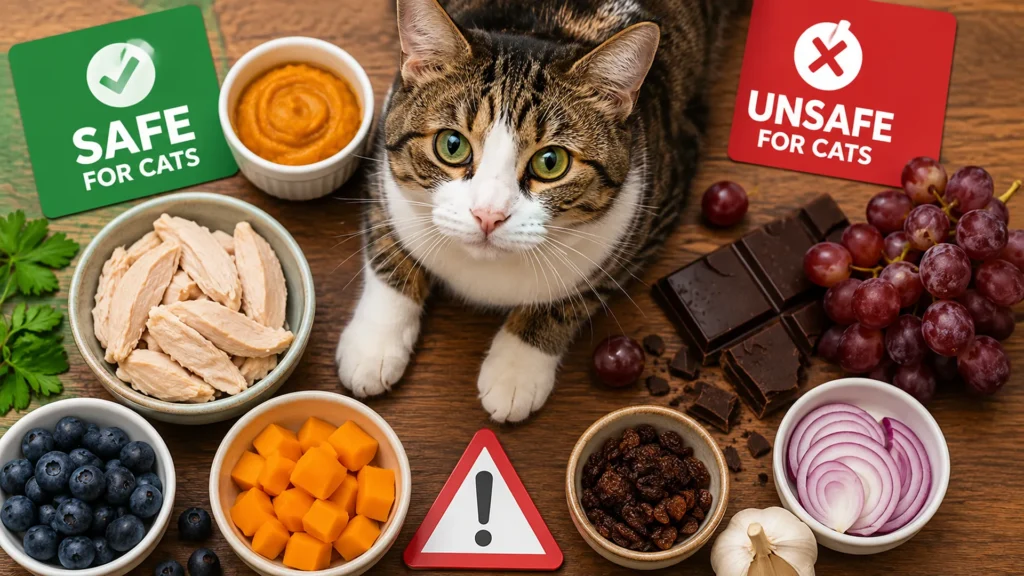
Search “what can cats eat” and you’ll get the same thing over and over: a giant list of foods with a green checkmark or a red X next to each one. Useful, sure, but it doesn’t tell you why chicken is fine and onions could send your cat to the emergency vet — or why a portion that’s totally safe for a 12-pound cat might be too much for a kitten.
This guide takes a different approach. Instead of just handing you a list, we’ll walk through the actual reasons behind these rules: how a cat’s body processes food differently from ours (or even from a dog’s), how much of a “safe” food is actually safe based on your cat’s weight, and how the answer can change depending on your cat’s age or health.
We’ll also cover spices, seasonings, and what to do if your cat eats something toxic. If you’re here because your cat just ate something questionable, jump straight to the emergency section.
Why Cat Nutrition Rules Are Different (Feline Physiology 101)
Dogs can get away with eating a lot of things that would send a cat straight to the emergency vet. That’s not a coincidence — it comes down to how differently cats are built on the inside. Understanding a bit of that biology makes the rest of this guide much easier to follow, because instead of just memorizing a list of “safe” and “unsafe” foods, you’ll actually understand why.
Obligate Carnivores — What This Means for Diet
Cats are obligate carnivores, which means their bodies are built to run on meat and nothing else. Unlike dogs or humans, cats can’t get everything they need from plant-based foods. They require specific nutrients — like taurine, arginine, and vitamin A — that are only found in animal tissue in usable amounts. Their digestive systems are also shorter and more specialized for breaking down protein and fat rather than carbohydrates. This is why even “healthy” fruits and vegetables should only ever be occasional extras, never a meaningful part of a cat’s diet.
Why Cats Can’t Taste Sweetness
Here’s a fun one: cats physically cannot taste sugar. They’re missing a functional version of the taste receptor gene that detects sweetness in other mammals. That’s likely because their ancestors never needed to seek out sugary foods as carnivores. This matters because it means a cat begging for your ice cream or cookie isn’t chasing a “sweet tooth” — they’re usually drawn to the fat or dairy content instead. It’s also a good reminder that sugary treats offer them zero nutritional benefit.
Allium Sensitivity — Why Garlic and Onion Are Dangerous
Onions, garlic, leeks, chives, and shallots all belong to the allium family, and all of them are toxic to cats. These foods contain compounds that damage a cat’s red blood cells, leading to a condition called hemolytic anemia. Cats are actually more sensitive to allium toxicity than dogs are. This applies to raw, cooked, and powdered forms — including garlic or onion powder hidden in sauces, broths, and seasoning blends, which is why checking ingredient lists really matters.
Limited Liver Enzymes and Toxin Processing
A cat’s liver works differently than ours. Cats have a reduced ability to produce certain liver enzymes, particularly glucuronyl transferase, which the body normally uses to break down and clear out toxins and some medications. Because of this, substances that a human or dog’s liver can process fairly easily may build up to dangerous levels in a cat’s system instead. This is a big part of why cats react so strongly to things like certain drugs, essential oils, and specific foods that other animals can tolerate.
Low Sodium Tolerance
Cats need very little sodium in their diet, and their bodies aren’t equipped to handle large amounts of salt. Too much sodium can lead to excessive thirst, vomiting, diarrhea, and in serious cases, sodium ion poisoning. This is one reason salty human snacks — chips, cured meats, or heavily seasoned leftovers — are a bad idea for cats, even in small quantities.
Body Size and Toxin Concentration
Finally, size plays a big role. The average cat weighs a fraction of what a dog does, so the same amount of a toxic substance is far more concentrated in a cat’s body. A quantity of chocolate or onion that might only mildly affect a large dog could be a serious, even life-threatening, dose for a cat.
Safe Human Foods Cats Can Eat (By Category)
Meat and Poultry
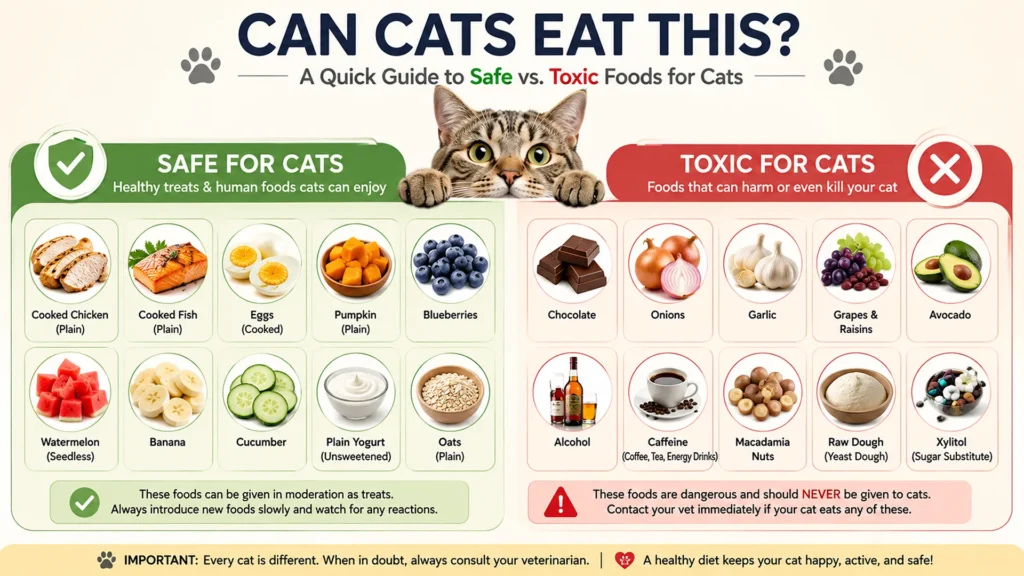
Meat is where cats are happiest, and it makes sense — they’re obligate carnivores, so protein from animal sources is exactly what their bodies are built to use. Chicken, turkey, beef, and lamb are all safe for cats when cooked plain and served in small amounts. Skip the seasoning, oil, garlic, and onion entirely, since these can cause problems even in small doses.
Always cook meat fully rather than serving it raw, as raw meat can carry bacteria like salmonella that upset a cat’s stomach just as easily as ours. Remove all bones before serving, since cooked bones can splinter and cause choking or internal injury. Trim visible fat too, because too much fat can trigger digestive upset or contribute to pancreatitis over time.
As for portions, treat meat as a occasional extra, not a meal replacement. A cat weighing around 8 to 10 pounds should get no more than a tablespoon or two of cooked, diced meat a few times a week. Anything more regular than that can throw off the balance of nutrients they’re getting from their regular cat food.
Fish and Seafood
Fish has a reputation as a cat favorite, and tuna and salmon are both safe in moderation — but “in moderation” really matters here. Both are high in sodium and, in the case of tuna especially, can contain mercury.
Feeding tuna too often can lead to mercury building up in a cat’s system over time, which is why it should be treated as a rare treat rather than a regular addition to meals. Always serve fish cooked, not raw, and skip canned versions packed in oil or brine, since the added salt and fat aren’t good for cats.
Salmon is a bit more nutritionally friendly thanks to its omega-3 content, but it still needs to be plain, boneless, and cooked. A small piece — about a tablespoon for an average-sized cat — once a week is a reasonable upper limit. If your cat has kidney issues, sodium-heavy fish should be avoided altogether or cleared with a vet first.
Eggs
Eggs are a solid source of protein and are generally safe for cats, as long as they’re fully cooked. Scrambled or boiled eggs, with nothing added, are the way to go. Raw eggs are best avoided because they carry a salmonella risk and contain avidin, a protein that can interfere with biotin absorption if fed regularly.
A small spoonful of plain cooked egg once or twice a week is plenty for most cats. There’s no need for salt, butter, or milk when cooking it — cats don’t need the extra fat or sodium, and plain is exactly what their digestive system prefers. If your cat has never had egg before, start with a tiny amount first to make sure it agrees with them, since some cats can be sensitive to new foods even when the food itself is considered safe.
Fruits
Fruit isn’t a natural part of a cat’s diet, but small amounts of certain fruits are safe and can be a fun occasional treat. Banana, blueberry, watermelon, strawberry, apple, cantaloupe, and pumpkin are all fine for cats in small quantities, though most cats aren’t actually drawn to sweet flavors, since they lack the taste receptors to detect sweetness at all.
A few notes on prep: remove seeds and pits from apples, since the seeds contain trace amounts of cyanide-producing compounds, and always remove watermelon rinds and any fruit skins that could be tough to digest.
Cantaloupe and pumpkin should be cut into small, soft pieces or served as plain puree, with no added sugar or spices — canned pumpkin pie filling is not the same thing as plain pumpkin puree, and the pie version often contains spices or sweeteners that aren’t cat-friendly.
Portion-wise, a teaspoon or two of any of these fruits, offered occasionally rather than daily, is enough. Fruit brings fiber and some vitamins, but it isn’t something a cat’s body needs, so it should stay a small side treat.
Vegetables
Vegetables are generally a safer bet than fruit for cats, mostly because they’re lower in sugar. Carrot, pea, broccoli, spinach, sweet potato, and cucumber are all fine in small, cooked, plain portions. Carrots and sweet potatoes should be cooked and mashed or cut small, since raw versions can be hard for cats to chew and digest properly.
Peas and broccoli can be steamed and offered in small pieces, while cucumber can be given raw in small slices since it’s mostly water and easy on digestion.
Spinach is safe for most cats but should be given in very small amounts and avoided altogether in cats with a history of urinary or bladder issues, since it contains compounds that can contribute to certain types of crystals forming. As with fruit, a spoonful here and there is enough — vegetables can offer some fiber and hydration, but they shouldn’t replace any part of a cat’s regular diet.
Grains
Plain, cooked rice and oats are safe for cats and are sometimes even recommended by vets in small amounts to help settle an upset stomach. Plain bread, in small pieces and without added ingredients like garlic, raisins, or xylitol-sweetened spreads, is also generally safe as an occasional nibble.
None of these are things a cat needs nutritionally, since their digestive systems are built around animal protein, not carbohydrates. A small spoonful of cooked rice or oats, or a small piece of plain bread once in a while, won’t cause harm, but grains shouldn’t make up a regular part of a cat’s diet.
Dairy
This one surprises a lot of people: despite the classic image of cats lapping up a bowl of milk, most adult cats are actually lactose intolerant, as mentioned earlier when we covered how their digestive enzymes change after kittenhood. Milk, cheese, and other dairy products can lead to diarrhea, gas, or an upset stomach in many cats.
If you want to offer dairy, small amounts of lactose-free options or a tiny bit of plain yogurt are safer choices, since the lower lactose content is easier on their system. Even then, keep portions minimal — a teaspoon is plenty — and watch for any signs of digestive upset afterward.
Foods That Are Toxic to Cats
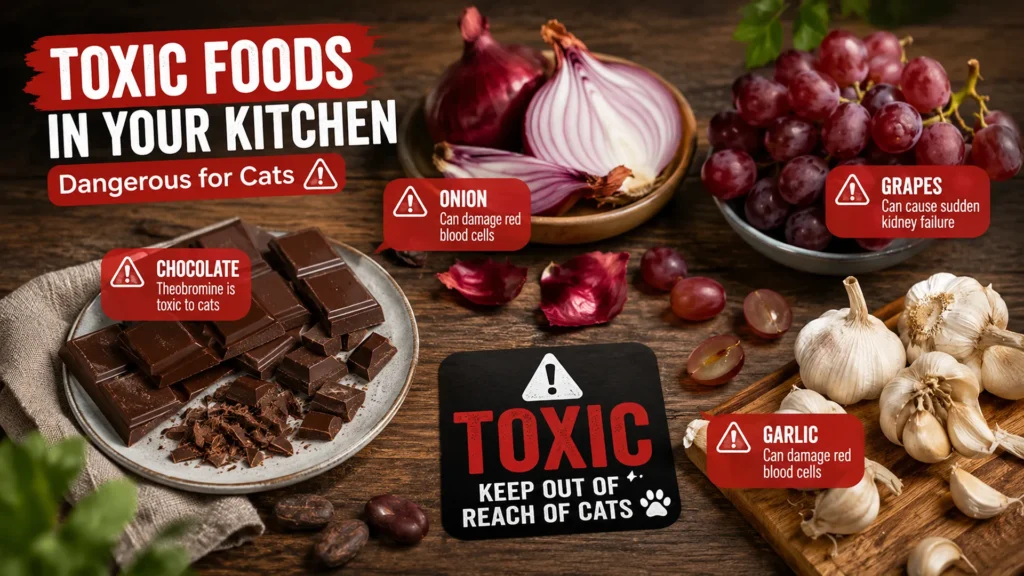
Some foods aren’t just unsuitable for cats — they’re genuinely dangerous, even in small amounts. Here’s what to keep locked away.
Chocolate, Coffee, and Caffeine
Chocolate, coffee, and other caffeinated products contain methylxanthines, compounds a cat’s limited liver enzymes struggle to break down. The darker the chocolate, the higher the risk. Symptoms like vomiting, restlessness, and a racing heart can show up within a few hours, and severe cases may lead to tremors or seizures. Call your vet immediately if you suspect ingestion.
Onions, Garlic, and the Allium Family
Onions, garlic, leeks, and chives all contain compounds that damage a cat’s red blood cells, leading to a type of anemia. This ties back to cats’ heightened sensitivity to allium compounds compared to other animals. Symptoms — including lethargy, pale gums, and rapid breathing — may not appear for a few days, which makes this one sneaky and easy to miss until it’s serious.
Grapes and Raisins
Vets still aren’t entirely sure why, but grapes and raisins can cause acute kidney failure in some cats. Since there’s no known “safe” amount, the safest approach is to avoid them entirely. Watch for vomiting or lethargy within 24 hours, which can signal kidney trouble is setting in.
Alcohol
Even a small amount of alcohol can affect a cat’s tiny body far more intensely than it would a human’s. It depresses the central nervous system quickly, and symptoms like poor coordination, low body temperature, and breathing trouble can appear within an hour of exposure.
Xylitol
This artificial sweetener, found in some sugar-free gums and baked goods, is far more commonly discussed as a dog toxin, but it’s wise to keep it away from cats too, since it can trigger a dangerous drop in blood sugar. Symptoms like weakness or vomiting can start within 30 minutes to an hour.
Macadamia Nuts and Other Nuts
Macadamia nuts are known to cause weakness, tremors, and vomiting in dogs, and while documented feline cases are rarer, it’s best to treat them — and nuts in general, which are high in fats — as an avoidable risk. Symptoms typically appear within 12 hours if they occur.
Avocado
Avocado contains persin, a compound that can cause vomiting and diarrhea in cats. The flesh, pit, and skin all pose a risk, so it’s best to keep this one off the menu entirely.
Spices and Seasonings — What’s Actually Safe
If you cook with a lot of spices, you’ve probably wondered whether a little seasoning on your plate could hurt your cat if they sneak a taste. The good news is that most spices aren’t going to poison your cat in tiny amounts, but that doesn’t mean they’re good for them either.
Cats have sensitive digestive systems, and many seasonings can cause stomach upset, irritation, or worse — especially in larger amounts or with repeated exposure. A few are genuinely dangerous, so it helps to know which is which before you let your cat lick the spoon.
Here’s a quick breakdown of common spices and seasonings:
| Spice/Seasoning | Status | Effect | Note |
|---|---|---|---|
| Turmeric | Use caution | Generally mild in tiny amounts, but no nutritional benefit for cats | Not toxic, but not necessary — skip it |
| Cumin | Use caution | Can cause mild digestive upset in larger amounts | Fine in trace amounts found in cooked food |
| Cayenne | Avoid | Irritates mouth, throat, and digestive tract | Cats are very sensitive to spicy heat |
| Cinnamon | Use caution | Can irritate the mouth and stomach in larger doses | A light dusting on cooked food is unlikely to cause harm |
| Nutmeg | Avoid | Contains myristicin, which can affect the nervous system in larger doses | Keep baked goods with nutmeg away from cats |
| Black pepper | Use caution | Mild irritant to nose and digestive tract | A tiny amount likely won’t cause issues, but isn’t needed |
| Salt/bouillon | Avoid in excess | High sodium can lead to dehydration or sodium poisoning | Cats need very little sodium — skip salty broths and bouillon |
| Garlic powder | Toxic | Damages red blood cells (allium toxicity) | Just as dangerous as fresh garlic — see the toxic foods section above |
The safest approach is simple: keep seasoned or spiced human food away from your cat altogether. Plain, unseasoned meat is always the better choice if you want to share a bite
What Cats Can Eat by Life Stage and Health Condition
Kittens
Kittens have different needs than adult cats. They’re growing fast and need more calories, protein, and fat per pound of body weight, so their diet should center on kitten-formulated food rather than adult food or human snacks. If you want to offer a taste of something like cooked chicken or egg, keep portions tiny — think a few small shreds, not a spoonful.
Their digestive systems are still developing, so new foods can upset their stomachs more easily than they would an adult cat’s. Always check with your vet before introducing anything outside their regular kitten diet, especially in the first few months.
Adult Cats
Healthy adult cats have the most flexibility when it comes to occasional human food treats. Small amounts of cooked meat, fish, or plain vegetables are generally fine as an occasional addition, not a replacement for their regular balanced diet. As a general rule, treats and extras shouldn’t make up more than about 10% of daily calorie intake. If your adult cat is at a healthy weight with no known conditions, most of the “safe foods” list applies without extra caution.
Senior Cats
Older cats often deal with slower metabolisms, dental issues, or reduced kidney function, even if it hasn’t been formally diagnosed yet. Soft, easy-to-chew foods like cooked fish or mashed pumpkin tend to work better than anything crunchy or tough.
Portion sizes should shrink too, since senior cats are usually less active and need fewer calories. If your senior cat has lost or gained weight recently, or seems less interested in food, that’s worth mentioning at their next vet visit before adding anything new to their diet.
Cats with Kidney Disease (CKD)
Cats with kidney disease need to watch their phosphorus and sodium intake closely, since both put extra strain on the kidneys. This means skipping salty treats, processed meats, and foods high in phosphorus like organ meats. Plain cooked chicken or fish in small amounts is usually fine, but always check with your vet first, since CKD diets are often quite specific and individualized based on bloodwork.
Diabetic Cats
For diabetic cats, the main concern is blood sugar spikes. Low-carb, high-protein foods work best, so plain cooked meat is a reasonable treat option. Fruits like banana should be given sparingly, if at all, since even natural sugars can affect blood glucose. Consistency matters a lot here — sudden diet changes can throw off insulin dosing, so any new food should be run by your vet first.
Cats with Pancreatitis or Urinary Issues
Cats prone to pancreatitis need a low-fat diet, since fatty foods can trigger flare-ups. Skip fatty fish, skin-on poultry, and dairy entirely. For cats with urinary issues, hydration matters more than anything — wet foods and foods with high water content, like cooked fish in moderation, can help support urinary tract health, while salty or dry treats should be limited.
What to Do If Your Cat Eats Something Toxic
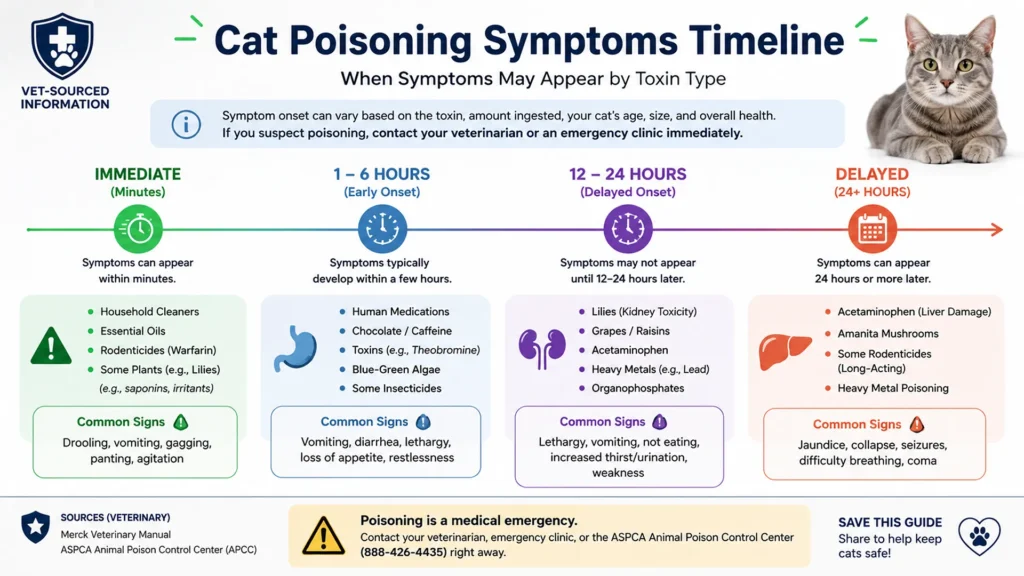
Immediate Steps to Take
If you catch your cat eating something toxic, don’t wait to see if symptoms show up. Time matters. First, move your cat away from the food and remove any leftovers so they can’t eat more. Try to figure out exactly what they ate and how much, since this will help your vet decide on treatment. Check the packaging for ingredients if you have it.
Call your vet right away, or reach out to the ASPCA Animal Poison Control Center at (888) 426-4435 or the Pet Poison Helpline at (855) 764-7661. Both are staffed 24/7 and can tell you whether it’s an emergency. Have your cat’s weight and the suspected toxin on hand when you call, since they’ll ask.
What Not to Do
Don’t try to make your cat vomit unless a vet or poison control specifically tells you to. Some substances cause more damage coming back up than staying down, and cats can also inhale vomit into their lungs. Skip home remedies like salt water, hydrogen peroxide, or milk — none of these are reliably safe or effective for cats, and some can make things worse. Don’t wait to “see how it goes” if you know your cat ate something dangerous. Waiting for symptoms often means waiting too long to help.
Symptom Timeline by Toxin Type
How fast symptoms appear depends on the toxin. Chocolate and caffeine typically cause symptoms like vomiting or restlessness within a few hours. Grapes and raisins are trickier — a cat might seem fine at first, but kidney damage can develop over the following day or two. Onion and garlic toxicity often builds up gradually, sometimes taking a few days to show as lethargy or pale gums.
Xylitol acts fast, sometimes within an hour. Because timelines vary and some damage isn’t visible right away, it’s safer to call a vet as soon as you know something happened, rather than waiting for signs.
Quick-Reference Cat Food Safety Chart
Short on time? This table pulls together everything from the sections above into one scannable list. Find the food, check its safety status, and see how much (if any) is okay to give your cat.
| Food | Safe? | Max Portion | Notes |
|---|---|---|---|
| Cooked chicken | Yes | Small piece, occasional treat | Plain, boneless, no seasoning |
| Cooked turkey | Yes | Small piece, occasional treat | Avoid skin and seasoned deli meat |
| Cooked beef | Yes | Small piece, occasional treat | Lean cuts only, no fat trimmings |
| Cooked fish (salmon, tuna) | Yes, in moderation | 1–2 small bites, not daily | Watch mercury and sodium in canned tuna |
| Eggs | Yes | Cooked, small portion | Always fully cooked, never raw |
| Banana | Yes | A few small pieces | High in sugar, treat only |
| Blueberries | Yes | A few pieces | Safe antioxidant snack |
| Watermelon | Yes | Small chunk, no seeds/rind | Mostly water, fine occasionally |
| Strawberries | Yes | One small piece | Remove leaves and stem |
| Apple | Yes | Small slice, no seeds | Seeds contain trace cyanide compounds |
| Cantaloupe | Yes | Small chunk | No rind |
| Pumpkin (plain) | Yes | A spoonful | Helps with digestion; avoid pie filling |
| Carrot (cooked) | Yes | Small piece | Cook to soften first |
| Peas | Yes | A few pieces | Fine fresh or frozen-thawed |
| Broccoli (cooked) | Yes | Small piece | Plain, no butter or seasoning |
| Spinach | Caution | Avoid if urinary issues | Contains oxalates |
| Sweet potato (cooked) | Yes | Small piece | Plain, no skin |
| Cucumber | Yes | A few slices | Low calorie, hydrating |
| Rice (plain, cooked) | Yes | Small spoonful | Bland diet staple |
| Oats (plain, cooked) | Yes | Small spoonful | No added sugar or flavoring |
| Plain bread | Yes, in moderation | Small piece | Occasional only, no nutritional value |
| Milk/dairy | Caution | Avoid or tiny amount | Most adult cats are lactose intolerant |
| Chocolate | No | None | Toxic — contains theobromine |
| Coffee/caffeine | No | None | Toxic to the nervous system |
| Onion, garlic, allium family | No | None | Damages red blood cells |
| Grapes and raisins | No | None | Linked to kidney failure |
| Alcohol | No | None | Toxic even in small amounts |
| Xylitol | No | None | Found in sugar-free products; toxic |
| Macadamia nuts | No | None | Toxic to pets |
| Avocado | No | None | Contains persin, harmful to cats |
| Turmeric | Caution | Tiny pinch only | Generally low risk in small amounts |
| Cumin | Caution | Avoid regular use | Not toxic, but no benefit |
| Cayenne/black pepper | No | None | Irritates digestive system |
| Cinnamon | Caution | Avoid regular use | Large amounts can cause irritation |
| Nutmeg | No | None | Contains toxic compounds |
| Salt/bouillon | No | None | Cats have very low sodium tolerance |
| Garlic powder | No | None | Same risk as fresh garlic |
Frequently Asked Questions
Can cats eat dog food?
Not as a regular diet. Dog food doesn’t have enough protein, taurine, or certain vitamins that cats need to stay healthy. An occasional bite won’t hurt, but a steady diet of dog food can lead to serious nutrient deficiencies over time.
How much human food can a cat safely eat per day?
As a general rule, treats and human food shouldn’t make up more than 10% of your cat’s daily calories. Their main diet should still be a complete, balanced cat food that meets their nutritional needs.
Can kittens eat the same human foods as adult cats?
Some yes, but kittens have higher energy and nutrient needs, so portions should be smaller and less frequent. Foods that are risky for adult cats, like anything high in fat or salt, are even riskier for a growing kitten.
Is tuna bad for cats every day?
Daily tuna isn’t a good idea. It’s high in sodium and can lead to mercury buildup over time, plus it doesn’t offer complete nutrition on its own. Treat it as an occasional snack, not a meal replacement.
What’s the first sign of food poisoning in cats?
Vomiting is usually the earliest sign, often followed by diarrhea, drooling, or lethargy. If your cat shows these symptoms after eating something new, contact your vet right away.
Conclusion
Every cat is different, so what’s fine for one might not sit well with another. Treats and human food should stay occasional extras, never a stand-in for a balanced diet. If your cat has a health condition or you’re ever unsure about something they’ve eaten, call your vet — they know your cat’s history best.
This guide draws on information from the Merck Veterinary Manual, the ASPCA Animal Poison Control Center (APCC), and nutritional standards set by AAFCO and FEDIAF.