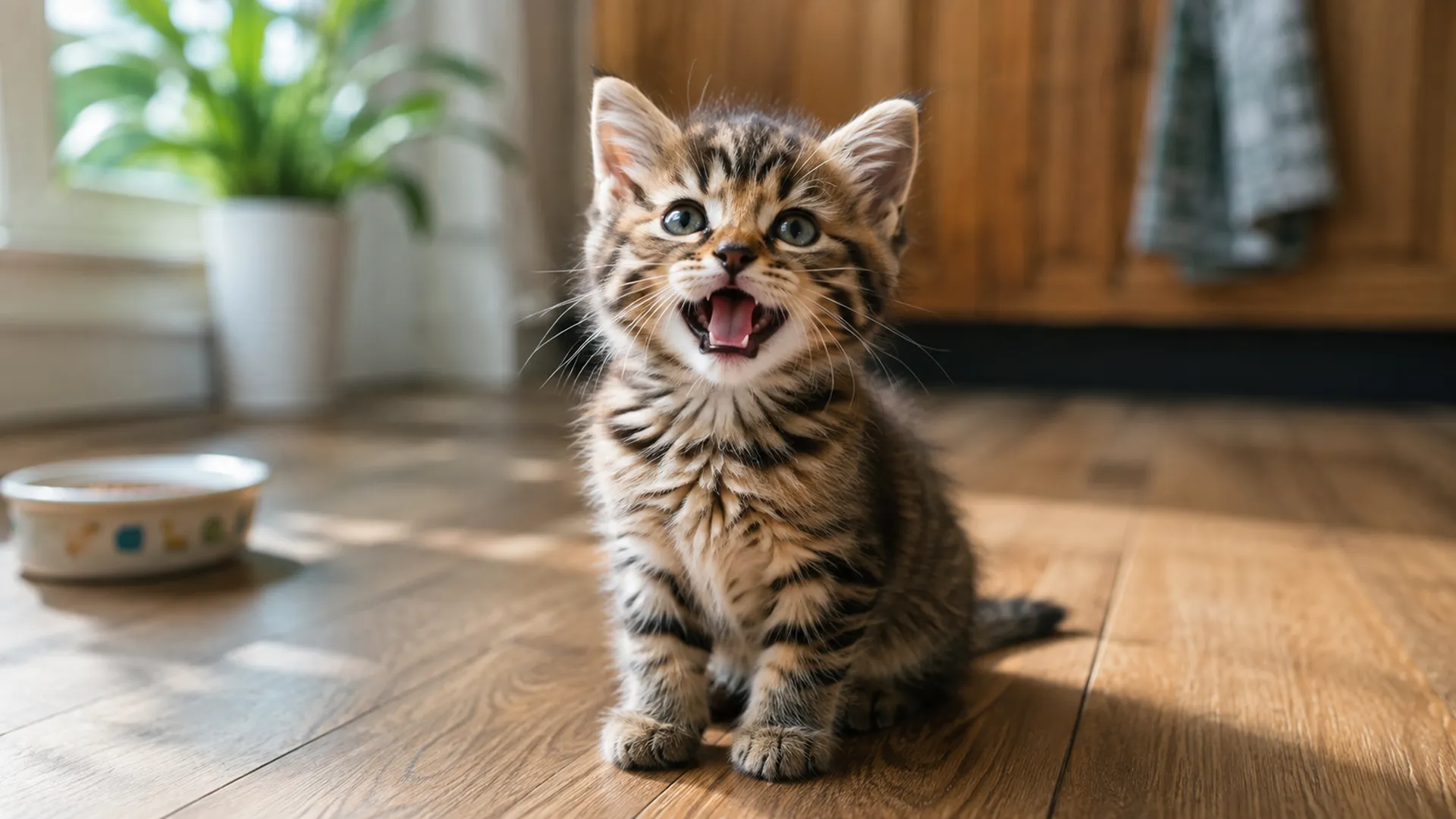
Tiny kitten, huge voice. That’s the deal. They yell at breakfast. They yell when you shut the bathroom door. Then at 3 a.m., when you’re finally asleep, they start up again. If you’ve found yourself lying there thinking “why does my kitten meow so much?”, trust me, you’ve got loads of company.
So, why does my kitten meow so much? Most of the time they’re asking for something. It might be food. It might be you, because they’re lonely or bored, or it could be that something feels scary or hurts. A young kitten meowing a lot is normal, especially if they’ve only just come home. If the crying shows up out of nowhere, doesn’t stop, and comes with other symptoms, that’s a vet visit.
Below we’ll pick apart “why does my kitten meow so much” one reason at a time, plus what the different meows usually mean, how to get through the night crying, and when you really should call the vet.
Is It Normal for Kittens to Meow a Lot?
Pretty much, yeah. Plenty of folks who ask why does my kitten meow so much calm down once they find out it’s basically kitten small talk. When they’re tiny, kittens meow so mum will come find them if they’re cold or hungry or lost. Now you’re the mum. So they call you.
Something a lot of people don’t realise is that grown cats hardly bother meowing at other cats. They’ve got body language and smell for that, plus the occasional hiss. Meowing is kind of a “for humans” thing. We keep answering, so they keep doing it.
How much is too much, then? Forget volume. Look for change. If your kitten’s been a little motormouth since day one, that’s just them. If a quiet kitten suddenly won’t shut up, or the meow sounds off somehow, keep a closer eye on things.
9 Reasons: Why Does My Kitten Meow So Much?
There’s no single neat answer to why does my kitten meow so much. A meow at the food bowl and a meow at the bedroom door aren’t the same message. So notice when it happens and what it sounds like. Here’s what usually turns out to be behind it.
1. Hunger
Kittens grow like crazy, and their stomachs are tiny, so they burn through food fast. Then they complain about it. Wondering why does my kitten meow so much right around dinnertime? Yep. Hungry.
Signs: hanging around the bowl or the kitchen, trailing you at mealtimes, and getting louder the closer you are to the food.
What to do: feed at the same times every day, and they’ll stop guessing about when the next meal’s coming. Kittens need to eat more often than adult cats, so small meals through the day work better than one big one. Our kitten feeding schedule guide has the details by age.
2. Missing Mom and Littermates
Picture it. Yesterday they were in a warm pile with mum and the siblings. Today, a new house, new smells, nobody they know. Crying is a pretty reasonable reaction. It’s also the reason so many new owners ask why does my kitten meow so much in those first week or two.
Signs: thin, high crying, wandering around like they’re looking for someone, and it gets worse once the lights go off.
What to do: set up a warm, snug bed and give them something soft to cuddle. A blanket or towel that smells like their mum or littermates is great if you can get one. Beyond that it’s mostly time. Most kittens ease out of this as the house starts to feel like home.
3. Wanting Attention
Kittens catch on fast. Meow, and you look over? Noted. Meow, and you pick them up? Definitely noted. They’ll use it again.
Signs: they meow while you’re right there, usually staring right at you, and it stops the moment you react.
What to do: carve out a bit of one-on-one time daily for play, a cuddle, or a quick brush. When attention turns up on a schedule, there’s less reason to shout for it.
4. Boredom and Excess Energy
A kitten with energy and nothing to spend it on is a noisy kitten. Simple as that.
Signs: meowing alongside zoomies, curtain climbing, stuff getting swatted off shelves, and sneak attacks on your ankles.
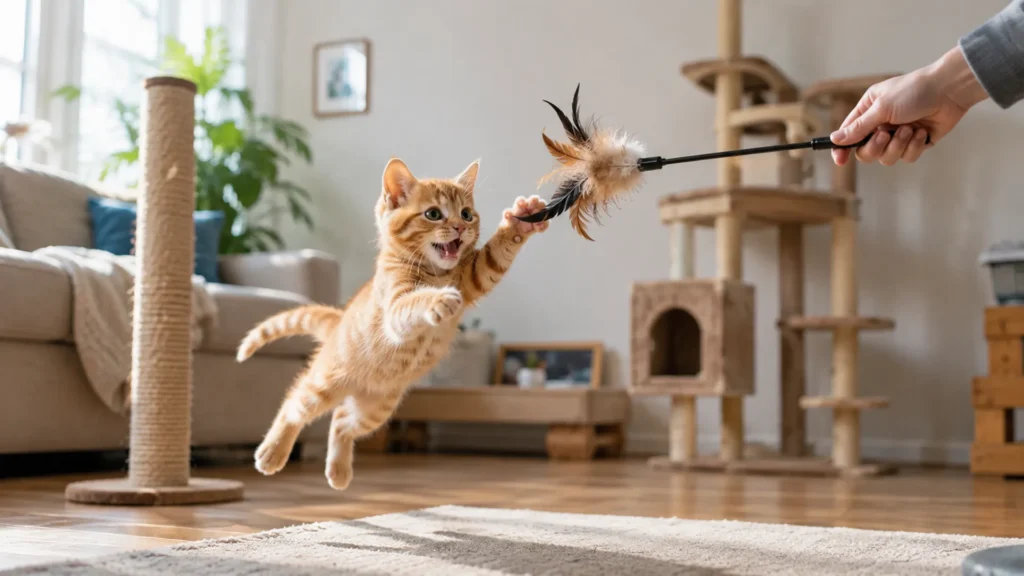
What to do: two or three short play sessions a day with a wand toy or a ball goes a long way. A puzzle feeder, a scratching post, and something to climb will keep them busy when you’re not free.
5. Stress or a New Environment
A house move can rattle a kitten. New people or pets can too, and so can loud noises. Meowing is how some of them say “I don’t like this.”
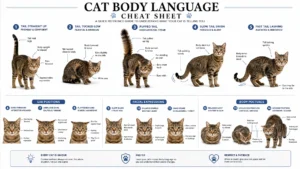
Signs: meowing while hiding or crouched low, with ears flat, tail tucked, or pupils really big.
What to do: give them a quiet “safe room” with food, water, a litter box, and a bed to hide in. Bring in new people, pets, and rooms bit by bit, not all at once. Our guide to cat anxiety goes deeper on this.
6. Being Left Alone
Some kittens fall apart when their person leaves. Even if “leaving” means walking into the kitchen.
Signs: crying at closed doors, meowing as soon as you step out, and calling over and over till you’re back.
What to do: practise short absences first and stretch them out slowly, so your kitten works out that you always come back. Leave a toy or puzzle feeder out while you’re gone. If it’s severe, have a look at our guide on separation anxiety.
7. Litter Box Problems
Sometimes it’s a toilet complaint. The box might be dirty, or stuck somewhere loud and busy, or the sides are just too tall for those short legs.
Signs: meowing in the box, or hovering next to it and meowing.
What to do: scoop daily, go for a low-sided box, and put it somewhere quiet. Crying while they pee or poop is another story, though. That can point to a health issue, so jump to the vet section below.
8. Breed and Personality
Sometimes the answer to why does my kitten meow so much is plain genetics. Siamese, Orientals, Burmese, and Bengals are all known talkers.
Plenty of moggies are chatty as well. If yours is healthy, eating fine, and playing like normal, the constant commentary is probably just their personality.
9. Pain or Illness
Every so often, the meowing means something’s actually wrong. Kittens can end up with intestinal worms, urinary trouble, constipation, injuries, or upper respiratory infections (cat flu). Once other symptoms show up alongside the meowing, “why does my kitten meow so much?” isn’t a behaviour question anymore. It’s a health one.
Signs: a new or weird-sounding meow, crying when you touch a particular spot, or meowing along with changes in appetite, energy, or toilet habits.
What to do: ring the vet. Kittens are small and can go downhill quickly, so checking early is always the better call. The warning signs are listed below.
What Your Kitten’s Meow Is Telling You
Still stuck on why does my kitten meow so much? This table can help you line up the meowing with what’s probably causing it:
| When / how it meows | Likely reason | What to try |
|---|---|---|
| Before meals, near the bowl | Hunger | Regular feeding times |
| At night, first weeks home | Missing littermates | Warm bed, comfort item |
| When you leave the room | Being alone | Short practice departures |
| While you’re nearby, looking at you | Attention | Scheduled play time |
| Restless, with zoomies | Boredom | Interactive play |
| In or near the litter box | Box issue or pain | Clean box; vet if straining |
| When touched, or a new tone | Pain | Vet visit |
The sound gives you hints too. A short chirp is usually just a hello. A long, drawn-out meow tends to mean “I want that, now.” A sharp, high cry can mean they’re scared or hurting, so go take a look.
Why Does My Kitten Meow at Night?
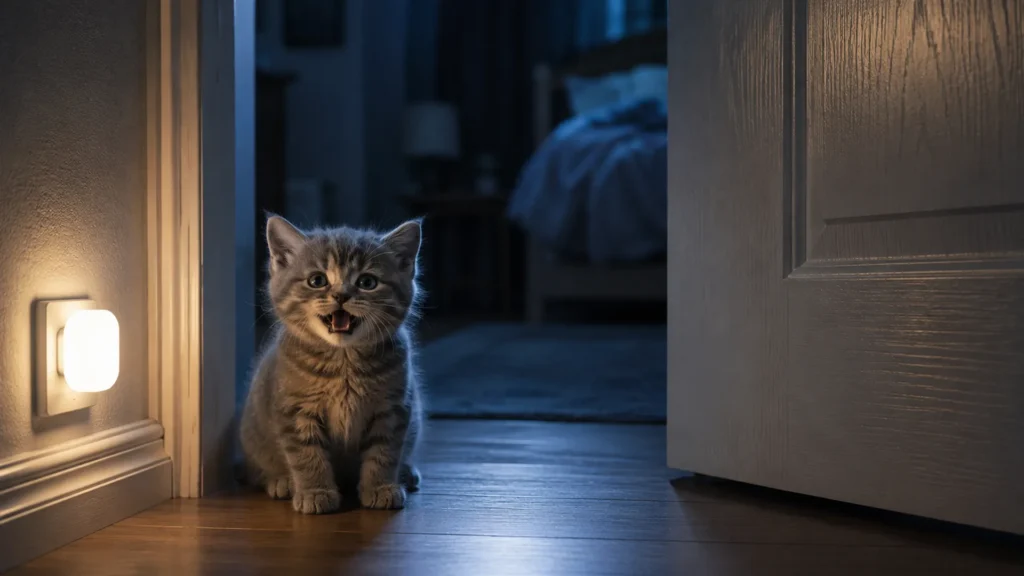
What a lot of owners actually want to know is “why does my kitten meow so much at night?” Night crying is honestly one of the roughest bits of the early weeks. Some of it’s just biology, because cats are naturally most active around dawn and dusk. Some of it is loneliness once the house goes dark and quiet. And if they didn’t get enough play during the day, they’ve still got all that energy at bedtime.
Here’s what tends to help:
- Play, then feed, then sleep. Just before bed, run a proper play session that feels like a hunt, with chasing and pouncing, and let them “catch” the toy at the end. Then feed them. It mirrors the hunt-eat-sleep pattern cats naturally follow, and it really does help them switch off.
- Keep them close at first. For the first few weeks, a cosy bed in your room or just outside it can make them feel less alone.
- Offer a late-evening meal. A small meal before bed, or a timed feeder for the early hours, stops hunger from setting off the alarm.
- Don’t reward every night meow. Once you know they’re fed, safe, and comfy, try not to get up every time they cry. If you do, they learn that crying at night brings you running.
Give it a few weeks. Most kittens start sleeping through more and more nights once they’ve settled and figured out your routine.
How to Stop Excessive Kitten Meowing
You’ll never get a kitten to stop meowing altogether, and you wouldn’t want to. It’s how they talk to you. But once you’ve figured out why does my kitten meow so much in your house specifically, you can turn the volume down a lot. Mostly that means meeting their needs and not accidentally rewarding the noise.
Do:
- Keep a routine. Meals, play, and bedtime at roughly the same times every day. Kittens like knowing what’s next.
- Reward quiet moments. Give attention, praise, or a treat when they’re calm, not while they’re yelling at you.
- Provide enrichment. Toys, scratchers, a cat tree, or a window perch give them something to do besides calling for you.
- Rule out health problems first. Before you treat it as a behaviour thing, make sure they aren’t hungry, uncomfortable, or sick.
Don’t:
- Give in every time. If every meow gets food or fuss, you’ve basically trained them to meow more.
- Yell, spray water, or punish. It just scares and stresses them, and stressed kittens tend to meow more. It can hurt your bond, too.
- Ignore sudden changes. If the meowing suddenly ramps up or sounds different, don’t write it off as a phase.
When to Take Your Kitten to the Vet
Most of the time, the answer to why does my kitten meow so much is nothing serious. A few signs, though, mean you should book a vet check:
- A sudden jump in meowing, or a change in how the meow sounds
- Crying while peeing or pooping, or straining in the litter box
- Not eating, vomiting, or diarrhoea
- Low energy, hiding more than normal, or crying when picked up
- Constant crying in a very young kitten (under 8 weeks old)
- A hoarse or lost voice, sneezing, or discharge from the eyes or nose
Kittens are small, and things can change fast. If you’re unsure, get them seen.
FAQs
Do kittens grow out of meowing so much?
Lots of them do, at least partly. Once they’ve settled in, learned your routine, and grown up a bit, most kittens get quieter. The naturally chatty breeds (and chatty personalities) may stay talkative for life, though.
Should I ignore my kitten’s meowing?
Only once you’ve checked the basics. Is there food and water? Is the litter box clean? Are they safe and comfortable? If yes, ignoring attention-seeking meows is fine. Crying that sounds like pain or distress is never something to ignore.
How much meowing is too much?
There isn’t a number. What matters is change and context. Meowing that’s nonstop, sounds unlike your kitten’s usual voice, or comes with other symptoms is worth looking into.
Why does my kitten meow when I pick it up?
Some kittens just don’t love being held, or you’ve startled them. Support their back legs and keep it gentle. If they flinch or seem sore anywhere, check with your vet.
Conclusion
So, why does my kitten meow so much? Most of the time, they’re just talking to you. Once you start paying attention to when, where, and how they meow, it gets a lot easier to work out what they’re after. Keep a steady routine, give them plenty of play and gentle attention, and try not to reward the bossy meows. Most kittens settle down within a few weeks. For more on raising a happy, healthy kitten, have a look at our kitten care guide and see what to expect at each of the kitten growth stages.