Okay so your cat’s tail won’t stop flicking and now you’re on Google at 11pm trying to figure out if that’s normal. Fair. Cat tail twitching meaning isn’t one neat answer — it really comes down to speed, where the tail’s held, and what the rest of the body’s doing right then. Could be “I’m about to pounce on that fly on the wall.” Could be “hands off me, please.” Occasionally it’s your cat telling you something actually hurts. Here’s how to actually tell those apart instead of just guessing and hoping.
Cat Tail Twitching Meaning: Quick Answer
If you’re in a hurry, here’s the gist. A twitching tail usually falls into one of these:
- Hunting or prey focus — locked onto a toy, bug, or bird
- Happiness or excitement — greeting you, waiting for something good
- Irritation — had enough attention, thanks
- Fear or building aggression — feeling cornered
- Pain or a medical issue — worth keeping an eye on
Here’s what nobody tells you though: “twitching” gets used for like five completely different movements that don’t mean the same thing. So the real cat tail twitching meaning has way less to do with the word itself and way more to do with everything happening around it.
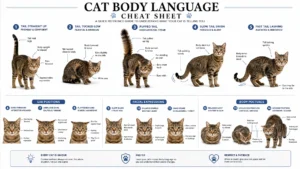
The Tail Twitch Decoder (Visual Flowchart)
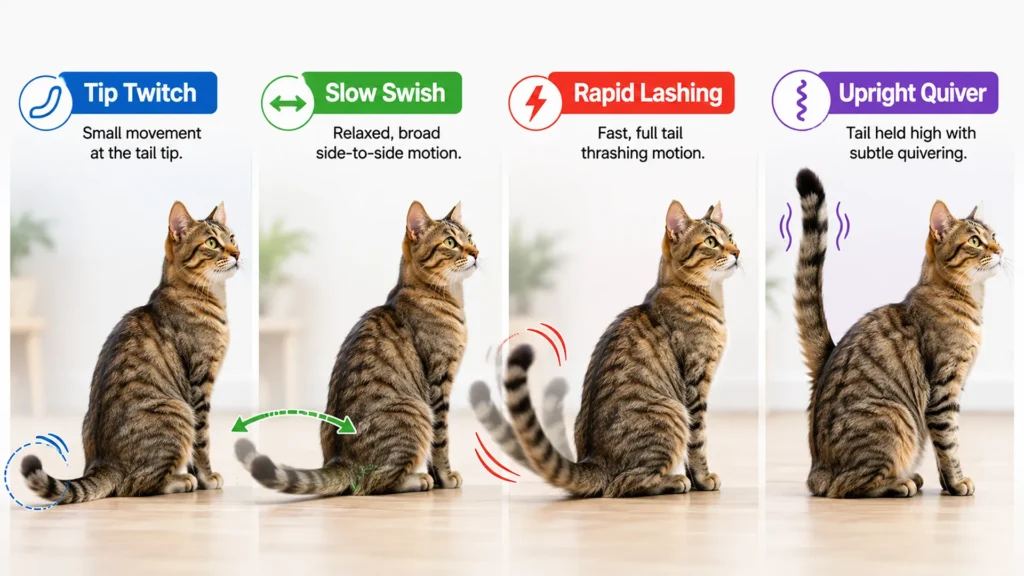
Two things really matter — speed and position. A slow flick at just the tip is a totally different message than the whole tail whipping back and forth, even though most people would call both of those “twitching” without thinking twice.
[Visual flowchart / GIF comparison placeholder: side-by-side of the four twitch types below]
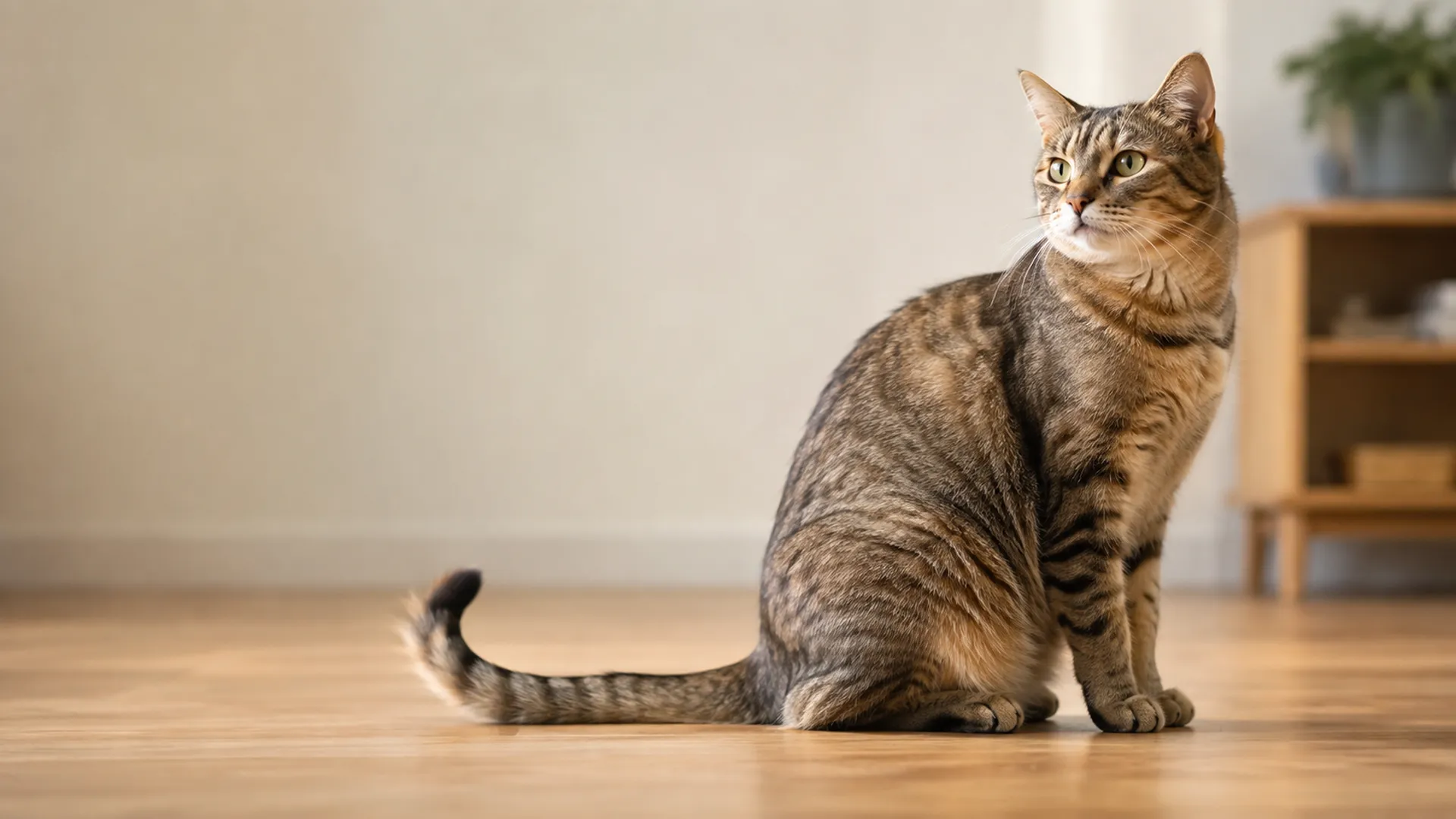
Tip-only twitch. Just the last inch or so moves, small and slow, rest of the tail’s still. Usually means your cat’s tracking something — a toy, a noise, you walking by.
Slow side-to-side swish. Bigger movement but no rush to it. Shows up when a cat’s relaxed but tuned in, like watching birds through the window or hovering near the food bowl around dinner time.
Rapid thrashing or lashing. Fast, hard, whole tail’s moving, and sometimes you’ll actually hear it thump the floor. This one’s the real warning sign. Usually means irritation or straight-up anger. Give some space.
Upright quivering. Tail shoots straight up and vibrates. Can be an excited hello. Can also mean — especially with an unneutered male standing near a wall — that spraying’s about to happen.
Context Combos: Reading the Tail Alongside Other Body Signals
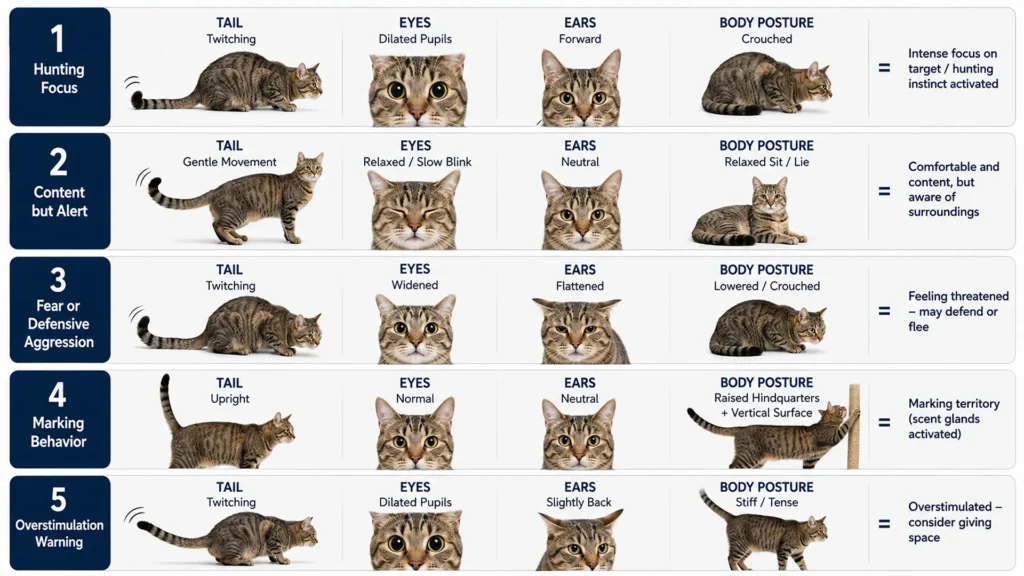
Most guides just list what twitching means and call it a day. That’s not really the full picture though. A tail on its own only tells you half of what’s going on — ears, eyes, posture, even how loud the purring is, all of that changes what’s actually being said. You only get the real cat tail twitching meaning once you look at everything together.
Twitch + dilated pupils + crouched body → hunting mode. Pupils go huge, body drops low, tail tip does that fast rattle-quiver thing right before a pounce. Real prey, fake prey, doesn’t matter. Just pure instinct kicking in, and honestly it’s kind of fun to watch happen.
Twitch + purring + slow blink → content but alert. Purring, slow blinks, a gentle slow twitch — your cat’s relaxed and comfortable but still half-tuned into the room. Good sign, nothing to worry about here.
Twitch + flattened ears + low body → fear or building aggression. Twitch speeds up, ears go back, body tenses and drops down. Your cat’s on edge. Not really the moment to go in for pets, tempting as it might be.
Twitch + upright tail + vertical surface → marking behavior. Upright, quivering tail near a wall or doorframe usually means spraying’s coming next. Shows up more with unneutered cats, but stress alone can trigger it in others too.
Twitch + stiff body + dilated pupils + no other movement → overstimulation warning. People miss this combo all the time because there’s no hissing, no growling, just stillness. Frozen body, huge pupils, tail twitching mid-pet. That’s usually the last warning before claws or teeth show up. I actually think this one deserves more attention than it gets — it looks like absolutely nothing right up until it isn’t.
Situational Guide: What’s My Cat’s Tail Doing Right Now?
Why does my cat’s tail twitch while sleeping? Totally normal, don’t stress about this one. Same as people twitching mid-dream — cats do this during light sleep too. Nervous system just winding down. If they’re breathing normally and otherwise settled, let them keep sleeping.
Why does my cat’s tail twitch when I pet or hold them? Usually a warning shot more than actual aggression. Means they’re getting close to their limit. If it starts speeding up or gets more forceful, that’s your sign to stop before it turns into a swat.
Why does my cat’s tail twitch while staring out the window? Prey drive, plain and simple. A bird, a squirrel, honestly even a leaf blowing past can trigger that same lock-in as hunting a real toy. Just nothing at the end to actually catch.
Why do kittens twitch their tails differently than adult cats? Kittens are still working out their own coordination, so it tends to look jerkier or more exaggerated. They also get overstimulated way faster than adults, so twitching can show up sooner during play than you’d expect.
Why does my cat’s tail twitch around other cats? Usually tension, or a standoff neither one wants to back down from first — especially paired with staring and a stiff stance. Doesn’t always end in a fight, but it’s worth keeping an eye on and giving both cats a way to walk off.
When Tail Twitching Signals Pain or a Medical Issue
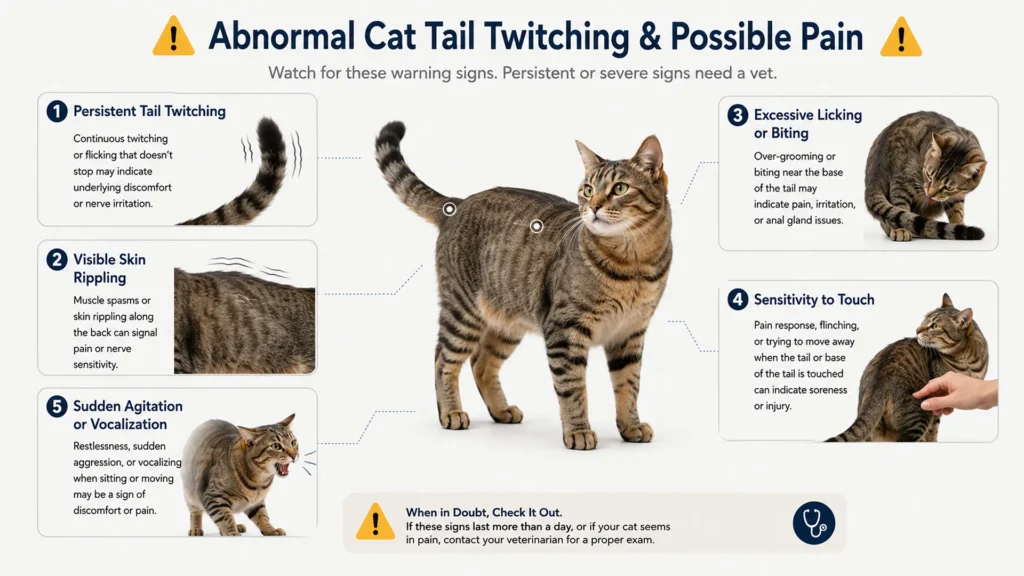
Most tail twitching is just behavior. Every so often, though, it’s not, and the pattern is usually what gives it away. Behavioral twitching tends to be short and tied to something happening right in that moment. A pain-related cat tail twitching meaning looks different — it sticks around, shows up for no clear reason, and often comes with things like rippling skin along the back, a lot of licking near the tail base, or a sudden flinch when you touch that spot.
Feline hyperesthesia syndrome, explained. This is a real, documented condition where cats get unusually sensitive along the back and tail — rippling skin, tail twitching, sometimes sudden bursts of grooming or biting at their own body. Cornell’s Feline Health Center has written about it. People mistake it for a quirky personality constantly, honestly, which is exactly why it flies under the radar in so many cats for way too long.
Red flags — when to call the vet. Keep an eye out for these showing up alongside the twitching:
- Twitching that’s constant, no obvious trigger
- Rippling or twitching skin on the back
- Sudden vocalizing or aggression out of nowhere
- Chasing or biting at their own tail
- A lot of licking or chewing near the tail base
- Loss of appetite or other behavior changes
Any one of these alone probably isn’t an emergency. All of them together, though — that’s worth a vet visit.
Real Example: How I Learned to Tell Playful Twitching From Pain
For the longest time I just chalked it up to personality. My cat would be lying there completely calm, then out of nowhere her lower back would ripple and her tail would flick hard, like something had spooked her — except nothing had. Happened a few times a week, and she’d usually turn around and lick at her tail base right after.
I ignored it for months, honestly. Then one night I ran my hand down her back and she snapped around, reacted way harder than usual. That’s actually what got me to book a vet appointment, not the twitching itself. Turned out the whole pattern matched feline hyperesthesia. Months of what I thought was “random” twitching, and it wasn’t random at all — it was a signal I just hadn’t learned to read yet. Kind of wish I’d figured out the real cat tail twitching meaning sooner. Would’ve saved us both some stress.
Frequently Asked Questions
Is tail twitching always normal in cats?
No. Occasional twitching from hunting, sleep, or mild irritation is normal. Frequent or unexplained twitching, especially with skin rippling, is worth a closer look.
What’s the difference between tail twitching and tail wagging in cats?
Twitching is small and quick, usually right at the tip. Cats don’t really “wag” the way dogs do — bigger tail movement in a cat usually points to agitation, not joy
Should I approach my cat when their tail is twitching fast?
Probably not a great idea. Fast, forceful twitching usually means irritation or stress. Better to give them room.
Can stress alone cause tail twitching?
Yeah, easily. Doesn’t even need a trigger in the room — changes at home or tension with other pets can be enough on their own.
Key Takeaway
There’s really no single, fixed cat tail twitching meaning — it’s more of a spectrum, and speed, position, and everything the body’s doing together are what actually matter. Learn to read those combos as a whole, know which red flags actually count, and you’ll end up understanding your cat way better than any single-signal guide could teach you. For more, check out our full guide to cat body language.