Why does my cat scratch the wall? Most people start asking this the day they notice claw marks running down the hallway paint. For others, it’s the scraping noise at 3 a.m. that does it. If you’re in either group, don’t worry. This is one of the most common complaints cat owners have, and it’s usually fixable.
Below we cover the usual reasons, the warning signs worth knowing, and the fixes that actually help.
Is It Normal for Cats to Scratch Walls?
It is. Plenty of owners asking “why does my cat scratch the wall?” think their cat is being naughty or getting back at them for something. That’s not what’s going on. Scratching is built in from birth, and cats need it for both physical and mental health. You can’t train it out of them, and you shouldn’t try.
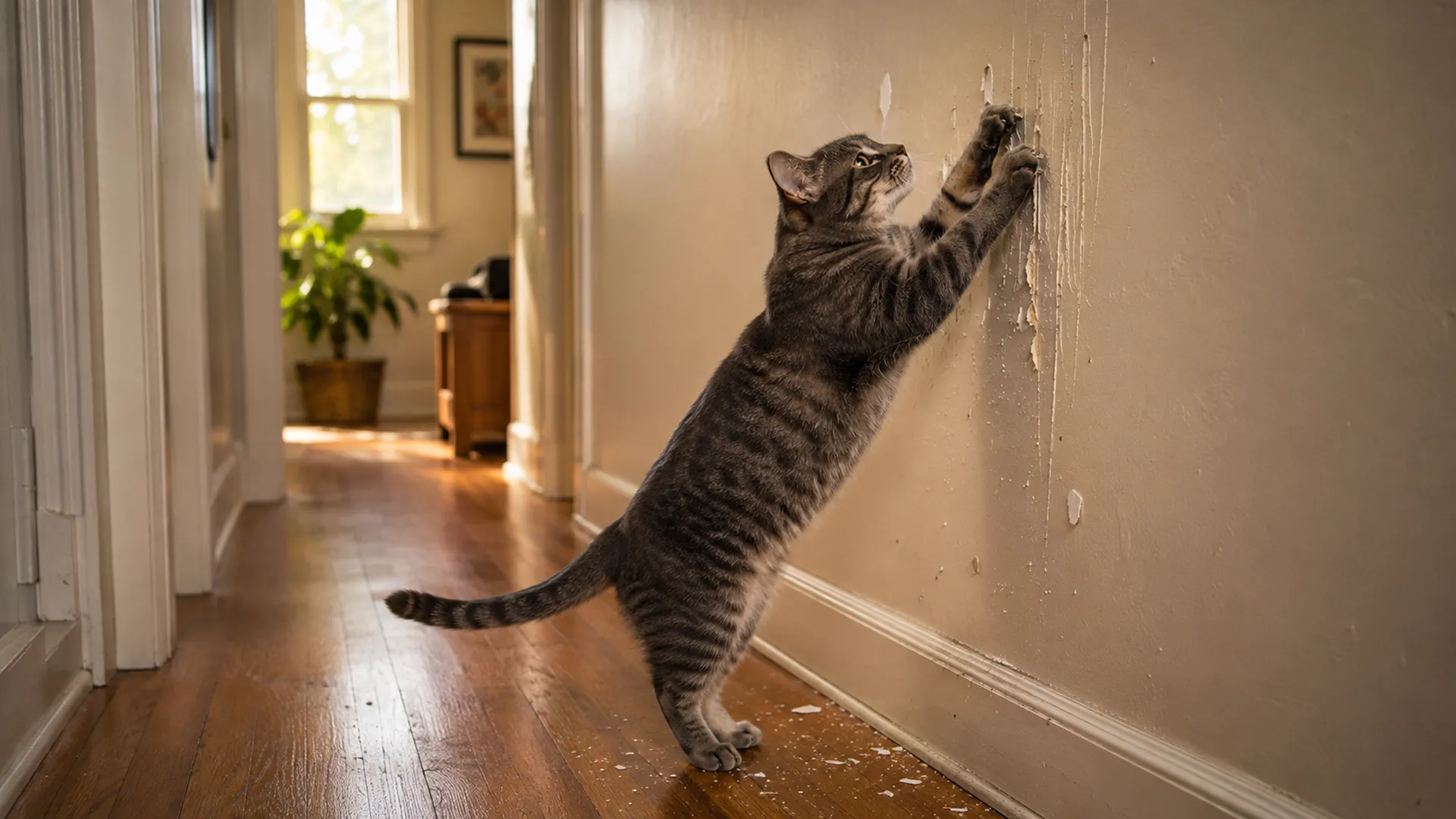
The wall itself makes sense once you see it the way a cat does. It’s tall and solid, and it won’t slide or tip when pulled on, which makes it great for stretching. Walls are also in the spots everyone passes through, like hallways, doorways, and the living room. A cat that wants its mark seen couldn’t ask for better.
So a cat scratching the wall is usually telling you one of two things. It doesn’t have a good alternative, or it’s trying to communicate something.
Why Does My Cat Scratch the Wall? 7 Common Reasons
1. Marking Territory
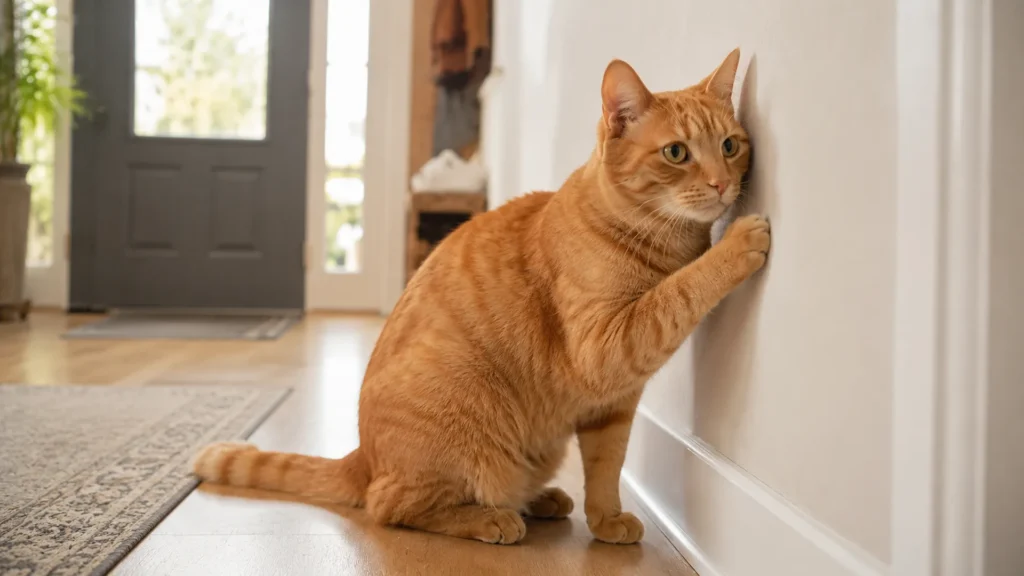
Cats have scent glands between their paw pads. Each scratch leaves a bit of scent on the surface. We can’t smell it, but other cats can, and combined with the visible marks it works like a sign saying the area is taken.
This is why scratches tend to pile up near doors, windows, and entryways. Those are the edges of your cat’s territory, where other animals might pass by. If you’ve been asking “why does my cat scratch the wall near the front door?”, territory marking is the most likely answer.
2. Keeping Claws Healthy
A cat’s claws grow in layers. The outer one, the sheath, wears out over time and has to come off so the fresh, sharp claw underneath can do its job. Scratching pulls that old layer loose.
Those small, curved claw shells you sometimes find on the floor near a scratching spot are exactly this. It’s ordinary claw maintenance. Textured walls and wallpaper are especially popular for it because claws grip them easily.
3. Stretching and Exercise
Watch your cat right after a long nap. A lot of the time it will reach up as high as it can and pull its claws down along whatever’s in front of it. That’s a full stretch through the back, shoulders, and front legs, much like the one people do first thing in the morning.
A wall gives your cat room to stretch to its full length. Many scratching posts on the market are too short for a grown cat, so it finds something taller instead. That’s usually the answer to “why does my cat scratch the wall right after waking up?”
4. Boredom or Excess Energy
An indoor cat doesn’t get to hunt, climb, or explore the way an outdoor or wild cat does. When it doesn’t get enough play, the energy builds up and comes out wherever it can. Scratching the wall is one of the easiest outlets.
Kittens, young cats, and active breeds do this the most. Watch for other clues along with the scratching, such as the “zoomies” (sudden laps around the house), knocking things off tables, or chewing things it shouldn’t. Put together, they point to a cat that needs more to do.
5. Seeking Attention
Cats are quick learners. Scratch the wall, and the owner jumps up, says its name, or rushes over to stop it. From the cat’s point of view, that’s a win. Being scolded is still being noticed.
It often happens at predictable times, like just before a meal or while you’re busy on your phone or computer. Reacting every time makes the habit stronger. You’ll usually get better results by ignoring the scratching and rewarding your cat when it’s calm.
6. Stress or Anxiety
Cats are creatures of routine, and changes can throw them off more than people expect. Moving house, a new pet or baby, visitors staying over, or a strange cat showing up outside the window can all leave a cat feeling unsure of its space.
Scratching spreads the cat’s scent and helps it feel settled again. If you only started wondering “why does my cat scratch the wall?” after a big change at home, stress is a good place to look. Other clues include more hiding than usual, over-grooming, or changes in litter box habits.
7. Sensing Something Inside the Wall
A cat’s hearing and sense of smell are far sharper than ours. It can pick up mice or insects moving behind a wall, or water running through pipes, long before we’d notice anything.
Pay attention if your cat keeps going back to one exact spot with its ears forward and its body alert, sniffing or staring at the wall. In that case, the answer to “why does my cat scratch the wall?” may be that it’s stalking something it can hear. Check for pests or a plumbing problem.
When Wall Scratching Could Signal a Problem
Most of the time, the answer to “why does my cat scratch the wall?” is harmless. Occasionally it’s a sign of something more, so keep an eye out for these:
- A sudden change: Your cat never scratched walls before and now does it all the time.
- Obsessive behavior: It works on one spot constantly and is hard to distract.
- Other symptoms: The scratching comes with a lot of meowing, aggression, appetite changes, or litter box problems.
- Night-time scratching in older cats: Senior cats can develop age-related cognitive changes (sometimes called feline cognitive dysfunction). Signs include confusion, wandering, and restlessness or yowling at night.
When to call a vet or feline behaviorist:
- The behavior started suddenly or is getting worse
- Your cat seems distressed, confused, or unwell
- The usual fixes haven’t helped after a few weeks
Your vet can check for pain, illness, or age-related causes. A behaviorist is the right call when stress or anxiety seems to be behind it.
How to Stop Your Cat From Scratching the Wall
Once you know why does my cat scratch the wall in your particular case, the fix is much easier to choose. The aim isn’t to stop your cat scratching. It’s to move the scratching somewhere you’re happy with. Match the fix to the cause:
| Cause | Best Fix |
|---|---|
| Marking territory | Scratching post right next to the targeted spot |
| Claw maintenance | Sturdy sisal post + regular nail trims |
| Stretching | Tall post your cat can fully stretch on |
| Boredom | More daily play and enrichment |
| Attention-seeking | Ignore the scratching, reward calm behavior |
| Stress | Stable routine, safe spaces, pheromone diffuser |
| Something in the wall | Check for pests or plumbing issues |
Place the Right Scratching Post Near the Wall
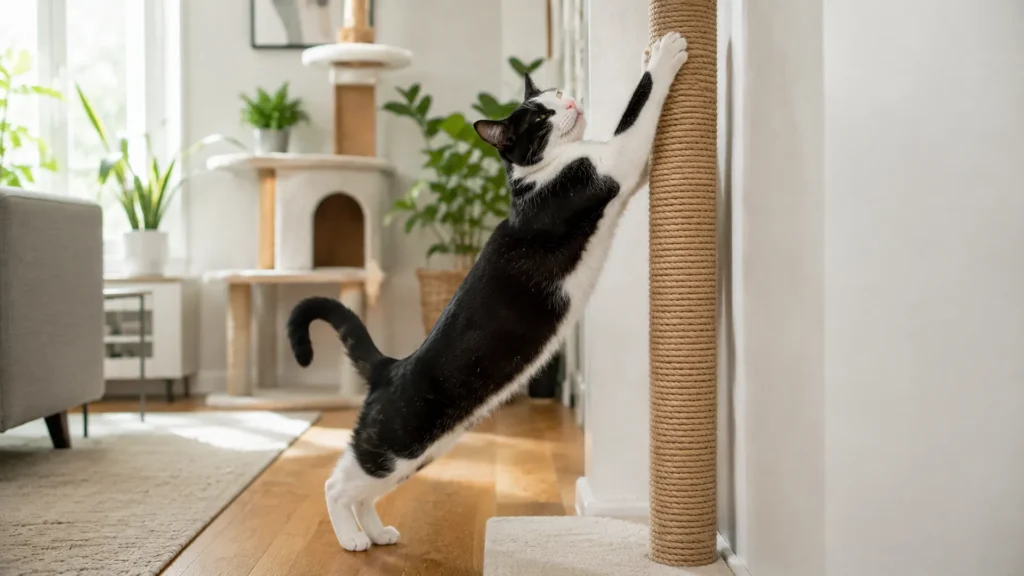
Location is the biggest factor. Put the post directly in front of the spot your cat has been using, or right beside it. Your cat has already chosen that area, so give it an acceptable thing to scratch there.
The post should be tall enough for a full stretch, roughly 80 cm (about 32 inches) or more for an adult cat. It also has to be heavy and stable. A post that wobbles or falls over sends the cat straight back to the wall. Sisal rope tends to be more popular with cats than carpet. It also helps to offer a flat scratcher as well as an upright one, since cats have their own preferences.
Make the Wall Unappealing
While your cat gets used to the post, make the wall less attractive. Double-sided sticky tape works for many cats because they dislike the feel of it on their paws. Clear plastic wall guards or corner protectors do the job too.
Cats generally don’t like citrus smells, so a cat-safe citrus spray can help. Avoid concentrated essential oils, though, as many of them are toxic to cats. When your cat is using its post regularly, remove the deterrents a little at a time.
Keep Claws Trimmed
Shorter claws do less damage, even if your cat still has a go at the wall once in a while. A trim every few weeks suits most cats, but it varies.
Soft nail caps are another short-term option. They’re glued onto the claws and come off naturally as the claws grow. If trimming makes you nervous, see our guide on [how to trim cat nails] or ask your vet to show you.
Increase Play and Enrichment
A cat that’s had a good workout is far less likely to go after the wall. Aim for at least two short play sessions a day with a wand toy or anything that lets your cat chase, pounce, and “catch” something.
Puzzle feeders, cat trees, and window perches keep your cat’s mind busy between sessions. For night scratching, play hard with your cat just before bed and then feed it. That follows the natural pattern of hunting, eating, then sleeping.
Redirect and Reward
If you catch your cat scratching the wall, stay calm. Pick it up gently, or tempt it with a toy, and take it over to the post. Give a treat or some praise when it scratches there.
A little catnip or silvervine rubbed on the post can make it more inviting. Some cats don’t react to catnip at all, and silvervine is a good alternative for them.
Reduce Stress at Home
When stress is the cause, the focus should be on helping your cat feel secure. Keep feeding and play times regular, and make sure it has quiet spots to hide and high places to climb.
Synthetic pheromone diffusers help some cats. They copy the calming scent cats leave when they rub their faces on furniture and people. If cats outside are the trigger, cover the lower part of the window to block the view.
Check the Wall for Pests or Leaks
When your cat focuses on one spot and seems to be listening or sniffing, take it seriously. Look for signs of mice or insects and listen for running water. Call a pest control company or a plumber if anything seems wrong.
What Not to Do
It’s easy to lose patience when you’re asking “why does my cat scratch the wall?” for the tenth time in a week. Still, a few common reactions tend to backfire:
- Don’t punish or yell at your cat. It won’t connect the punishment with the scratching. It will just get stressed, and stress often leads to more scratching.
- Don’t use spray bottles. Water might stop your cat for a moment, but it damages trust and doesn’t deal with the reason it’s scratching.
- Don’t declaw. Declawing is not a nail trim. It’s surgery that removes the last bone of each toe. It can cause lasting pain and has been linked to biting and litter box avoidance. It’s banned in a number of countries and several US states, and major veterinary groups strongly advise against it.
How to Fix Scratched Walls
The walls are usually simple to repair once the scratching stops. For light marks on painted walls, fill them with spackle, sand it smooth once dry, and repaint.
Deeper damage to drywall or wallpaper may need a patch kit, which most hardware stores stock. To prevent repeat damage, fit clear protective panels on corners and other favorite spots. They’re hard to notice and save you doing the same repair twice.
Frequently Asked Questions
Why does my cat scratch the wall at night?
Cats are naturally most active around dawn and dusk. A cat that didn’t use up its energy during the day can get restless while you sleep. Playing with it and feeding it before bed usually helps. If an older cat suddenly becomes restless at night, mention it to your vet.
Why does my cat scratch the wall after using the litter box?
Cats have a strong instinct to cover their waste. Scratching the wall instead of the litter can mean the box is too small, not clean enough, or filled with a litter your cat doesn’t like. Try a larger box, scoop more often, or change the litter.
Why does my cat scratch the wall and meow?
This usually means your cat wants something, whether that’s attention, food, or to get into a room with the door shut. In an older cat, especially if it’s new and happens at night, it may be a sign of confusion and worth a vet visit.
Why does my cat scratch the wall near its food bowl?
This is thought to come from an instinct to bury or hide leftover food, which wild cats do. It’s normal and doesn’t mean your cat dislikes its food. Some cats just do it more than others.
Conclusion
So, why does my cat scratch the wall? Almost always, it’s instinct or communication, not bad behavior. Work out which reason fits your cat, then give it a good place to scratch, more play, and a calm, predictable home. Most cats move over to their scratching post within a few weeks. If the scratching starts suddenly or looks obsessive, have your vet take a look.
For more help, read our guides on choosing the best scratching posts, spotting signs of stress in cats, and easy enrichment ideas for indoor cats.