
Anyone who shares their home with a cat knows the trade-off. You get the head bumps, the loud purring, the way they somehow know when you need company. But you also get litter tracked across the kitchen floor, fur on every dark sweater you own, and a scratched-up corner of the couch you’ve stopped trying to hide. Loving your cat and keeping a tidy home can feel like two goals pulling in opposite directions.
This guide is for anyone trying to close that gap, whether you just brought home your first kitten or you’ve been a cat person for years and are still fighting the fur battle. Skip the generic “clean up after your pet” advice. What follows is practical, specific stuff you can actually use.
Daily Cat Care Basics
Getting the daily routine right is the foundation of good cat care. Most health and behavior issues can be avoided simply by keeping things consistent.
Feeding Schedule & Portion Control
Cats do best with a predictable feeding routine, ideally at the same times each day. Most adult cats do well with two meals a day, though some owners prefer smaller, more frequent portions to mimic natural grazing habits. Whether you choose wet or dry food (or a mix of both) matters less than sticking to consistent portions. Wet food offers more moisture, which is great for hydration, while dry food is convenient and helps with dental wear. Always check the feeding guidelines on the packaging and adjust based on your cat’s age, weight, and activity level.
Water & Hydration
Cats are notorious for not drinking enough water, so placement matters. Keep water bowls away from food and litter boxes, since many cats prefer their water source separate. A pet water fountain can also help, as the movement often encourages cats to drink more than they would from a still bowl. Fresh water should be available at all times, and bowls should be cleaned regularly to keep it appealing.
Grooming Basics
Brushing needs depend on coat type. Short-haired cats usually do fine with weekly brushing, while long-haired breeds may need brushing every day or two to prevent mats and tangles. Regular nail trims, roughly every two to three weeks, help prevent overgrown or split nails and reduce scratching damage around the home.
Litter Box Management & Odor Control
Best Litter Box Placement — privacy, ventilation, multi-cat ratio rule
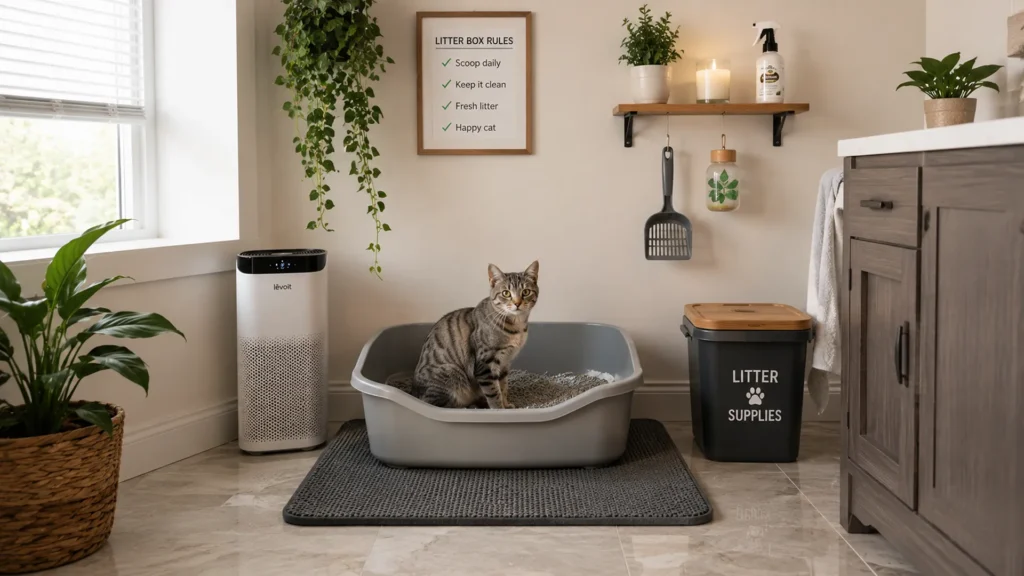
Cats like a bit of privacy when they go, so skip the high-traffic hallway and pick a quiet corner instead. A spot with decent airflow helps too — it keeps smells from building up in one enclosed area. If you’ve got more than one cat, the general rule of thumb is one litter box per cat, plus one extra. So two cats means three boxes, spread out in different spots rather than clustered together. This cuts down on territorial squabbles and gives every cat an easy option nearby.
Cleaning Frequency & Routine — daily scoop vs. full changes
Scooping once a day is the baseline for keeping odor under control — waste sitting around for days is really the main source of smell. Beyond the daily scoop, plan on a full litter change and box wash every one to two weeks, depending on how many cats you have and what litter you’re using. A quick wash with mild soap and warm water works fine; harsh chemical cleaners can leave a scent that puts cats off using the box altogether.
Choosing the Right Litter Type — clumping, odor-control, eco-friendly options
Clumping litter tends to be the easiest to maintain since it makes daily scooping simple and thorough. If odor is your main concern, look for litters with added odor-control formulas, often using baking soda or activated charcoal. For a greener option, there are plant-based litters made from materials like corn, wheat, or recycled paper — these break down more easily and are a good pick for eco-conscious households.
Fixing Persistent Odor Problems — mats, air purifiers, box placement fixes
If odor keeps lingering no matter what, check a few things: a litter mat underneath the box catches tracked litter and stray odor particles. An air purifier nearby can help filter the air in that room. And sometimes it just comes down to placement — a box tucked in a poorly ventilated closet will trap smells no matter how often you clean it.
Cat-Proofing Your Home
Before your cat comes home, it’s worth spending an afternoon looking at your space from their point of view. Cats are curious, they climb, and they’ll investigate anything new — so a little prevention now saves you a stressful vet visit later.
Hiding Toxic Plants & Household Chemicals
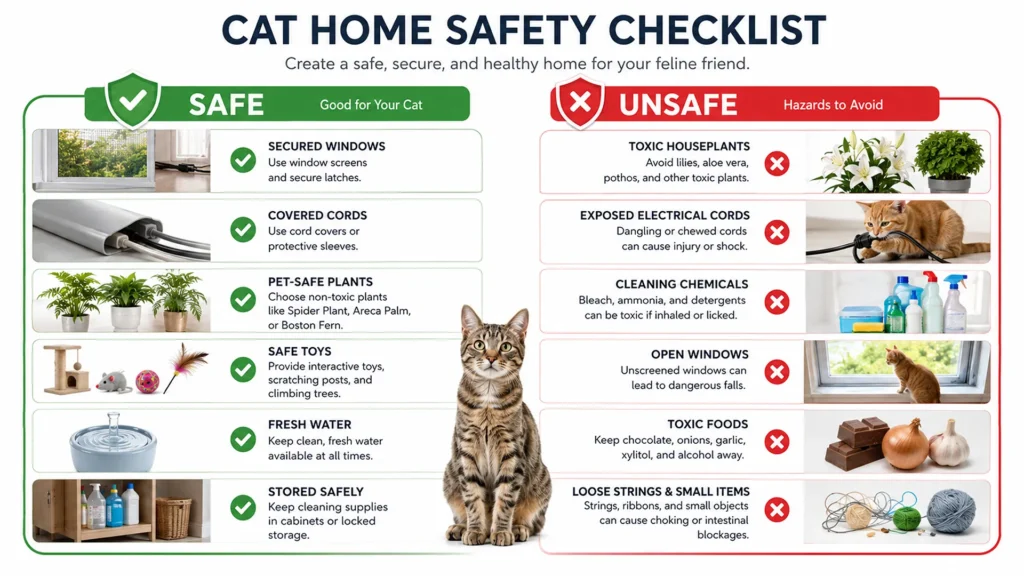
Some common houseplants, like lilies, pothos, and aloe vera, are toxic to cats if chewed on. Either remove them from your home or move them somewhere your cat truly can’t reach, since cats are excellent climbers. The same goes for cleaning products, medications, and anything like antifreeze — store these in closed cabinets, not just on a high shelf, since a determined cat can still find a way up.
Managing Cords, Blinds & Small Objects
Cats love to bat at anything that dangles or moves, which makes cords and blind pulls a real hazard. Tuck electrical cords behind furniture or use cord organizers, and tie up or clip blind cords out of reach. Also do a quick sweep for small items your cat could swallow — rubber bands, hair ties, string, bottle caps, and buttons are all easy to miss but easy for a cat to snatch off a table or counter.
Securing Windows, Balconies & Screens
Cats can push through gaps you wouldn’t expect, so make sure window screens are sturdy and properly fitted, not just resting in place. If you have a balcony, consider a cat-proof net or mesh barrier, since falls from height are a genuine risk even for cats with good balance.
Room-by-Room Safety Checklist
A quick walkthrough helps catch anything you missed:
- Kitchen: Keep the trash covered, stove knobs out of reach, and food wrappers cleared away
- Bathroom: Close the toilet lid, store medications and toiletries in cabinets
- Laundry area: Keep the washer and dryer closed, and detergent pods locked away
Protecting Furniture & Managing Shedding
Anyone who shares their home with a cat knows the struggle: shredded couch corners and fur that somehow ends up everywhere, including your morning coffee. The good news is that a few smart habits and the right products can save your furniture and your sanity.
Scratch-Proofing Sofas & Chairs
Scratching is instinctive for cats, so the goal isn’t to stop it but to redirect it. A sturdy scratching post near your favorite seating area gives your cat a better option than the armrest. Look for posts covered in sisal rope, since cats tend to prefer that texture over carpet. Deterrent sprays with citrus or bitter scents can also help keep cats off furniture, though results vary from cat to cat. If scratching is still a problem, soft nail caps are a painless, temporary fix that blunt the damage without affecting your cat’s natural behavior.
Reducing Fur Around the House
Regular brushing is honestly the easiest fix here. A few minutes a few times a week catches loose fur before it ends up on your couch or clothes. The right brush depends on your cat’s coat, so it’s worth trying a couple of options to see what works best. Washable throws or slipcovers on furniture give you an easy layer of protection you can toss in the wash whenever needed. And when it comes to cleanup, a vacuum with a pet-hair attachment makes a noticeable difference compared to a standard one.
Best Fabrics & Materials for Cat Owners
Not all upholstery holds up the same way against claws and fur. Tightly woven fabrics like microfiber or canvas tend to resist snagging better than looser weaves. Leather can also work well since claws are less likely to catch, though it can show scratches more visibly. Avoiding delicate fabrics like silk or loosely woven linen in cat-friendly spaces can save a lot of frustration down the road.

Creating a Cat-Friendly Living Space
Managing a home with cats isn’t just about keeping things clean and orderly, it’s also about making sure your cat actually feels happy and settled there. A little enrichment goes a long way, and it often solves behavior problems before they start.
Vertical Space & Cat Trees
Cats love height. It gives them a sense of security and lets them survey their territory like tiny, furry landlords. A sturdy cat tree near a window or in a busy room gives your cat a place to climb, scratch, and perch above the chaos. If floor space is tight, wall-mounted shelves or cat ladders work just as well and free up room below.
Designated Safe Zones & Hiding Spots
Every cat needs a spot to retreat to when things feel like too much, whether that’s guests, kids, or another pet. A cozy box, a covered bed, or even a quiet corner behind furniture can serve as a safe zone. The goal is to give your cat somewhere private that’s always accessible, so they never feel cornered or forced to interact.
Enrichment: Toys, Window Perches & Play Areas
Bored cats tend to get into trouble, scratching furniture, knocking things over, or acting out. Rotating a few toys every week keeps things interesting without cluttering your space. Window perches are especially popular since cats enjoy watching birds and outdoor activity. Setting aside even a small play area with interactive toys or a scratching post helps burn energy and keeps your cat mentally engaged throughout the day.

Health & Hygiene Routines at Home
Taking care of a pet isn’t just about walks and cuddles — it’s also about building small habits that keep your whole household healthy. A little routine goes a long way here.
Vet Checkups & Parasite Prevention Schedule
Regular vet visits are one of those things that are easy to put off, but they really do make a difference. Most vets recommend annual checkups for healthy adult pets, and more frequent visits for puppies, kittens, or senior animals. These visits usually cover vaccinations, dental checks, and weight monitoring — all things that are hard to track on your own. Parasite prevention is another piece of the puzzle. Fleas, ticks, and worms aren’t just uncomfortable for your pet; they can also affect people in the home, especially kids. Talk to your vet about a prevention schedule that fits your pet’s lifestyle, whether that’s monthly topical treatments, oral medication, or seasonal dosing.
Keeping Feeding & Litter Areas Sanitary
Food and water bowls can harbor bacteria if they’re not washed regularly, so a quick daily rinse and a deeper wash every few days helps keep things clean. The same goes for litter boxes — scooping daily and doing a full clean weekly cuts down on odor and bacteria buildup. It’s a small habit, but it makes a noticeable difference in how fresh your home feels.
Managing Allergens for Sensitive Household Members
If someone in your home has allergies, regular grooming, brushing, and vacuuming can help reduce dander buildup. Air purifiers and designated pet-free zones, like bedrooms, can also give sensitive family members some relief without giving up life with a pet.
Managing Cats in Multi-Pet or Multi-Person Households
Introducing Cats to Dogs or Other Cats
Bringing a new cat into a home with existing pets takes patience. Cats are territorial by nature, so rushing introductions usually backfires. Start by keeping the newcomer in a separate room for a few days, letting everyone get used to each other’s scent before any face-to-face meeting. When you do introduce them, keep sessions short and supervised, and give your resident pets plenty of reassurance so they don’t feel replaced. It can take anywhere from a few days to several weeks for things to settle, and that’s completely normal.
Setting Boundaries with Kids & Guests
Cats need a space where they can retreat when things get overwhelming. Teach kids to approach calmly, avoid sudden movements, and never corner or chase the cat. A simple rule like “let the cat come to you” goes a long way. For guests, especially ones the cat doesn’t know, it helps to have a quiet room set up in advance where your cat can hide out until it’s ready to come explore on its own terms.
Dividing Pet-Care Responsibilities at Home
In busy households, cat care runs smoother when tasks are clearly split up. A simple chore chart or shared reminder app can help track who’s feeding, scooping litter, or scheduling vet visits. This avoids double-feeding, missed litter cleanings, or nobody remembering the last flea treatment.
Time-Saving & Budget-Friendly Management Tips
Automating Feeding & Litter Cleaning
Automatic feeders and self-cleaning litter boxes can genuinely make cat ownership easier, especially for people with unpredictable schedules. Timed feeders keep portions consistent, which also helps with weight management, while self-cleaning litter boxes cut down on daily scooping. They’re an upfront investment, but many owners find the time saved is worth it.
Buying Supplies in Bulk
Litter, food, and treats are recurring expenses, so buying in bulk when possible usually saves money over time. Subscribe-and-save options through online retailers or warehouse clubs often bring the per-unit cost down. Just make sure you’re not overbuying food faster than your cat can finish it before the expiration date.
Simple DIY Hacks for Cat Owners
You don’t need fancy gear to keep a cat entertained or comfortable. Cardboard boxes, paper bags, and empty toilet paper rolls stuffed with treats make great budget toys. An old t-shirt tied in a knot can double as a lightweight toy too. These small hacks stretch your budget without cutting corners on your cat’s happiness.
Common Cat Care & Home Management Mistakes to Avoid
Even experienced cat owners slip up sometimes. Here are a few common mistakes worth fixing.
Overfeeding or free-feeding without portion control. Leaving a bowl full of food out all day seems convenient, but it often leads to weight gain. Cats are natural grazers, sure, but that doesn’t mean they’re good at self-regulating portions, especially indoor cats who don’t burn much energy. Measuring meals and sticking to a feeding schedule makes a real difference for their long-term health.
Neglecting litter box hygiene. A dirty litter box is one of the top reasons cats start avoiding it altogether. Cats are surprisingly picky about cleanliness, and a neglected box can lead to accidents around the house.
Ignoring vertical space needs. Cats love to climb, perch, and observe from up high. Without shelves, cat trees, or window perches, they can get bored or stressed, which sometimes shows up as behavior issues.
Skipping regular vet visits. It’s easy to assume no news is good news, but routine checkups catch problems early, well before symptoms become obvious at home.
Frequently Asked Questions
How often should I clean my cat’s litter box?
Scoop it at least once a day, and do a full clean with soap and water every one to two weeks. Cats are far more likely to use a box that’s kept fresh, and daily scooping also helps you notice any changes in their bathroom habits early.
How can I stop my cat from scratching furniture?
Give them a better option. Place sturdy scratching posts near the furniture they usually target, and consider different textures like sisal or cardboard since cats have preferences. Trimming their nails regularly also helps reduce damage.
How do I reduce cat odor in my home?
Start with the litter box, since that’s usually the main source. Scoop daily, use a litter that controls odor well, and wash the box itself often. Good ventilation and regular vacuuming also help keep smells from building up.
What’s the best way to introduce a new pet to my cat?
Go slowly. Keep the new pet in a separate room at first, and let them get used to each other’s scent before any face-to-face meeting. Gradual, supervised introductions over several days or weeks tend to go much smoother than rushing things.
Conclusion
At the end of the day, a happy cat and a well-run home aren’t separate goals—they’re the same project. When you treat feeding schedules, litter box upkeep, cleaning routines, and your cat’s habits as parts of one system, everything runs smoother. Fewer messes, less stress, and more time actually enjoying your pet instead of constantly cleaning up after them.
If you want help staying on top of it all, sign up for our newsletter and grab our free downloadable cat care checklist—it’s a simple way to keep every task organized in one place.
And if odor control is still a struggle in your home, don’t miss our guide on the Best Litter Boxes for Odor Control. It might be the missing piece in your setup.