
Have you ever wondered why your cat follows you from room to room one day but prefers to nap alone the next? Understanding cat behavior can help you build a stronger, more trusting relationship with your pet. Cats communicate in subtle ways through their body language, vocalizations, and daily habits, so learning to recognize these signals makes it easier to understand their needs and emotions.
Just like people, every cat has a unique personality. Some are outgoing and playful, while others are quiet, cautious, or independent. These traits are shaped by a combination of genetics, early socialization, environment, and life experiences.
In this complete guide, you’ll learn how to interpret common cat behaviors, understand different personality types, recognize signs of happiness and stress, and discover practical tips for strengthening your bond with your feline companion. Whether you’re a first-time cat owner or an experienced pet parent, this guide will help you better understand your cat’s fascinating behavior.
What Is Cat Behavior and Personality?
Understanding the difference between cat behavior and cat personality can help you better understand your pet’s actions, needs, and emotions. While these two terms are closely related, they are not the same.
What Is Cat Behavior?
Cat behavior refers to the actions and reactions a cat shows in different situations. These behaviors are part of how cats communicate, survive, and interact with people, other animals, and their surroundings.
Some behaviors are driven by natural instincts. For example, hunting, scratching, climbing, hiding, and grooming are normal feline behaviors that helped wild cats survive. Even indoor cats still display many of these instinctive habits.
Other behaviors are learned through experience. A cat may learn that meowing brings food, that a certain chair is a favorite sleeping spot, or that hiding during loud noises helps it feel safe. Positive interactions, training, and daily routines also shape how a cat behaves over time.
What Is Cat Personality?
Cat personality is the unique combination of traits that makes one cat different from another. Just like people, cats have individual temperaments. Some are outgoing and curious, while others are quiet, cautious, or independent.
A cat’s personality develops gradually as it grows. Kittens may become more confident with positive experiences, while adult cats often settle into stable behavior patterns. Although personality can change slightly with age and life experiences, many core traits remain consistent throughout a cat’s life.
Factors That Influence Personality
Several factors work together to shape a cat’s personality:
- Genetics: Some personality traits are inherited from a cat’s parents.
- Breed tendencies: Certain breeds are known for common behavioral characteristics, although every cat is still an individual.
- Early socialization: Positive experiences with people, other pets, and new environments during kittenhood often help cats become more confident and adaptable.
- Environment: A safe, enriching, and predictable home encourages healthy behavior.
- Health: Pain, illness, or discomfort can affect both behavior and temperament.
- Daily routine: Regular feeding, playtime, and rest help many cats feel secure and reduce stress-related behaviors.
Understanding Your Cat’s Natural Instincts
Every cat, whether it’s an adventurous outdoor explorer or a relaxed indoor companion, is guided by instincts that have been passed down through thousands of years of evolution. These natural behaviors help explain why your cat chases a toy mouse, naps for hours, or insists on inspecting every new box that enters your home. Understanding these instincts makes it easier to provide an environment where your cat feels safe, happy, and mentally stimulated.
Hunting Instincts
Many people assume that well-fed indoor cats have no reason to hunt, but that’s not how feline instincts work. Hunting is a deeply rooted natural behavior that exists regardless of whether a cat is hungry.
This is why your cat may:
- Chase toy mice or feather wands
- Pounce on moving shadows or insects
- Bat at rolling balls or dangling strings
- Stalk another pet during play
These activities mimic the stalking, chasing, and pouncing behaviors that wild cats use to catch prey. Interactive play sessions help satisfy these instincts while providing valuable exercise and mental enrichment.
Territorial Behavior
Cats are naturally territorial animals. Having a space they consider their own helps them feel secure and reduces stress. Even cats living peacefully with other pets often establish favorite resting spots, sleeping areas, or window perches.
Cats also communicate ownership through scent. They have scent glands around their cheeks, forehead, paws, and tail base. When your cat rubs against your legs, furniture, or doorways, it’s leaving familiar scent markers rather than simply asking for attention. Scratching posts also serve a dual purpose by keeping claws healthy and depositing scent from the paws.
Providing multiple resting places, scratching posts, and hiding spots can help your cat feel more comfortable, especially in multi-cat households.
Curiosity and Exploration
Cats are naturally curious animals. They investigate unfamiliar sounds, smells, objects, and people because exploring their surroundings helps them understand whether something is safe or potentially threatening.
You can safely encourage this curiosity by offering:
- Puzzle feeders and treat toys
- Cardboard boxes and paper bags (without handles)
- Cat trees and climbing shelves
- Rotating toys to keep playtime interesting
Always keep hazardous items such as toxic plants, medications, cleaning products, and small swallowable objects out of your cat’s reach.
Sleep and Energy Cycles
Cats spend a large part of the day sleeping, with many healthy adult cats resting between 12 and 16 hours daily. This isn’t laziness—it’s a normal part of their biology.
Cats are crepuscular, meaning they are naturally most active around dawn and dusk. These times historically offered the best opportunities to hunt small prey. As a result, your cat may become energetic early in the morning or just before bedtime, even after sleeping for much of the day.
Planning interactive play sessions during these peak activity periods can help satisfy your cat’s natural instincts, provide healthy exercise, and encourage more relaxed behavior during the rest of the day.
Common Cat Personality Types
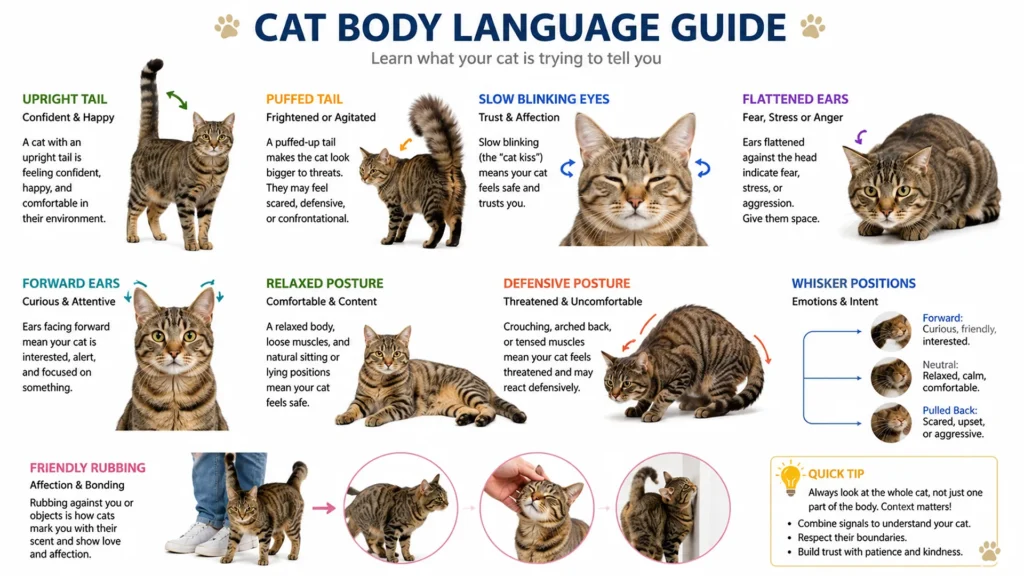
Every cat has a unique personality. Some love being around people, while others enjoy having their own space. Many cats also show a mix of different personality traits depending on their age, breed, life experiences, and environment. Understanding your cat’s personality can help you build a stronger bond and provide the care they enjoy most.
The Social Butterfly
Typical traits: Friendly, outgoing, and confident.
Common behaviors: Greets visitors, follows family members around the house, and enjoys being part of daily activities.
Best way to interact: Spend quality time together through petting, play, and gentle conversation. These cats usually enjoy positive attention from trusted people.
Tips for enrichment: Offer interactive toys, climbing trees, and regular play sessions to keep them mentally and physically active.
The Independent Explorer
Typical traits: Self-reliant, curious, and confident.
Common behaviors: Likes exploring every room, watching the outdoors from windows, and spending time alone before returning for affection.
Best way to interact: Respect their personal space and allow them to approach you on their own terms.
Tips for enrichment: Provide cat trees, window perches, puzzle feeders, and safe places to explore indoors.
The Shy and Timid Cat
Typical traits: Quiet, cautious, and sensitive to change.
Common behaviors: Hides when strangers visit, startles easily, and may need extra time to adjust to new surroundings.
Best way to interact: Be patient and let the cat set the pace. Speak softly and avoid forcing physical contact.
Tips for enrichment: Create cozy hiding spots, maintain a predictable routine, and use gentle play to build confidence over time.
The Playful Adventurer
Typical traits: Energetic, active, and always ready for fun.
Common behaviors: Chases toys, climbs furniture, runs around the house, and enjoys interactive games.
Best way to interact: Schedule daily play sessions that mimic hunting, such as using feather wands or toy mice.
Tips for enrichment: Rotate toys regularly, add climbing shelves, and offer puzzle toys to prevent boredom.
The Lap Cat
Typical traits: Affectionate, calm, and people-oriented.
Common behaviors: Seeks cuddles, curls up on laps, and enjoys relaxing close to family members.
Best way to interact: Provide gentle petting and quiet companionship while respecting signs that the cat has had enough attention.
Tips for enrichment: Offer soft beds, cozy blankets, and peaceful resting areas where they can stay close to their favorite people.
The Curious Investigator
Typical traits: Inquisitive, observant, and intelligent.
Common behaviors: Inspects bags, boxes, cupboards, and anything new brought into the home.
Best way to interact: Encourage their natural curiosity with safe exploration and interactive activities.
Tips for enrichment: Cardboard boxes, food puzzles, treat-dispensing toys, and changing play setups can keep these cats mentally stimulated.
The Vocal Communicator
Typical traits: Expressive and responsive.
Common behaviors: Meows to greet people, ask for food, request attention, or respond when spoken to. Some cats are naturally more talkative than others.
Best way to interact: Pay attention to the situation and body language to understand what your cat is trying to communicate. Respond calmly and consistently.
Tips for enrichment: Maintain a regular daily routine, provide enough play and attention, and make sure basic needs such as food, water, and a clean litter box are always met.
How Cats Communicate With People and Other Animals
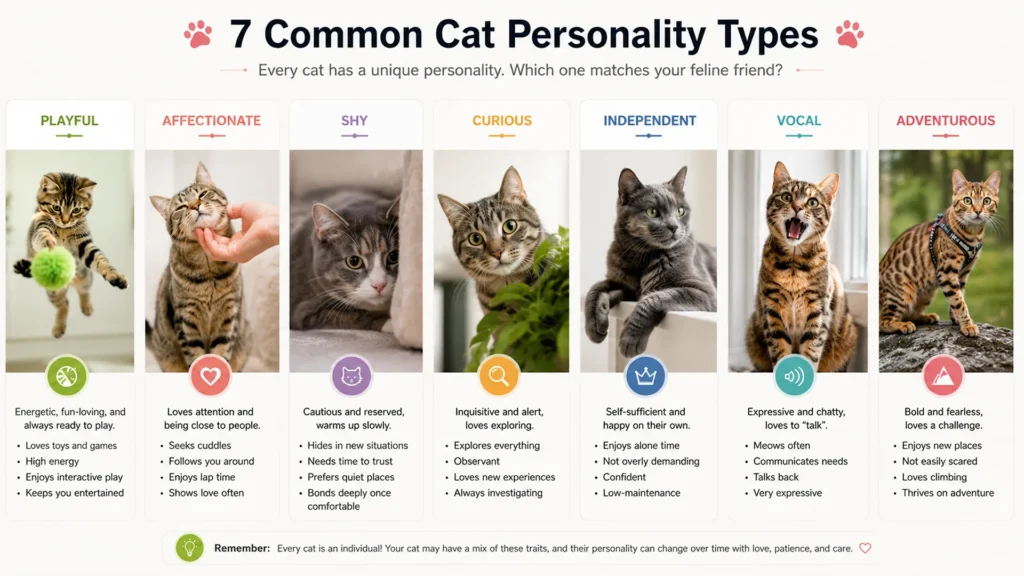
Cats communicate in many different ways. Instead of relying on words like humans, they use their body, facial expressions, sounds, and scent to share how they feel. Learning to understand these signals can help you build trust with your cat, recognize stress early, and avoid misunderstandings.
While every cat has its own personality, most feline communication follows common patterns. Looking at several signals together—not just one—gives you the clearest picture of what your cat is trying to say.
Body Language
A cat’s posture often reveals its emotional state before it makes a sound.
Relaxed posture
A relaxed cat usually looks comfortable and at ease. Its muscles are loose, ears face forward or slightly to the side, and the tail rests naturally. A cat lying on its side, stretching, or calmly sitting with soft eyes is generally feeling safe in its environment.
Defensive posture
When a cat feels threatened or frightened, it tries to protect itself. You may notice:
- A crouched body close to the ground
- Flattened ears
- A tucked or puffed-up tail
- Arched back with raised fur
- Hissing or growling
This posture is meant to warn others to stay away rather than invite a fight.
Confident posture
A confident cat moves comfortably through its surroundings. Signs include:
- Standing tall with a relaxed body
- Head held high
- Tail carried upright
- Calm, steady movements
- Curious exploration
Confident cats are often comfortable around familiar people and animals.
Tail Positions and Their Meanings
A cat’s tail is one of its most expressive communication tools.
Upright tail
An upright tail usually signals confidence, friendliness, or a happy greeting. Cats often approach trusted people with their tails held high.
Curved tail
A tail with a gentle curve or question-mark shape often means the cat is feeling playful, curious, or interested in interacting.
Puffy tail
A puffed-up tail makes the cat appear larger. This is commonly a response to fear, surprise, or feeling threatened. It may be accompanied by an arched back.
Flicking tail
A tail that flicks or swishes quickly often shows excitement, irritation, or increased focus. If you’re petting your cat and the tail begins flicking sharply, it may be time to give it some space.
Wrapped tail
Cats sometimes wrap their tails around themselves while sitting to stay comfortable or warm. They may also wrap their tail around another cat or a trusted person as a sign of affection and social bonding.
Ear Positions
A cat’s ears constantly move to express emotions and detect sounds.
Forward
Forward-facing ears usually indicate interest, confidence, and attention. Your cat is likely focused on something it finds interesting.
Sideways
Ears turned sideways, sometimes called “airplane ears,” often suggest uncertainty, mild anxiety, or irritation. The cat may be deciding how to respond to a situation.
Flattened
Ears pressed flat against the head are a strong warning sign. This position usually indicates fear, anger, or a defensive mood. It’s best to avoid handling a cat showing this signal.
Rotating ears
Cats can rotate their ears independently to monitor sounds from different directions. Constant ear movement usually means they are alert and paying attention to their surroundings.
Eye Expressions
A cat’s eyes provide valuable clues about its emotions and intentions.
Slow blinking
A slow blink is often considered a sign of trust and relaxation. Many cats use it with people they feel safe around. You can slowly blink back to communicate in a calm, non-threatening way.
Dilated pupils
Large, wide pupils can appear when a cat is excited, playful, frightened, or highly alert. The surrounding situation helps determine the exact emotion.
Narrow pupils
Small, narrow pupils often occur in bright light, but they can also appear when a cat is intensely focused or feeling tense.
Staring
A relaxed stare may simply show curiosity. However, prolonged direct staring between unfamiliar cats can be seen as a challenge or sign of social tension.
Vocal Communication
Cats use different sounds depending on who they are communicating with and what they need.
Meowing
Adult cats commonly meow to communicate with people. They may meow to ask for food, greet you, request attention, or let you know something has changed.
Purring
Purring is often associated with contentment and relaxation. However, cats may also purr when they are anxious, injured, or trying to comfort themselves, so it should be interpreted alongside their body language.
Chirping
Chirps are short, high-pitched sounds often heard when a cat watches birds or other prey through a window. Some cats also chirp as a friendly greeting.
Trilling
A trill is a soft, rolling sound that usually expresses friendliness. Mother cats often use trills to call their kittens, and many adult cats trill when greeting familiar people.
Hissing
Hissing is a clear warning to stay away. It usually means the cat feels frightened, threatened, or uncomfortable.
Growling
Growling signals serious discomfort or defensive behavior. A growling cat wants more distance and should not be forced into interaction.
Yowling
Yowling is a loud, drawn-out vocalization. Cats may yowl because of stress, territorial disputes, mating behavior, pain, or age-related confusion in some senior cats. If sudden or unusual yowling continues, a veterinary check-up is recommended.
Scent Communication
Cats also communicate using scent, even though humans usually cannot detect these signals.
Head bunting
When a cat gently presses or rubs its head against you, it is depositing scent from glands around its face. This behavior often marks trusted people, animals, or objects as familiar and safe.
Rubbing
Cats rub against furniture, doorways, and people to leave their scent behind. This helps create a familiar environment and can strengthen social bonds.
Scratching
Scratching serves more than one purpose. It helps maintain healthy claws while also leaving both visual marks and scent from glands in the paws, helping cats define their territory.
Spraying
Spraying is different from normal urination. A cat sprays small amounts of urine on vertical surfaces as a form of scent marking. This behavior is often linked to territory, stress, or communication with other cats and may require attention if it starts suddenly in a previously litter-trained cat.
Common Cat Behaviors Explained
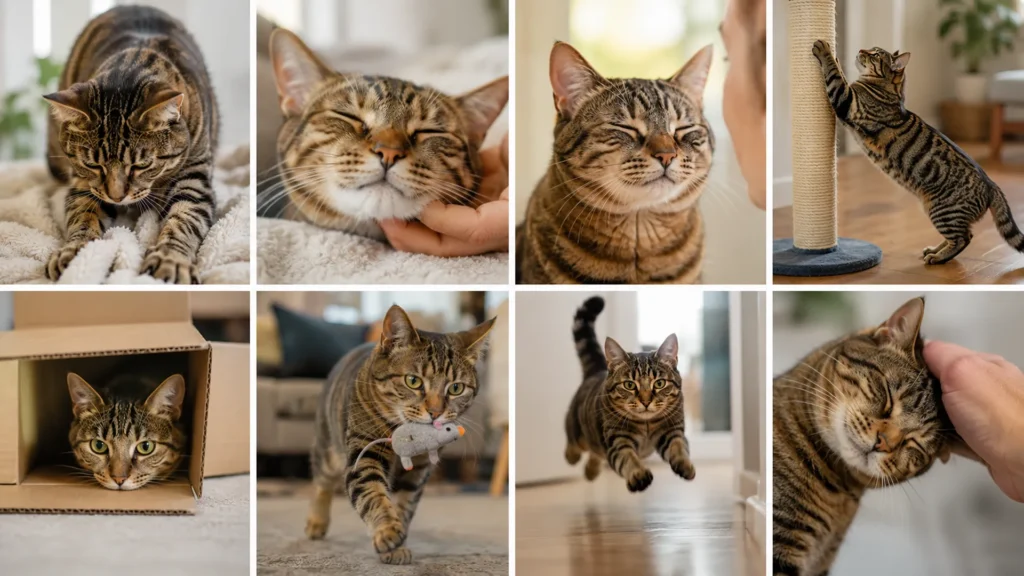
Cats communicate in subtle ways, and many of their everyday habits can seem confusing at first. While some behaviors are simply part of being a cat, others can provide clues about your pet’s emotional or physical well-being. Understanding these common cat behaviors can help you build a stronger bond and recognize when something may need attention.
Why Cats Knead
Kneading is the rhythmic motion of pushing their front paws in and out against a soft surface, such as a blanket, pillow, or even your lap.
What it means:
Cats often knead because it reminds them of kittenhood, when they kneaded their mother’s belly to stimulate milk flow. Adult cats usually knead when they feel relaxed, safe, and comfortable. They may also be marking their territory, as scent glands are located in their paw pads.
Is it normal?
Yes. Kneading is a completely normal and healthy behavior.
When it may indicate a problem:
If your cat suddenly becomes obsessed with kneading or appears anxious while doing it, discuss the change with your veterinarian, especially if other unusual behaviors are present.
Why Cats Purr
Purring is one of the best-known cat behaviors, but it doesn’t always mean a cat is happy.
What it means:
Cats commonly purr when they feel content, relaxed, or are enjoying attention. They may also purr to comfort themselves when they are frightened, stressed, injured, or recovering from illness.
Is it normal?
Yes. Purring is a natural form of communication and self-soothing.
When it may indicate a problem:
If your cat is purring while hiding, refusing food, limping, or showing signs of pain, the purring may be associated with discomfort rather than happiness. A veterinary examination is recommended.
Why Cats Head Butt You
A gentle bump of your cat’s forehead against you is called head bunting or head butting.
What it means:
This is a friendly greeting and a sign of trust. Cats have scent glands on their faces and use head butting to leave their scent on people and objects they consider part of their safe environment.
Is it normal?
Yes. It is one of the clearest signs that your cat feels comfortable with you.
When it may indicate a problem:
Frequent pressing of the head firmly against walls or furniture is different from gentle head bunting and may signal a neurological problem that requires immediate veterinary care.
Why Cats Slow Blink
Many cat owners notice their cat slowly opening and closing its eyes while looking at them.
What it means:
A slow blink is often called a “cat kiss.” It signals trust, relaxation, and a lack of fear. Cats usually reserve this behavior for people and animals they feel safe around.
Is it normal?
Yes. Slow blinking is a positive social behavior.
When it may indicate a problem:
If one eye remains closed, appears swollen, or produces discharge, the issue is likely related to an eye condition rather than normal communication.
Why Cats Follow Their Owners
Some cats seem to follow their owners from room to room throughout the day.
What it means:
Your cat may simply enjoy your company, be curious about your activities, or expect food, playtime, or attention. Certain breeds are naturally more people-oriented than others.
Is it normal?
Yes. Many cats form strong attachments to their owners.
When it may indicate a problem:
If your cat suddenly becomes unusually clingy along with changes in appetite, vocalization, or behavior, it could be a sign of stress, aging, or an underlying medical condition.
Why Cats Sleep in Boxes
Cats often choose cardboard boxes over expensive beds.
What it means:
Boxes provide warmth, security, and protection. Small enclosed spaces help cats feel hidden from potential threats while allowing them to observe their surroundings.
Is it normal?
Absolutely. This preference is common among both domestic and wild cats.
When it may indicate a problem:
If your cat constantly hides in boxes or other enclosed spaces while avoiding normal interaction, especially if this is new behavior, illness, fear, or pain may be contributing.
Why Cats Bring You “Gifts”
Some cats leave mice, birds, insects, or even toys near their owners.
What it means:
This behavior is linked to natural hunting instincts. Your cat may see you as part of its social group and be sharing its successful hunt or practicing hunting skills.
Is it normal?
Yes. Even indoor cats may present toy “prey” instead of real animals.
When it may indicate a problem:
The behavior itself is not usually a health concern, but if your outdoor cat frequently catches wildlife, discuss ways to reduce hunting to help protect local wildlife and lower your cat’s risk of injury or disease.
Why Cats Get the Zoomies
The “zoomies” are sudden bursts of running, jumping, and energetic play.
What it means:
Cats often experience these energetic moments after resting, using the litter box, or during their natural peak activity periods around dawn and dusk. It’s a healthy way to burn excess energy.
Is it normal?
Yes. Zoomies are especially common in kittens and young adult cats.
When it may indicate a problem:
If the episodes become extreme, involve signs of fear, aggression, or repeated frantic behavior, consult your veterinarian to rule out pain or medical issues.
Why Cats Scratch Furniture
Scratching is one of the most common cat behaviors that owners struggle with.
What it means:
Cats scratch to maintain healthy claws, stretch their muscles, and leave both visual and scent marks that define their territory.
Is it normal?
Yes. Scratching is a natural and necessary behavior.
When it may indicate a problem:
Excessive scratching caused by itchy skin, parasites, allergies, or skin irritation should be evaluated by a veterinarian. Providing sturdy scratching posts can also help redirect the behavior away from furniture.
Why Cats Hide
Cats naturally seek quiet places when they want privacy or feel overwhelmed.
What it means:
Hiding can occur when a cat is resting, adjusting to a new environment, or avoiding loud noises, unfamiliar people, or other stressful situations.
Is it normal?
Yes. Occasional hiding is a normal part of feline behavior.
When it may indicate a problem:
If your cat suddenly begins hiding for long periods, refuses food, avoids interaction, or shows other changes in behavior, it could be a sign of illness, pain, or significant stress. Persistent hiding should always be investigated by a veterinarian.
Signs Your Cat Is Happy, Stressed, or Scared
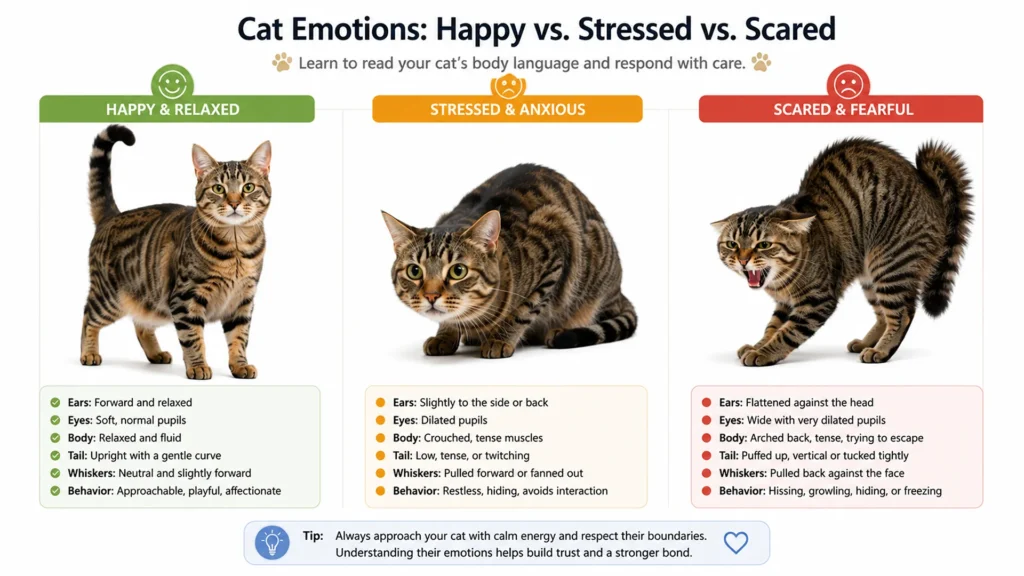
Understanding your cat’s body language becomes much easier when you know how different emotions look. Cats often communicate their feelings through posture, facial expressions, movement, and everyday habits. Paying attention to these signs can help you respond appropriately and notice health or behavior problems early.
Signs of a Happy Cat
A happy cat usually has a relaxed body with loose muscles, a gently raised tail, and a calm expression. They move confidently around the house and seem comfortable in their surroundings.
Purring is another common sign of contentment, especially when your cat is resting beside you or enjoying gentle petting. Keep in mind that cats may also purr when they are anxious or in pain, so it’s important to consider the overall situation.
A slow blink is often called a cat’s way of showing trust and affection. If your cat slowly closes and opens their eyes while looking at you, they’re likely feeling safe. Many happy cats are also playful, showing curiosity, chasing toys, and interacting with people or other pets.
Signs of Stress
Stress can appear in many ways, and some signs are easy to overlook.
Common signs include:
- Hiding more than usual
- Excessive grooming that leads to thinning fur or bald patches
- Changes in appetite, such as eating much less or much more
- Increased aggression, including hissing, swatting, or biting
Stress may be triggered by changes in the home, unfamiliar people or pets, loud noises, or illness.
Signs of Fear
A frightened cat often tries to make itself look larger or prepare for escape. Watch for:
- Flattened ears pressed against the head
- An arched back with raised fur
- Dilated pupils
- A crouched or defensive posture, sometimes accompanied by hissing or growling
If you notice these signs, give your cat space and avoid forcing interaction.
When Behavior Changes Require a Vet Visit
Occasional changes in behavior can happen, but sudden or persistent changes should not be ignored. Contact your veterinarian if your cat’s unusual behavior lasts for more than a day or two, is severe, or is accompanied by symptoms such as vomiting, diarrhea, weight loss, difficulty walking, trouble using the litter box, or signs of pain. Medical conditions can sometimes cause behavior changes, so a veterinary examination can help identify and treat the underlying problem.
How Age Affects Cat Behavior
A cat’s behavior naturally changes as it grows from a playful kitten into an adult and eventually a senior. Understanding these age-related differences helps you respond to your cat’s needs and build a stronger relationship.
Kitten Behavior
Kittens are full of energy and curiosity. They spend much of their day exploring, climbing, chasing moving objects, and learning about their surroundings through play. This stage is also when they develop important social and hunting skills. Gentle handling, interactive toys, and positive experiences with people help kittens grow into confident adult cats.
Adult Cat Behavior
Adult cats are usually more predictable than kittens. While they still enjoy play, their energy levels are generally lower, and they often settle into daily routines. Most adult cats become more confident in their environment and continue learning through positive reinforcement. Their social behavior varies by personality—some enjoy frequent interaction, while others prefer shorter periods of attention followed by quiet time.
Senior Cat Behavior
As cats age, they often become less active and may sleep for longer periods. Jumping, climbing, and long play sessions may become less appealing, especially if they develop age-related stiffness. Some senior cats become more affectionate and seek extra comfort, while others prefer more personal space. You may also notice changes in grooming habits, activity levels, or reactions to household changes. Sudden or dramatic behavior changes should be discussed with a veterinarian, as they can sometimes indicate an underlying health problem.
How to Encourage Positive Behavior
Encouraging good behavior is easier when you understand what motivates your cat. Patience, consistency, and rewarding desired actions are much more effective than punishment.
Positive Reinforcement
Reward your cat immediately when it shows a behavior you want to encourage. Small treats, praise, petting, or a favorite toy can reinforce actions such as using the scratching post, coming when called, or staying calm during grooming. Avoid yelling or physical punishment, as these methods can increase fear and damage trust.
Daily Play Sessions
Regular play helps satisfy your cat’s natural hunting instincts and prevents boredom. Aim for two or more short interactive play sessions each day using wand toys, balls, or puzzle toys. This is especially important for indoor cats, who have fewer opportunities to stay physically and mentally active.
Environmental Enrichment
A stimulating environment supports healthy behavior. Give your cat opportunities to climb, scratch, hide, and observe the outdoors. Consider adding:
- Cat trees or shelves for climbing
- Scratching posts in different areas
- Puzzle feeders or treat-dispensing toys
- Cozy hiding spots and resting areas
- Window perches for bird or outdoor watching
Creating a Predictable Routine
Cats feel more secure when they know what to expect. Feed meals, schedule playtime, and clean the litter box at consistent times each day. A predictable routine can reduce stress and make it easier for your cat to adapt to daily life.
Respecting Your Cat’s Boundaries
Every cat has its own comfort level with handling and social interaction. Let your cat choose when to approach, and watch for signs that it wants a break, such as a twitching tail, flattened ears, or walking away. For first-time owners, allowing a cat to interact at its own pace is one of the best ways to build trust and encourage positive behavior over time.
Common Cat Behavior Myths
Many common beliefs about cats are based on misunderstandings. Learning the truth can help you better understand your cat’s behavior and build a stronger relationship.
- Cats are always aloof: While some cats are more independent than others, many enjoy spending time with their people. Some follow their owners around, greet them at the door, or seek out cuddles and attention.
- Purring always means happiness: Purring often shows that a cat is relaxed, but it can also happen when a cat is stressed, frightened, injured, or trying to comfort itself. It’s important to look at the cat’s overall body language.
- Cats can’t be trained: Cats are capable of learning through positive reinforcement. Many can be taught to come when called, use a scratching post, perform simple tricks, or walk with a harness.
- Scratching is revenge: Cats do not scratch furniture out of spite. Scratching is a natural behavior that helps maintain their claws, stretch their muscles, and mark their territory.
- Cats don’t love their owners: Cats may show affection differently than dogs, but many form strong emotional bonds. Slow blinking, head bunting, purring, and choosing to stay close are all common signs of trust and affection.
Frequently Asked Questions About Cat Behavior & Personality
Why is my cat suddenly acting differently?
A sudden change in behavior can happen for many reasons, including stress, changes in the home, a new pet, a different routine, or an underlying health problem. If the behavior change is severe, lasts more than a few days, or comes with symptoms like hiding, loss of appetite, or unusual aggression, contact your veterinarian.
Can a cat’s personality change with age?
Yes. Kittens are usually playful and energetic, while adult cats often become calmer. Senior cats may sleep more, become less active, or seek extra comfort. Positive experiences, health, and environment can also influence personality over time.
Why does my cat follow me everywhere?
Many cats follow their favorite person because they enjoy companionship, feel safe, or expect food, play, or attention. Some breeds are naturally more people-oriented than others.
Are some cat breeds friendlier than others?
Certain breeds are known for being more social, but every cat is an individual. Early socialization, daily interaction, and a positive environment have a major impact on a cat’s personality.
How can I tell if my cat trusts me?
Common signs of trust include slow blinking, purring, rubbing against you, exposing their belly (without always wanting a belly rub), grooming near you, and choosing to sleep close by.
Is aggressive behavior always a problem?
Not necessarily. Cats may act aggressively out of fear, pain, overstimulation, or territorial instincts. However, frequent or unexplained aggression should be evaluated by a veterinarian or a qualified cat behavior professional.
Why does my cat stare at me?
Your cat may be watching you out of curiosity, waiting for food, seeking attention, or simply observing your movements. A relaxed stare with slow blinking is usually a positive sign.
Can indoor cats become bored?
Yes. Without enough mental and physical stimulation, indoor cats can become bored, which may lead to excessive sleeping, overeating, scratching furniture, or attention-seeking behaviors. Interactive toys, climbing spaces, scratching posts, puzzle feeders, and regular play sessions help keep indoor cats happy and mentally engaged.
Final Thoughts
Every cat communicates in its own unique way. While body language and common behaviors can offer useful clues, your cat’s personality, past experiences, and environment all play a role in how it expresses itself. The more time you spend observing your cat, the easier it becomes to understand what different actions and signals mean.
Pay attention to behavior patterns over time instead of judging a single moment. This helps you respond to your cat’s needs with greater confidence and build a stronger, more trusting relationship.
If you’d like to learn even more, explore our related cat behavior guides to better understand your feline companion and support a happy, healthy life together.