
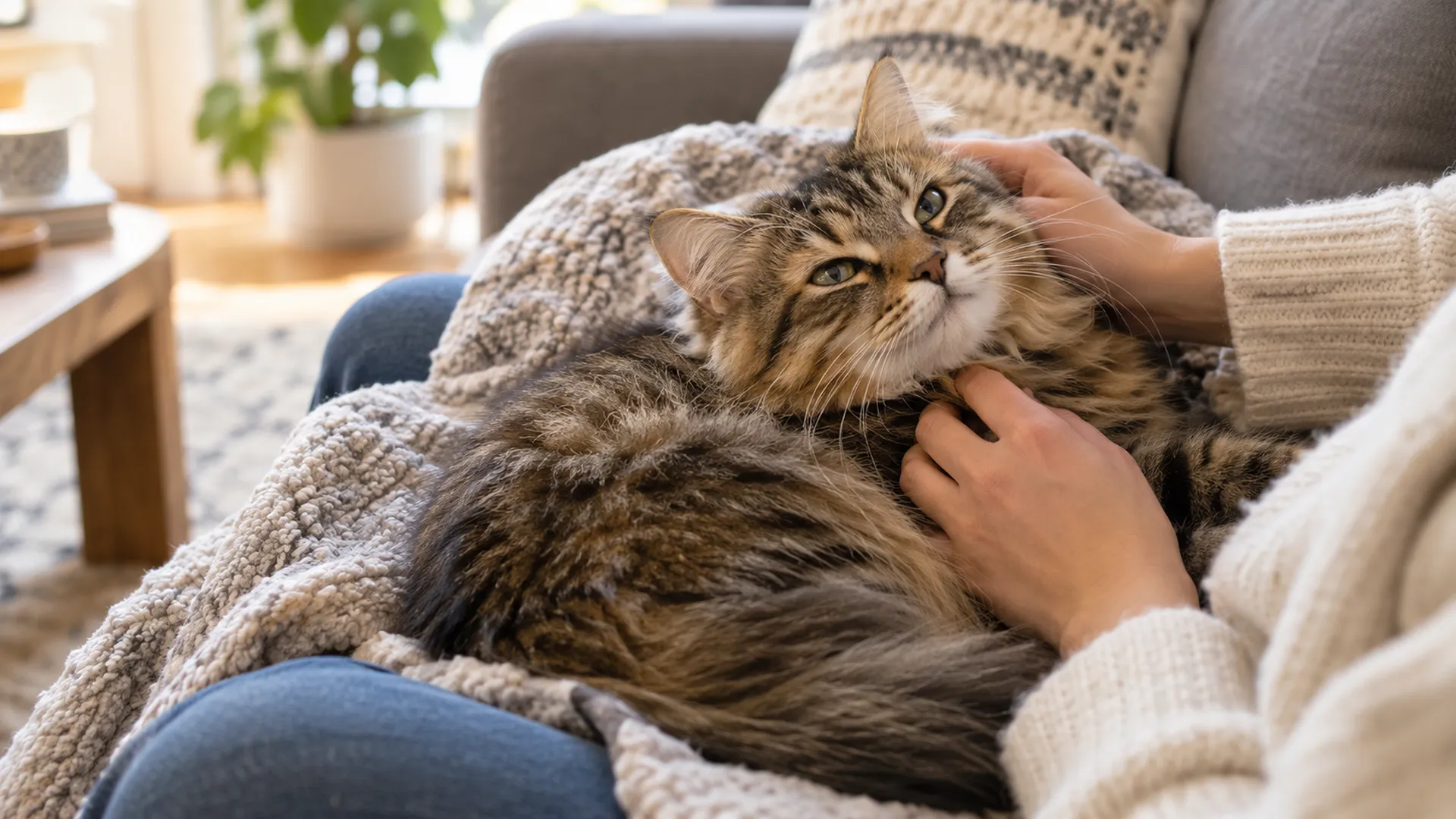
Why is my cat so clingy? Usually it’s one of five things: their personality, stress, a habit you taught them by accident, their age, or a health problem. If it started suddenly, or their eating, drinking, litter box habits, or hiding changed at the same time, call your vet. If they’re eating, playing, and acting relaxed otherwise, it’s most likely bonding, or a reaction to something that changed at home.
You sit down and your cat’s in your lap before you’ve even found the remote. You head to the bathroom and there’s crying outside the door. It’s sweet, right up until you start wondering whether it’s normal.
Below you’ll find five types of clingy cat, the red flags that mean a vet visit, and what you can actually do about it. Seen a sudden change or other symptoms? Skip straight to the triage table.
Why Is My Cat So Clingy? Is It Normal?
The three-question baseline test
Run through these before you worry:
- Is this new? A cat who’s always followed you around is a different story from an aloof cat who suddenly won’t leave you alone.
- Is it getting in the way of your day, or theirs? Nonstop crying, broken sleep, a cat who can’t do anything without you.
- Can they relax when you’re not touching them? A calm cat naps nearby. A tense one paces or cries.
If it’s no, no, and yes, you’re most likely looking at plain affection.
What healthy attachment looks like
Following you from room to room, sitting in your lap, headbutting: all normal social behavior. A slow blink from across the room counts too. For plenty of cats, being near their person is just how they show trust.
Which Type of Clingy Is Your Cat?
If you keep asking yourself why is my cat so clingy, these questions will point you to one of five types:
- Came on suddenly, with changes in eating, weight, or energy? Health-signal.
- Something changed at home lately? Stress-seeker.
- Worst at mealtimes or when you’re busy? Attention-trained.
- Kitten, newly adopted, or senior? Life-stage.
- Been like this forever? Velcro.
The velcro personality
Some cats just love people. Siamese, Maine Coon, and Ragdoll cats often get described as very attached to their humans, though plenty of mixed-breed cats are velcro cats too. It’s simply their nature. They shadow you all day, and they still eat, play, and rest like normal.
The stress-seeker
Cats like routine, and they pick up on more than we give them credit for. A move, a new baby or pet, rearranged furniture, a new work schedule, loud noises: any of these can leave a cat unsure, and sticking close to you is how they cope. Check the timing. Did the clinginess begin around the change? If your cat seems on edge in general, read our guide to cat anxiety.
The attention-trained cat
Cats figure out fast what gets results. Meow, and you get up to feed them. Nudge your hand, and you get a pet. Of course they keep doing it. This type tends to peak at mealtimes or when you’re busy, then settles once they get what they wanted. Take a look at your cat feeding schedule too.
The life-stage cat
Kittens stay close to their caregivers while they learn how the world works. Newly adopted cats often shadow you while they settle in. Seniors may want more comfort as their senses or joints change. None of that is unusual, but with an older cat I’d rule out a health problem first.
The health-signal cat
Sometimes clinginess is a cat’s way of saying they feel off. Pain, thyroid problems, kidney disease, diabetes, dental trouble, and vision or hearing loss can all make a cat needier. The giveaway is other changes alongside it: eating, drinking, weight, litter box habits, or hiding. If that sounds like your cat, jump to the triage guide below.
Should You Worry? Triage Guide for a Suddenly Clingy Cat
The clinginess alone doesn’t tell you much. What’s going on around it does. If you’ve just searched why is my cat so clingy all of a sudden, use this table to see how fast you need to act.
| Urgency | What you’re seeing | What to do |
|---|---|---|
| Same day | Straining or crying in the litter box, or no urine (especially in male cats); labored or open-mouth breathing; collapse, seizures, or sudden disorientation; no food for 24 hours or more; repeated vomiting; swelling, discharge, or lethargy after surgery | Call your vet or an emergency clinic now |
| This week | More thirst or urination; weight loss despite a normal or big appetite; stiffness or reluctance to jump; bumping into things; bad breath, drooling, or dropping food; night yowling or confusion in a senior; new litter box accidents | Book a vet visit within the week |
| Monitor for 1-2 weeks | Normal appetite, energy, litter box, and grooming, plus a clear trigger (a move, a new pet, a schedule change), and the clinginess is easing | Keep routines steady and track it in the diary |
If it goes past about two weeks or gets worse, don’t wait it out. The table is general guidance, not a diagnosis. Cats are good at hiding illness, so if you’re not sure, call. I’d rather you make a wasted phone call than miss a real problem.
Comfort or Boundaries? How to Respond
How to tell distress from demand
When you ask why is my cat so clingy, the useful follow-up is whether it’s demand or distress, because the fix is different for each.
- Demand: shows up at predictable times, like meals or when you’re busy. It stops once your cat gets what they want, and their body looks loose and relaxed. Left alone, they eat and play fine.
- Distress: your cat can’t settle even with you right there, cries or paces when you leave, eats little or has accidents when alone, or over-grooms. Our guides on cat separation anxiety and excessive grooming go deeper.
A 2-4 week plan for an anxious cat
Weeks 1-2: build safety. Keep meals, play, and your daily routine as predictable as you can. Give your cat safe hiding spots and high places to perch. And don’t punish a clingy cat. Ever. It only piles more stress on.
Weeks 3-4: practice short, calm absences. Leave for a few minutes, keep goodbyes and hellos low-key, and leave a puzzle feeder behind. Stretch the time out slowly.
If nothing improves after a few weeks, talk to your vet or a behaviorist. You’ll find perches and feeders in our cat gear guides.
A 2-4 week plan for an attention-trained cat
Week 1: figure out what’s getting rewarded. Food, a lap, your attention, whichever it is, write it down. Then schedule two short play sessions a day and feed at set times, so your cat doesn’t have to ask.
Weeks 2-4: reward calm. Give attention and treats when your cat settles on a perch or bed, and steer demands toward a toy. Add boundaries gradually, like closing a door for a few minutes, and only lengthen it as your cat stays comfortable.
Skip this plan if your cat is showing distress signs. They need reassurance, not boundaries.
Clingy in Specific Moments: Quick Answers
Why does my cat follow me to the bathroom?
Cats love routine, and the bathroom is a quiet, predictable spot where you stay put for a while. Some are also curious about the water. Usually harmless. It’s only a concern if your cat panics when the door closes.
Why does my cat want petting while eating?
Some cats just like company at mealtimes, sometimes called affection eating. If it’s new, though, they may be having trouble finding their food or hearing you, so get it checked.
Why is my cat clingy at night?
Cats tend to be most active at dusk and dawn, and a bored or hungry cat will come to you for entertainment. Try play before bed and a small late meal. In seniors, new night yowling can signal confusion, so mention it to your vet.
Why is my cat clingy after I return from travel?
They missed you, and your absence may have been stressful for them. A few days of extra following and meowing is common and usually fades. Keep routines steady and give them calm, focused time.
Why is my cat clingy after being spayed?
They may be sore and want comfort. Call your vet if it continues, if your cat seems to be in pain, or if the incision looks red, swollen, or is leaking.
Why is my cat clingy during thunderstorms or fireworks?
Loud noises frighten cats, and you’re their safe place. Give them a quiet hideaway, close the curtains, and play some soft background sound to muffle the noise.
Why is my cat clingy since my schedule changed?
Working from home more, or heading back to an office, changes your cat’s whole day. Keep meal and play times steady, since those are the anchors they can count on, and build up any new alone time slowly.
Clingy Cat Myths vs. Facts
- Myth: Male or female cats are clingier. Fact: There’s no consistent difference, except that intact females can get clingier during a heat cycle.
- Myth: Cats aren’t attached to people the way dogs are. Fact: Research on cat-owner attachment suggests many cats form secure bonds with their people.
- Myth: Clingy always means unhealthy. Fact: Plenty of cases are just personality or bonding, which is why the triage table matters.
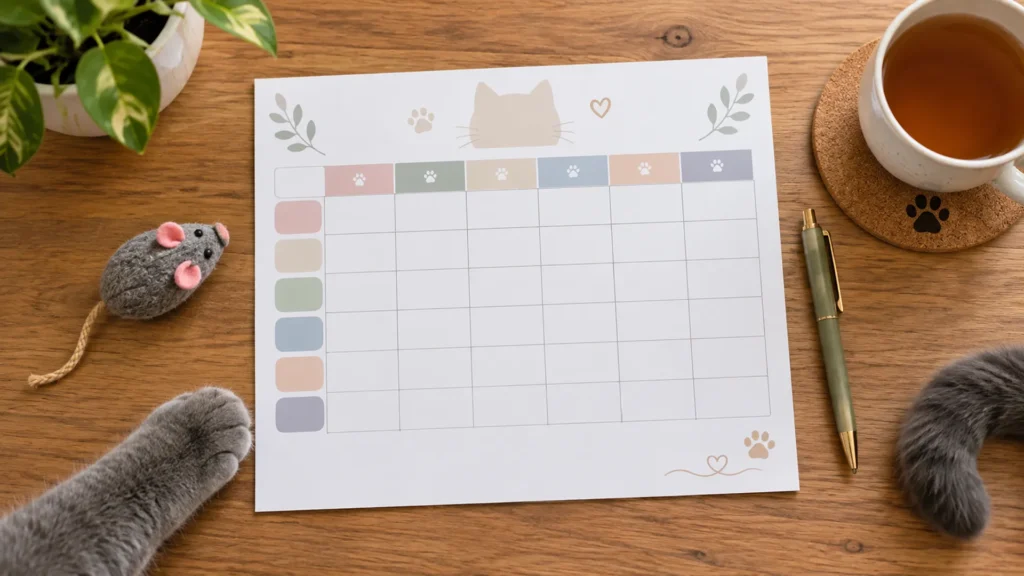
Free Printable: 7-Day Clingy Cat Trigger Diary
The diary is the quickest way to get a real answer to why is my cat so clingy for your cat, not cats in general. [Download the free 7-day diary here.] Each day, jot down:
- Date and time
- What was happening
- What your cat did
- How long it lasted
- Appetite and litter box habits
- Any change at home
After a week, look for patterns. A spike after you leave, around meals, or after a noisy day usually points to one of the five types above. If you only do one thing from this article, do this. Then take the diary to your vet, because it gives them something concrete instead of a vague description.
FAQs
Will a second cat help a clingy cat?
Sometimes, especially for a social, bored cat. It won’t fix anxiety, though, and it can add stress for a cat who’s already unsettled. Introductions need to go slowly, so talk to your vet first if your cat seems anxious.
Will my kitten grow out of being clingy?
Often, yes. Many settle as they mature. See our kitten growth stages guide for what to expect.
Can a cat be too attached?
Yes, when distress is driving it instead of affection. If your cat can’t cope when you’re gone, revisit the distress vs. demand section above.
Conclusion
So, why is my cat so clingy? Three steps get you to the answer: find their type, check for red flags, and respond to what’s driving it. Start with a week in the trigger diary. It takes the guesswork out, and your vet will appreciate it if you end up needing one. Most clingy cats aren’t broken. They’re bonded, curious, or asking for a little reassurance. Watch for the warning signs and you’ll know what to do.