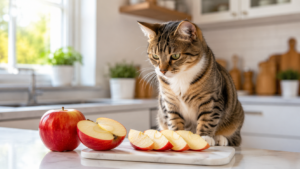
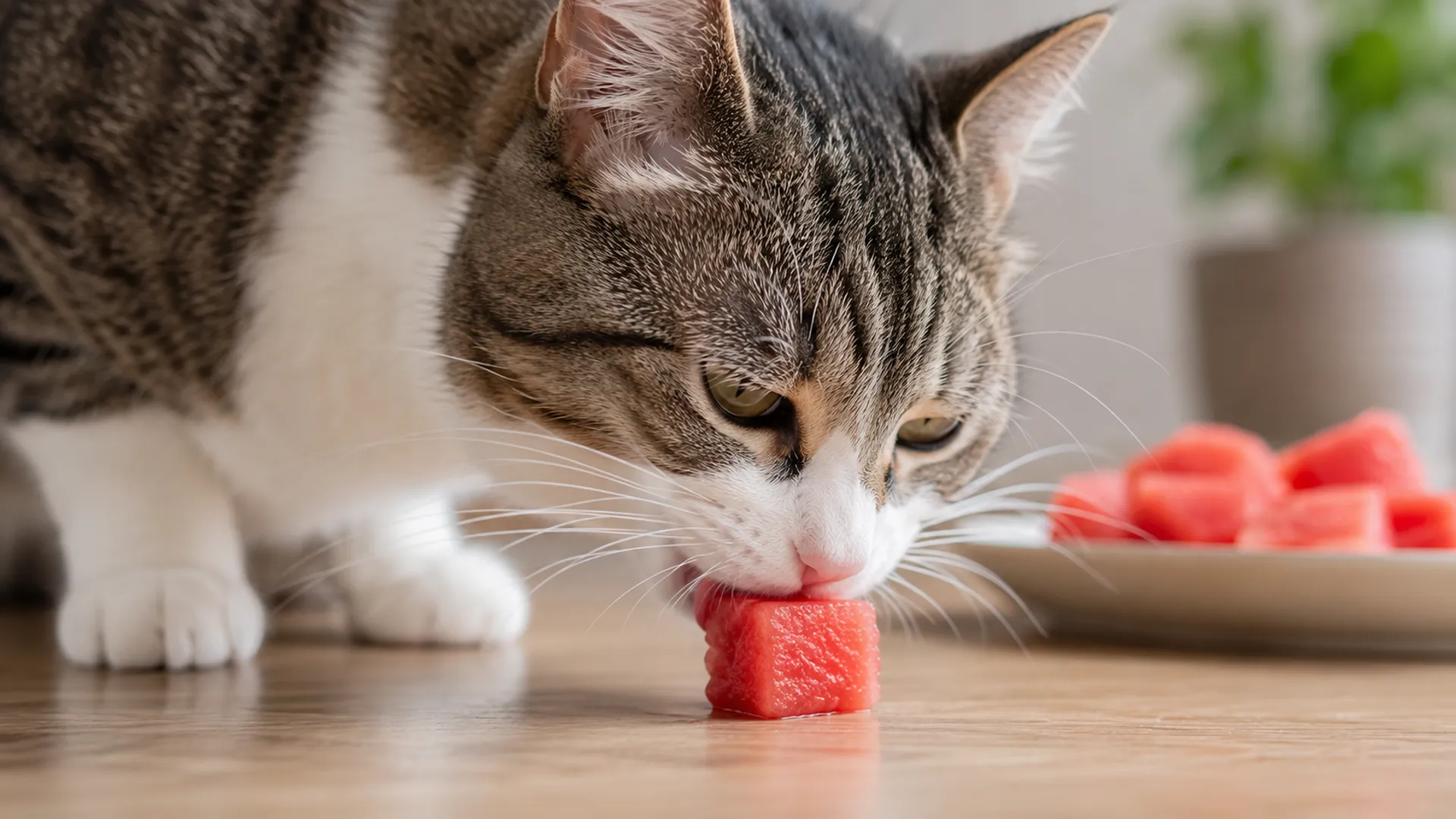
Yes, cats can eat watermelon — but only the flesh, and only in small amounts. It’s not toxic, but it’s also not something your cat’s body actually needs. The tricky part isn’t whether watermelon is safe. It’s knowing how much to give, and that depends entirely on your cat’s weight. Skip ahead to the portion guide below if that’s what you’re after.
Quick Answer: Is Watermelon Safe for Cats?
Watermelon is safe for cats to eat, as long as it’s just the flesh, given in moderation, with the seeds and rind removed. It’s not a health necessity for them — cats are obligate carnivores, meaning their bodies are built to run on meat, not fruit. That’s also why most cats don’t go wild for watermelon the way dogs sometimes do. Their taste buds simply aren’t wired to crave sweetness, which we’ll get into later. For now, the short version: a few small cubes of watermelon flesh, once in a while, is perfectly fine for a healthy adult cat.
How Much Watermelon Can a Cat Eat? (Portion Guide by Weight)
Vets generally follow what’s called the 10% rule for treats: any treat, including fruit, shouldn’t make up more than 10% of your cat’s total daily calorie intake. The other 90% should come from a complete, balanced cat food that actually meets their nutritional needs. Watermelon is mostly water and natural sugar, so it adds up fast for an animal as small as a cat — even a few extra cubes can tip the balance if you’re not paying attention.
Here’s a general breakdown by weight to help you keep portions sensible.
Portion Chart by Cat Weight
- Under 8 lbs (small cat): 1–2 small cubes (about ½ inch each), given occasionally. Small cats have less daily calorie “room,” so even a small amount of watermelon can use up a good chunk of their treat allowance.
- 8–12 lbs (average adult cat): 2–3 small cubes. This is roughly the size and weight range most house cats fall into, so this amount works as a reasonable default for many owners.
- 12+ lbs (larger cat): Up to 3–4 small cubes. Even so, “larger” doesn’t mean unlimited — if your cat is on the heavier side because of weight gain rather than frame size, treat portions should stay conservative regardless.
As for frequency, watermelon shouldn’t be a daily habit. An occasional treat — a couple of times a week at most — is plenty. There’s no nutritional reason for a cat to eat it more often than that.
What Parts of Watermelon Are Safe (and What Aren’t)?
Not every part of a watermelon is fair game. Here’s how it breaks down.
Flesh — safe, the only part to serve
The red (or yellow) juicy flesh is the only part you should actually feed your cat. Cut it into small, bite-sized cubes with no seeds or rind attached, so there’s nothing your cat has to work around or accidentally swallow whole.
Seeds — why they’re unsafe
Watermelon seeds are a choking hazard, especially for smaller cats, and they’re hard to digest in any quantity. Seeds also contain trace amounts of a compound called amygdalin, which can break down into cyanide — the amount in a few seeds isn’t likely to cause real harm, but there’s no reason to take the risk. Black, mature seeds are the bigger concern since they’re harder and more likely to cause choking or a digestive blockage; the small white seeds found in seedless watermelon are immature and softer, but it’s still safest to remove them before serving.
Rind — digestive and blockage risk
The green rind is tough and fibrous, which makes it much harder for a cat to digest than the flesh. Eating rind can lead to an upset stomach, vomiting, or in more serious cases, an intestinal blockage — especially in smaller cats. It’s best kept off the menu entirely.
[Suggested visual: a simple labeled diagram of a watermelon slice showing the flesh in green (“safe, feed this”), seeds in yellow (“remove first”), and rind in red (“do not feed”) — helps readers scan the safe/unsafe parts at a glance.]
Is Watermelon Actually Good for Cats?
Watermelon does offer some nutritional extras — it’s around 90% water, so it can offer a small hydration boost, and it contains vitamin C and potassium. But it’s worth being honest here: none of this is something a cat actually needs from their diet. Cats get their hydration primarily from their food (especially wet food) and water intake, and their nutritional requirements are built around animal protein, not fruit. Watermelon is a nice-to-have snack at best, not a health food for cats.
Why Most Cats Aren’t Even That Interested
Here’s something that surprises a lot of owners: cats lack the taste receptors for sweetness. Unlike dogs or humans, they genetically can’t taste sugar the way we do. So when a cat shows interest in watermelon, it’s usually not about the sweet taste — it’s about the texture, the coolness, or just curiosity about what you’re eating. Some cats enjoy batting around or licking a cube out of pure novelty. Don’t be surprised if your cat sniffs it once and walks away; that’s a completely normal reaction, not a sign anything’s wrong.
Can Kittens Eat Watermelon?
Kittens are a different story, and it’s worth treating this as its own question rather than a footnote. Kittens have a much smaller margin for error digestively — their systems are still developing, and they’re far more sensitive to anything outside their regular diet. They also have significantly higher caloric and nutritional needs relative to their size, and those needs should be met almost entirely through a proper kitten food formulated for growth, not treats. On top of that, kittens tend to be more sensitive to sugar intake than adult cats.
As a general guideline, it’s best to hold off on watermelon (and most treats) until a kitten reaches adulthood, typically around 12 months old. If you’re unsure when it’s appropriate to introduce treats like this, it’s worth checking in with your vet at a routine visit.
Which Cats Should Avoid Watermelon Entirely?
Some cats shouldn’t have watermelon at all, even in small amounts. These include:
- Diabetic cats — watermelon’s natural sugar content can affect blood sugar regulation.
- Overweight cats — the extra calories and sugar aren’t worth it when weight management is already a concern.
- Cats with known food or fruit sensitivities — any cat that’s reacted poorly to fruit before should skip it going forward.
If your cat falls into any of these groups, it’s best to check with your vet before offering watermelon or any new treat.
Can Cats Have Frozen Watermelon?

Yes, frozen watermelon can be a fun warm-weather treat for cats — as long as it’s prepared the right way. To freeze it safely, cut seedless watermelon into small, bite-sized cubes (removing the rind first), then pop them in the freezer on a tray for a couple of hours. You can also blend the flesh into a puree and freeze it in an ice cube tray for smaller, easier-to-manage portions.
Frozen watermelon isn’t just a novelty — it can actually be a smart choice during hot weather. The cold temperature makes cats eat more slowly, which is easier on digestion, and the coolness itself can be refreshing on a warm day. That said, the same rules still apply: keep portions small, and don’t let frozen treats replace a balanced diet.
Watermelon vs. Other Fruits: Quick Comparison Table

Wondering how watermelon stacks up against other fruits you might have in your kitchen? Here’s a quick side-by-side look:
| Fruit | Safe for Cats? | Notes |
|---|---|---|
| Watermelon | Yes, in moderation | Remove seeds and rind; high water content |
| Cantaloupe | Yes, in moderation | Similar to watermelon; remove rind and seeds |
| Strawberries | Yes, in moderation | Remove leaves/stems; naturally higher in sugar |
| Blueberries | Yes, small amounts | Low sugar, easy to portion, antioxidant-rich |
| Banana | Yes, small amounts | Higher in sugar and starch than melons |
| Mango | Yes, in moderation | Remove skin and pit; higher sugar content |
As you can see, most fruits follow the same general rule: they’re fine as occasional treats, not staples. If you’re curious about how other fruits affect your cat specifically, it’s worth checking fruit-by-fruit safety guides before offering anything new.
Store-Bought Watermelon Treats and Rind Chews: What to Check
If you’re buying commercial “cat-safe” watermelon treats or rind chews, don’t assume the label tells the whole story. Always check the ingredient list first. Look out for:
- Added sugars or syrups, which cats don’t need and can’t process well
- Artificial preservatives or flavorings
- Any mystery “fruit blend” ingredients that aren’t clearly watermelon
The shorter and more recognizable the ingredient list, the better. When in doubt, homemade fresh or frozen watermelon (seedless, rind removed) is usually a safer bet than a packaged product.
Signs of a Bad Reaction — When to Call the Vet
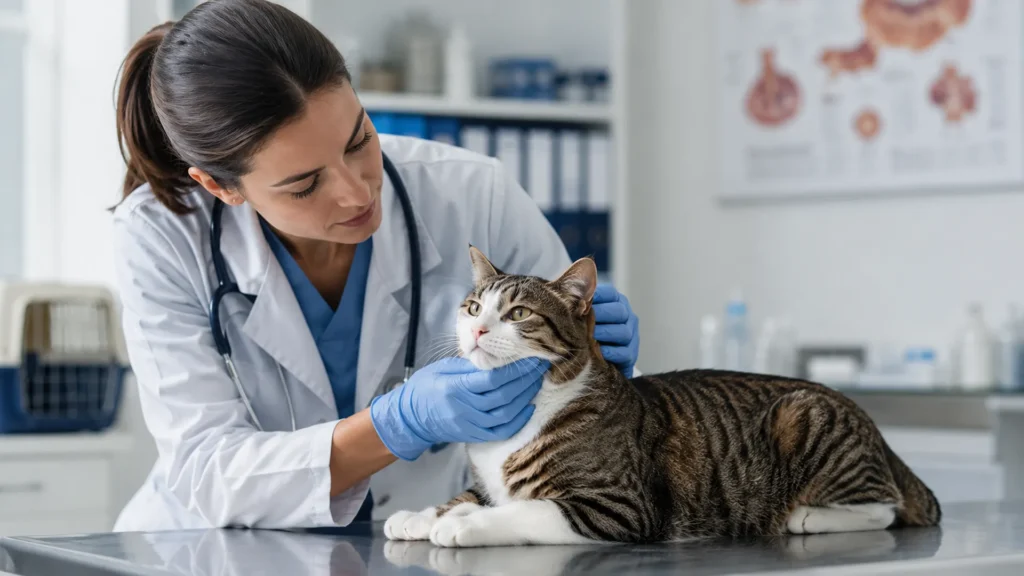
Most cats handle a small taste of watermelon just fine, but it’s worth knowing what a bad reaction looks like. Watch for:
- Vomiting or diarrhea
- Lethargy or unusual tiredness
- Allergic signs like itching, swelling, or hives
If you notice any of these after feeding watermelon, stop giving it right away and monitor your cat closely. Mild, short-lived digestive upset (like one loose stool) can often just be watched at home. But if symptoms are severe, don’t go away within a few hours, or include swelling or trouble breathing, call your vet or an emergency clinic right away — don’t wait it out.
Should You Feed Your Cat Watermelon? Quick Decision Checklist
Still not sure if watermelon’s a good fit for your cat? Run through this quick checklist:
- Is your cat diabetic? Skip it — watermelon’s natural sugars can be risky.
- Is your cat overweight? Keep portions very small, or skip it.
- Is your cat under 1 year old? Introduce slowly, in tiny amounts.
- Is this the first time trying it? Start with a small piece and watch for a day.
If you answered “no” to concerns above, a few small, seedless, rind-free pieces are generally safe to offer as an occasional treat.
FAQs
Can cats eat watermelon rind?
No, it’s best avoided. The rind is tough to digest and can be a choking hazard or cause digestive blockage.
Can cats drink watermelon juice?
It’s not recommended. Juice concentrates the sugar without the fiber, and it’s easy to overdo the portion size.
How often can I give my cat watermelon?
As an occasional treat only — a few small pieces once in a while, not a regular part of their diet.
Can diabetic cats have watermelon?
It’s best to avoid it or check with your vet first. Watermelon’s natural sugar content can affect blood sugar levels in diabetic cats.