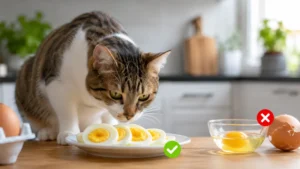
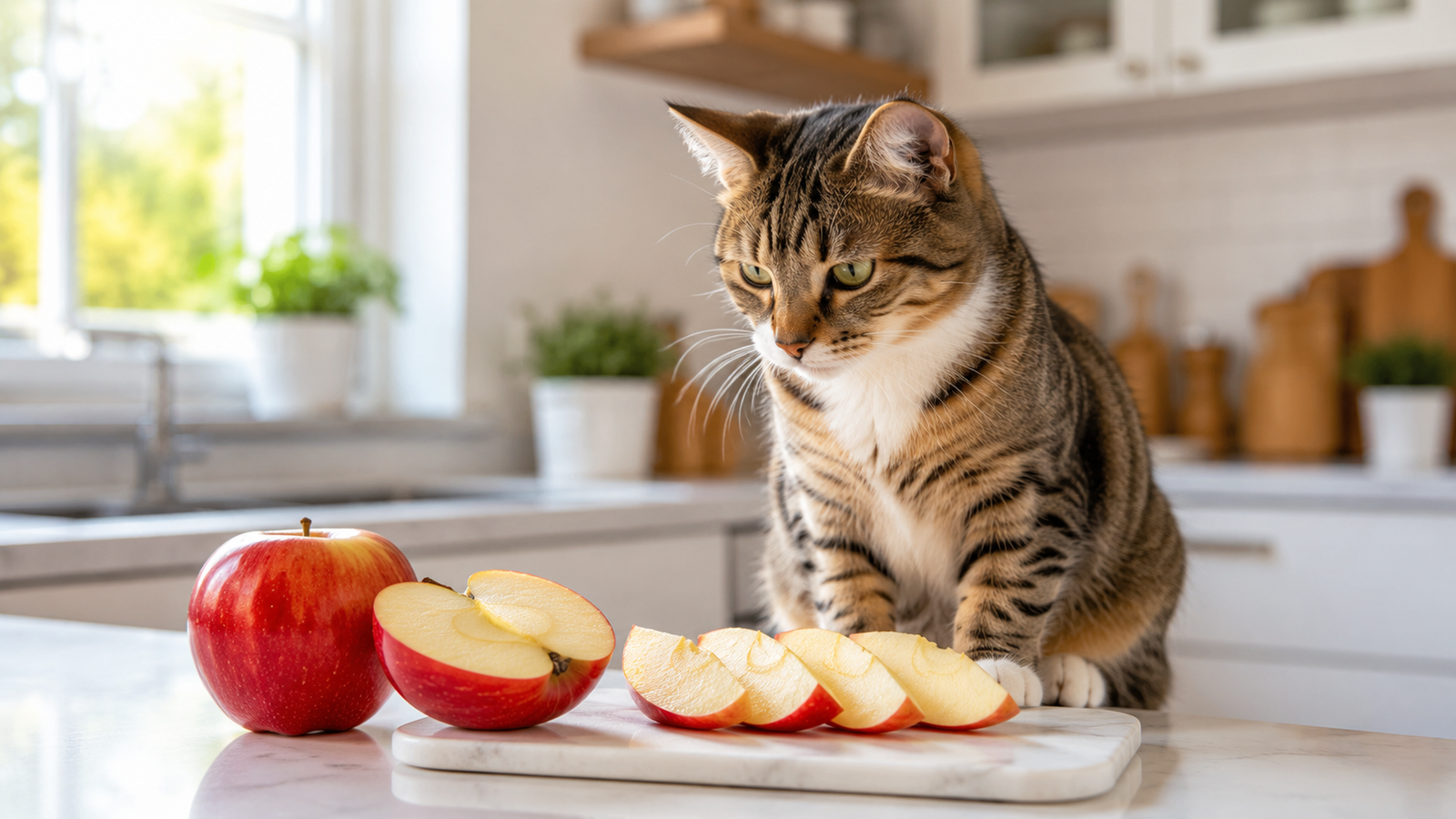
Yes, cats can eat apples, but preparation matters. Plain apple flesh poses no danger in small amounts, while the seeds, core, stem, and leaves can genuinely harm your cat. Because cats are obligate carnivores that rely on meat to survive, apples should never be more than an occasional novelty.
Is It Actually Safe?
Plain apple flesh is non-toxic to cats, so a curious nibble from a clean, skinless slice is nothing to worry about. That said, it belongs in the “occasional treat” category, not the food bowl rotation. A cat’s digestive system is built to break down animal protein, not plant fiber, and there’s no nutritional requirement for fruit in their diet. Feeding it too often can throw off digestion rather than support it.
What’s Actually in an Apple — and Why It Doesn’t Matter Much to Cats
Apples are loaded with fiber, water, vitamin C, potassium, and antioxidants — nutrients that make them a health staple for humans. Cats, however, produce their own vitamin C and get everything else they need from meat, so most of what makes an apple nutritious to us is largely irrelevant to them.
That doesn’t mean a small piece is pointless. A cube of apple has fewer calories than most commercial treats, which makes it a reasonable option for a cat on a diet. The water content adds a trace of hydration, the fiber can occasionally ease digestion, and the novel texture gives an inquisitive cat something new to investigate. None of these are meaningful health benefits — they’re just harmless upsides, provided portions stay tiny.
The Real Risks
Sugar. Apples contain fructose. Cats can’t taste sweetness and aren’t equipped to process much sugar, so regular sugary snacks — even “healthy” ones — can contribute to weight gain and, over time, diabetes.
Digestive upset. A carnivore’s gut isn’t primed for fibrous plant matter. Too much apple can bring on vomiting, diarrhea, or general lethargy.
Choking. Cats don’t chew the way humans do, so larger or firmer chunks of apple can lodge in the throat or digestive tract.
Nutritional displacement. Apples contribute nothing toward a cat’s protein needs. Treating them as a food substitute rather than an occasional extra can leave gaps in a cat’s diet.
The Parts You Must Never Feed
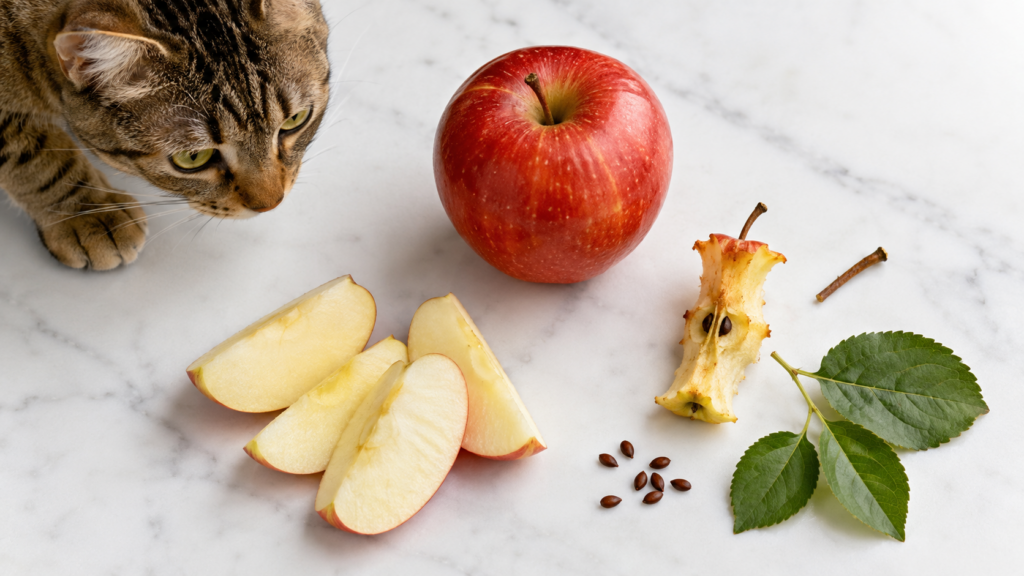
The seeds, core, stem, and leaves deserve their own warning, separate from the risks above, because they’re outright dangerous rather than merely something to limit.
Apple seeds contain cyanogenic glycosides, compounds that release cyanide when chewed or digested. One seed likely won’t harm an adult cat, but cyanide exposure accumulates over time, so seeds should never be treated as incidental. The core is a solid choking hazard, and the woody stem and leaves can irritate or even obstruct the digestive tract. All of it should be removed and discarded before offering any apple to your cat.
| Apple Part | Safety Status | Action Required |
|---|---|---|
| Plain flesh | Safe | Cut into tiny, bite-sized pieces |
| Skin | Use caution | Peeling is optional; wash thoroughly if left on |
| Core | Dangerous | Discard entirely — choking hazard |
| Seeds | Toxic | Discard entirely — contains cyanide compounds |
| Stem & leaves | Dangerous | Discard entirely — digestive hazard |
How to Prepare Apple for Your Cat
- Wash the apple thoroughly to remove pesticide residue, dirt, or wax.
- Cut away the stem, core, and seeds, keeping only the clean flesh.
- Peel the apple if you want to make it easier to chew and digest (optional, not required).
- Slice the flesh into pieces roughly the size of a kibble piece.
- Offer a single small piece the first time.
- Watch your cat over the next 24 hours for any digestive changes.
How Much Is Too Much?
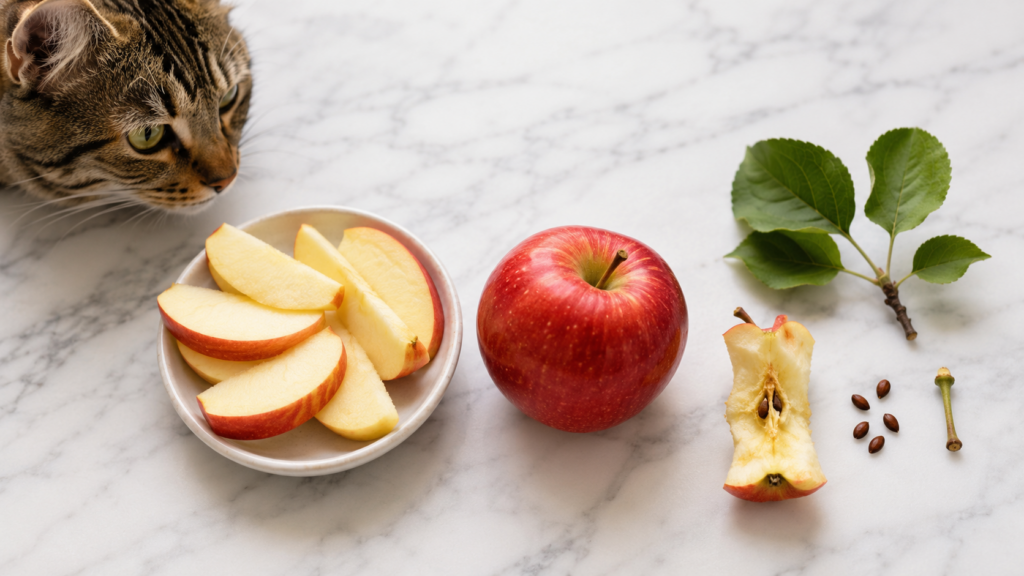
A safe serving for an adult cat is a single cube under half an inch — and even that shouldn’t happen more than once every few weeks. First-timers should start with something closer to pea-sized. Kittens should skip apples entirely, since their digestive systems aren’t developed enough to handle plant sugars. As a general guideline, treats of any kind — apple included — should stay under 10% of a cat’s daily calories.
Signs Your Cat Had Too Much
A cat that gets into more apple than intended, or manages to grab a discarded slice, may show vomiting, loose stools, bloating, or a drop in appetite. If any of these symptoms last beyond 24 hours, contact your vet. If you suspect your cat swallowed seeds or choked on a piece of core, treat it as an emergency and seek veterinary care immediately.
Other Fruits: What’s Safe and What’s Not
Fruit safety varies widely for cats, and some common options can cause serious harm — including kidney failure in the case of grapes and raisins.
| Safe in Moderation | Strictly Avoid |
|---|---|
| Apple flesh (no seeds) | Grapes & raisins (kidney failure) |
| Blueberries | Cherries (toxic stems and seeds) |
| Watermelon (seedless) | Citrus fruits (stomach upset) |
| Strawberries | Avocado (contains persin) |
| Bananas (small, occasional) | Apple seeds (cyanide risk) |
Frequently Asked Questions
Safe Fruits and Toxic Fruits for Cats
Technically, yes — but it’s not ideal. The skin concentrates fiber that’s harder to digest and may carry pesticide residue, so peeling is the safer choice.
Can cats eat green apples?
Yes, though the tartness and higher acidity of varieties like Granny Smith make stomach irritation somewhat more likely, and most cats won’t find the flavor appealing anyway.
Can cats eat cooked apples?
Plain cooked apple — baked or boiled in water only — is fine and easier to chew than raw. Skip any version made with butter, sugar, cinnamon, or nutmeg.
Can cats eat applesauce?
Only if it’s unsweetened, organic, and free of additives or artificial sweeteners like xylitol, which is highly toxic to cats. Standard store-bought applesauce is usually too sugary to offer.
Can kittens eat apples?
No. Kittens need nutrient-dense food built for rapid growth, and their stomachs are too sensitive for the sugars in fruit.
Why does my cat like apples?
It’s not the sweetness — cats can’t taste it. The appeal is more likely the crunch, the moisture, or simple curiosity about what’s on your plate.
Bottom Line
Small amounts of plain apple flesh are safe for most adult cats, but the seeds, core, stem, and leaves should never make it anywhere near their mouth. Treat apple as an occasional novelty rather than a dietary staple — a complete, meat-based cat food should always do the heavy lifting for your cat’s nutrition.