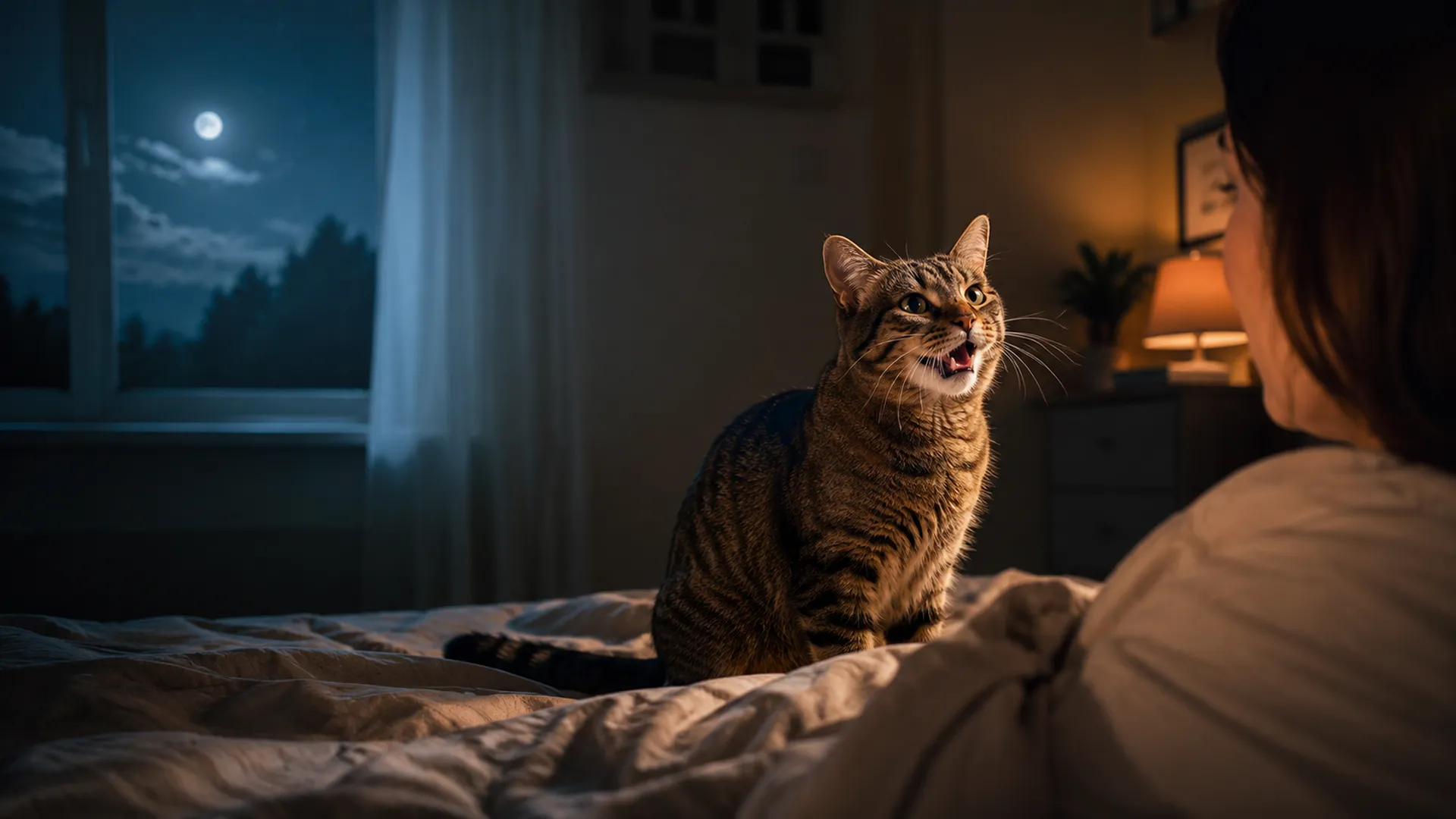
So why does my cat meow at night? Nine times out of ten it’s boredom, hunger, or your cat just wanting you awake and paying attention to them. Cats are wired this way, dawn and dusk especially, and it’s rarely something to panic about. That said, if the meowing ramps up out of nowhere, especially in an older cat, don’t brush it off. That shift can mean something’s actually wrong.
Why Does My Cat Meow at Night? Is It Normal?
Has your cat always been a bit of a talker once the lights go off? Then you can probably stop worrying. This is genuinely one of the most common things cat owners deal with. Dawn and dusk are peak activity windows for cats, so a bit of noise then isn’t unusual at all.
What actually matters is whether this is new, and how old your cat is. A one-year-old crying because they want to play is a totally different story than a 12-year-old suddenly yowling at 3am for no reason. Age is doing a lot of the heavy lifting here, so let’s start there.
Why Your Cat Meows at Night, By Age
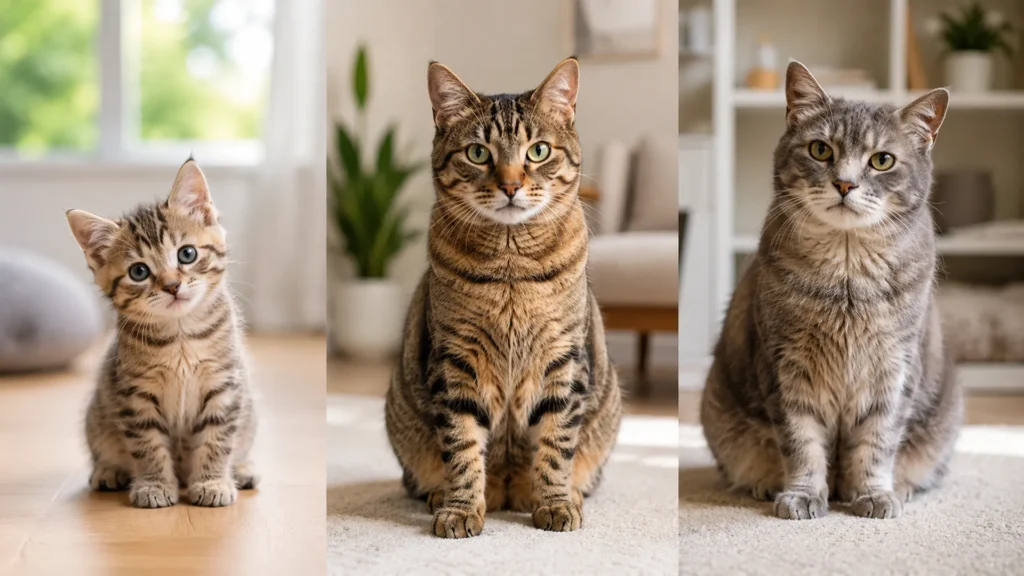
Kittens (Under 1 Year)
Kittens are basically little engines that don’t know how to turn off. That energy doesn’t clock out just because it’s dark outside. If your kitten tends to meow at night, it’s usually leftover play drive, hunting instinct waking up, or, if they were recently taken from their littermates, real separation anxiety.
This is also the stage where they’re figuring out what actually works on you. And if meowing at 2am gets you out of bed, congrats, you just taught them that trick works.
Quick fixes: wear them out with real play before bed, stick to a routine, and try to resist rushing in the moment they start up. I know that’s easier said than done at 3am.
Adult Cats (1–7 Years)
With adult cats, it’s usually less about instinct and more about habit. Boredom shows up a lot here, particularly in cats left alone all day with nothing going on. Sometimes it’s straight-up attention-seeking, and if it’s worked before, why would they stop?
Hunger matters too, especially if your feeding schedule doesn’t line up with when your cat actually gets hungry. Personality and breed play into it as well, more on that in a second.
Quick fixes: more enrichment during the day, puzzle feeders, a window perch, whatever keeps them occupied, plus shifting mealtimes closer to bedtime and not caving when the meowing starts.
Senior Cats (7+ Years)
Honestly, this is the age bracket I’d pay closest attention to. If you’re wondering why your cat meows at night and they’re past 7, this is often where the real answer lives. It can still be behavioral, sure, but medical causes get a lot more likely from here on out.
Cognitive dysfunction, basically feline confusion that resembles dementia, can make older cats cry out for no clear reason, especially once the house goes dark and quiet. Hyperthyroidism is another common one past age 7, and it often comes with weight loss or a bigger appetite than usual. Add in vision or hearing loss, which makes plenty of senior cats more anxious at night, and sometimes the meowing is simply pain they can’t tell you about any other way.
If your older cat suddenly starts up and never used to, don’t chalk it up to “just getting old.” Get it looked at.
Does Breed Play a Role in Why Cats Meow at Night?
It does, more than people expect. Some breeds are just louder by nature, no matter their age. Siamese cats are the classic example, that loud, insistent “voice” they’re known for isn’t a myth. Oriental Shorthairs come from similar lines and are pretty much just as chatty. Bengals tend to meow a lot too, mostly because their energy levels need more outlets than a typical house cat gets.
If your cat’s one of these breeds, some of that nighttime noise might just be who they are. Doesn’t mean the age-related stuff above doesn’t still apply though, so don’t rule it out entirely just because it’s “a Siamese thing.”
When to Worry: A Simple Way to Sort It Out
Rather than guessing, it helps to look at the actual pattern.
| Situation | Likely Cause | What to Do |
|---|---|---|
| Sudden onset + senior cat | Possible medical issue (hyperthyroidism, cognitive dysfunction, pain) | See a vet |
| Gradual, cat is a kitten or young adult | Likely normal or behavioral | Try routine and enrichment fixes |
| Consistent for weeks, no other symptoms | Behavioral (boredom, attention, habit) | Address with the fixes below |
| Paired with weight loss, increased thirst, disorientation, or a changed meow | Likely medical | See a vet, don’t wait it out |
Basically: slow and steady usually means behavior. Sudden and paired with other changes usually means something medical, especially with older cats.
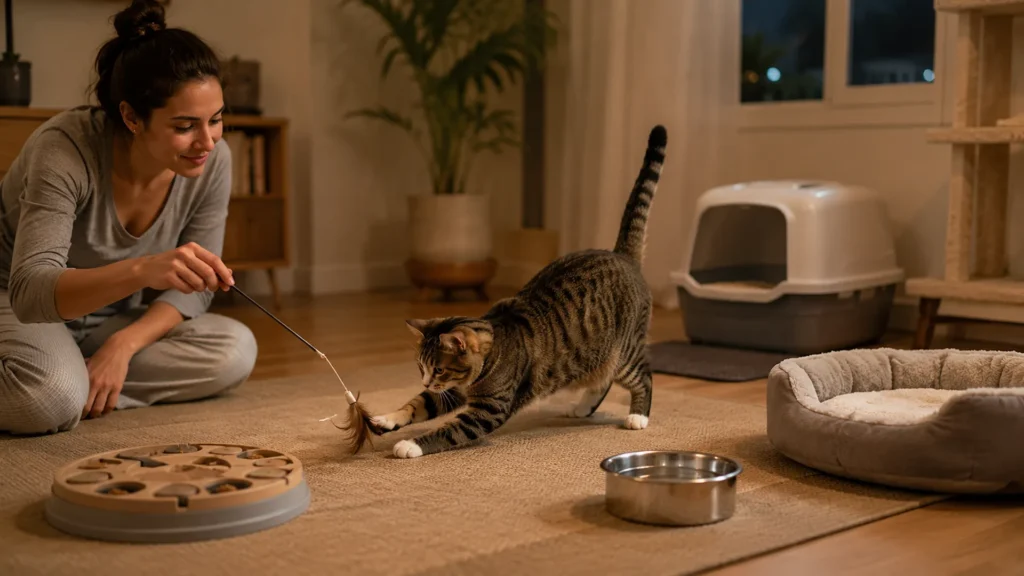
Already Tried Feeding and Playtime? Here’s What’s Next
If you’ve fed your cat before bed and run them ragged with a toy and your cat is still meowing at night, you’re not failing at this. Some cats just need more than the standard advice.
Rule Out the Basics First
Before anything fancier, check the obvious stuff. Easy to miss when you’re exhausted and just want quiet.
- Litter box clean? Cats notice, and care, more than you’d think.
- Water bowl actually fresh, not sitting there since breakfast?
- Room too hot or too cold?
- Any limping or stiffness that might mean pain?
If none of that’s the issue, keep reading.
Reset the Routine
Sometimes it’s not what you’re doing, it’s the timing. Try nudging feeding and play times earlier or later and watch what happens. A real play session 30 to 60 minutes before bed, not right at bedtime, gives them time to actually wind down afterward, kind of like how you don’t sleep well right after a workout either.
Puzzle feeders and timed feeders help a lot here too. They keep your cat’s brain busy and spread food out through the evening, so you’re not the alarm clock at 3am.
Environmental Fixes
Sometimes the problem isn’t your cat, it’s what’s happening outside. Cars, other animals, wind against a window, cats hear all of it way better than we do, and it can set them off. Closing blinds or running some white noise can cut down on that.
For older cats especially, a small night-light somewhere dark can ease the confusion. Pheromone diffusers are worth trying too, they genuinely calm some cats down. And giving your cat something safe to burn energy on, a window perch, even those cat TV videos of birds, can redirect that restless energy somewhere that isn’t your bedroom door.
Behavioral Resets
If your cat’s figured out that meowing gets a reaction, even an annoyed one, that’s still reinforcement. Hard as it is, try not to respond right when it starts. Save the attention, treats, and affection for the quiet moments instead.
This takes real patience and won’t fix itself in a night or two. But stick with it, cats pick up on patterns fast, whether that pattern works in your favor or not.
Should You Ignore It? The Owner’s Side of This
This is the part most articles conveniently skip: what do you actually do about this at 4am when you’re running on fumes?
Ignoring it isn’t cruel, not once you’ve ruled out hunger, pain, and the basics. If anything, it’s usually the better call long-term, because caving every time just teaches your cat that meowing works. You’re also allowed to draw boundaries that fit your actual life. Some people shut the bedroom door. Others are fine co-sleeping and just deal with it. Neither one’s wrong, though I’ll say co-sleeping does make ignoring the meows a lot harder when your cat’s literally next to your face.
And if it’s attention-seeking rather than medical, medicating your cat isn’t the automatic next step either. One owner online mentioned being offered a prescription for their otherwise healthy, vocal cat and wasn’t comfortable going there for what was really just a behavior thing. Fair enough. Try the routine and environment changes first before jumping to anything more drastic.
You can be frustrated and still love your cat at the same time. That’s allowed.
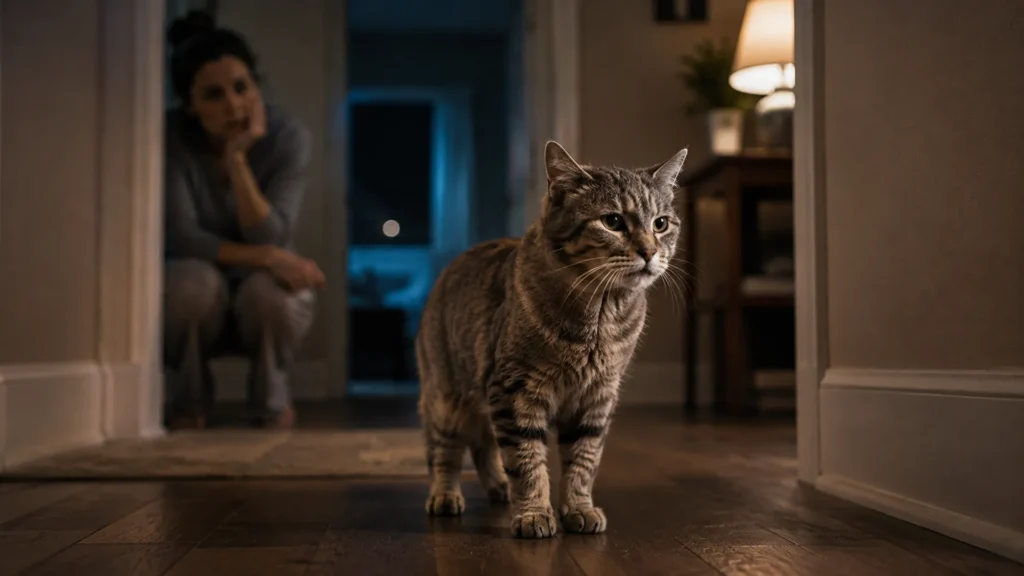
When to See a Vet
Book a vet visit if you’re noticing any of these, rather than continuing to troubleshoot on your own:
- The meowing started suddenly, out of nowhere
- Noticeable weight loss
- Drinking or eating more than usual
- Disorientation, like wandering into corners and getting stuck
- The actual sound of the meow has changed
- Signs of pain, stiffness, or not wanting to move
None of this automatically means disaster. But it’s worth a check rather than hoping it passes on its own.
FAQs
Is it bad to ignore my cat meowing at night?
Not really. Once you’ve ruled out hunger, pain, and other needs, ignoring it is usually the better move long-term. It only becomes a problem if you’re ignoring real distress, not just noise.
Why did my cat suddenly start meowing at night?
Sudden usually points somewhere medical or environmental, a new sound, something changing at home, or a health issue, especially in older cats. New behavior is worth paying closer attention to.
Do older cats meow more at night?
Yes, pretty commonly. Confusion, vision or hearing changes, and various health conditions all make senior cats more vocal after dark.
Can I train my cat to stop meowing at night?
Usually, yes. Sticking to a routine, not rewarding the meowing, and reinforcing quiet behavior tends to work over time. It just takes patience, it won’t happen in a week.
Closing Thoughts
So, why does my cat meow at night? Most of the time it really does come down to age. Young cats are usually just bored or hungry. Older cats acting differently deserve a closer look. Most of this fixes itself with small tweaks to routine and environment, but if your gut says something’s off, trust it and get your cat checked out.