My cat used to purr so quietly I’d have to put my hand on her chest to actually feel it. Then one day, out of nowhere, she sounded like she’d swallowed a tiny engine. If you’re here because your own cat just did something similar, you’ve probably typed why does my cat purr so loud into Google more than once by now. Relax, mostly. Loud purring is usually just a happy, comfortable cat. But “mostly” is doing some work in that sentence, because cats also purr when they want food, when they’re stressed, and sometimes even when they’re hurting.
I’ll walk through what’s actually causing that sound, how it stacks up against real-world noise, whether breed has anything to do with it (short answer: not much), why volume can change seemingly overnight, how age factors in, what’s going on in multi-cat households, and when it’s worth picking up the phone and calling your vet.
Why Does My Cat Purr So Loud? The Decibel Chart
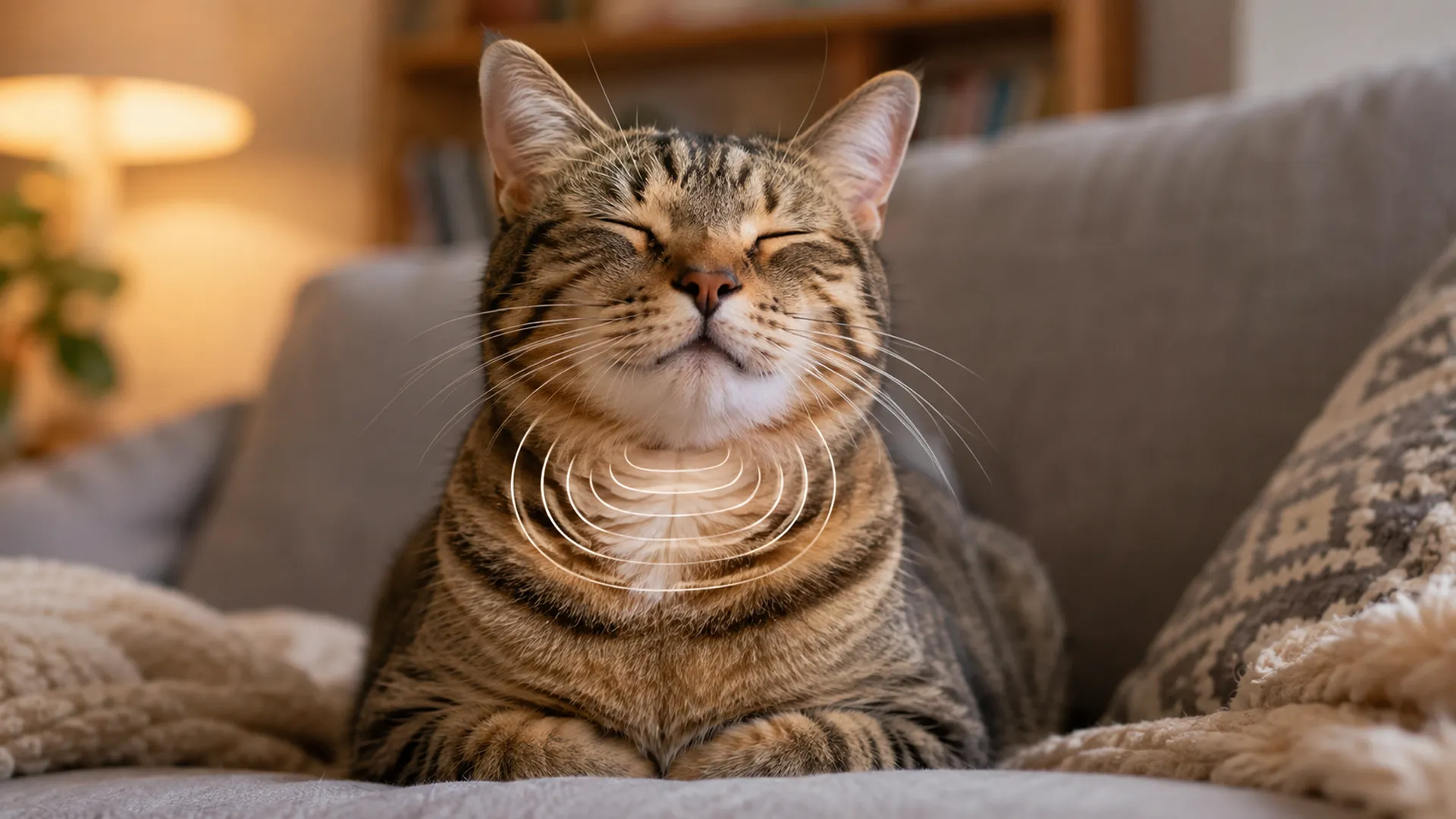
The sound itself comes from the larynx muscles contracting fast, paired with the diaphragm doing its thing as your cat breathes. That’s also why it never really pauses for a breath — it’s happening on the inhale and the exhale both.
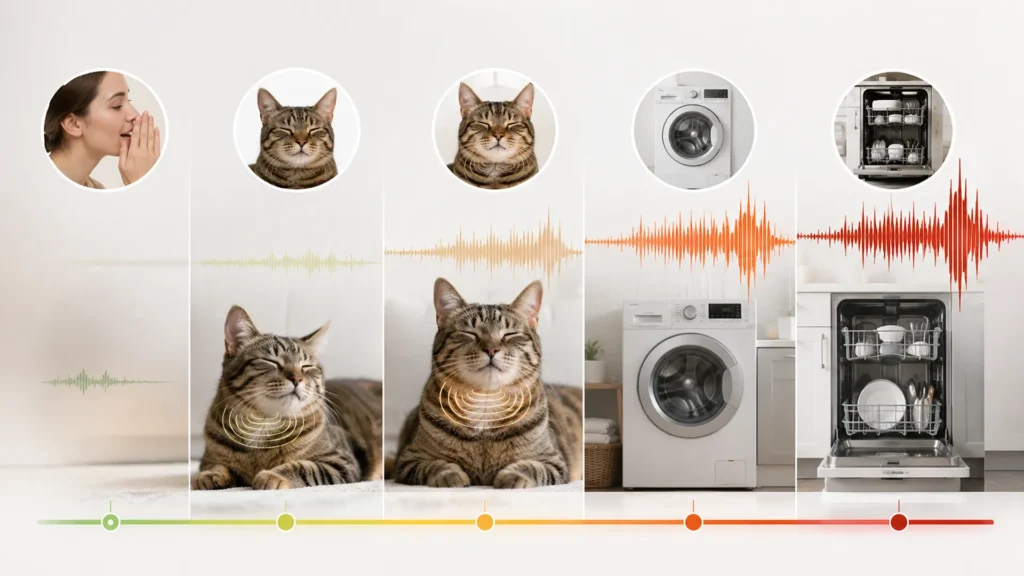
But how loud does that actually get, in numbers you can compare to something? Here’s the breakdown:
| Sound | Approximate Volume |
|---|---|
| Average cat purr | ~25 dB |
| Human whisper | ~30 dB |
| Loud, content purr | ~35–45 dB |
| Merlin’s Guinness World Record purr | 67.7 dB |
| Washing machine or dishwasher | ~70 dB |
Here’s what surprised me when I first looked into this: even a genuinely loud purrer is usually still quieter than a whisper. Merlin, the UK cat who actually holds the world record, is the rare exception that gets anywhere near appliance-level noise. So if you’re lying in bed at 2am wondering why does my cat purr so loud right next to your head, it’s less about your cat setting any records and more about how much a silent room amplifies things.
What Actually Controls Purr Volume? (Busting the Breed Myth)
Look this up and you’ll hit two totally opposite claims within five minutes. One site insists Maine Coons purr the loudest of any breed. The next says the opposite — that they’re actually pretty quiet. Neither one is exactly lying, they’re just both zoomed in on the wrong thing.
Breed just isn’t the deciding factor here. What actually shapes purr volume:
- Vocal cord and larynx size — cats have real anatomical variation, the same way people’s voices naturally differ
- Fur density — a thick coat can genuinely muffle sound, which probably explains why some owners swear their fluffy Maine Coon barely makes a peep
- Genetics — volume tends to run in family lines, same as most inherited traits
- Diaphragm strength and breathing rhythm — steadier, stronger breathing usually means a fuller sound
So the honest answer to why does my cat purr so loud has basically nothing to do with what breed is on the papers. It’s just your specific cat and however their body happens to be built.
Why Cats Purr Loudly — The Core Reasons
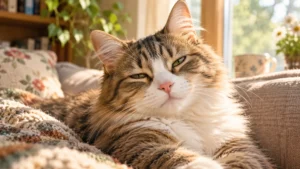
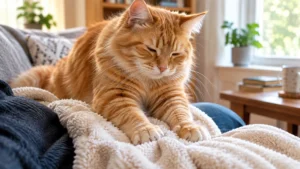
Contentment and relaxation. The obvious one first. Cat sprawled in a sunbeam, getting scratched exactly where they like it, purring because life is currently good. Usually you’ll spot the other signs too — slow blinking, kneading, that fully melted-into-the-couch look.
Requesting something. Cats catch on fast that purring gets a response out of us. Behaviorists sometimes call this solicitation purring, and it has a slightly different edge — more insistent, almost pushy — often paired with circling the food bowl or leaning into your leg until you finally get up.
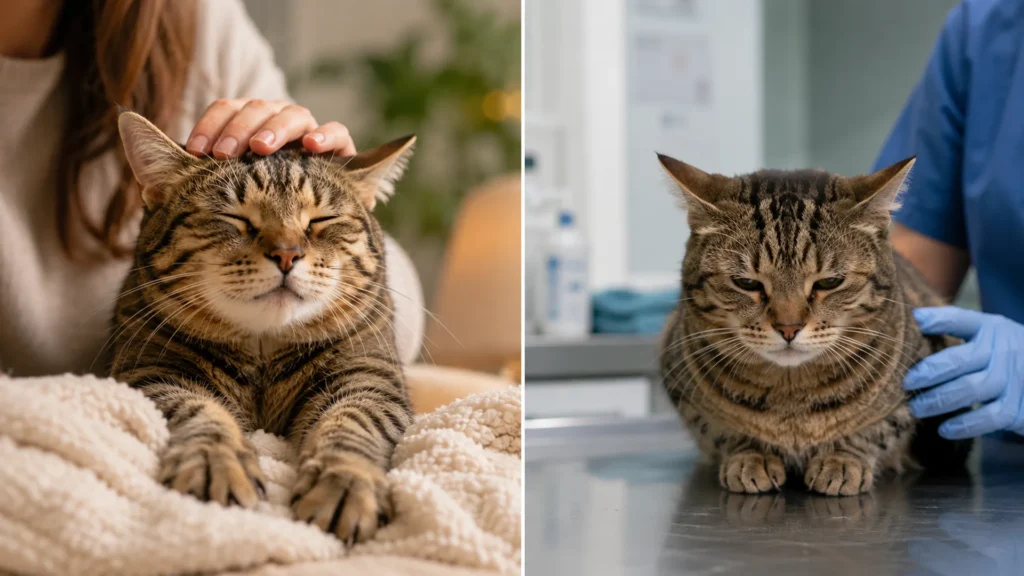
Self-soothing under stress or pain. This is the one people get wrong constantly. Purring isn’t a happiness gauge. Cats also purr to calm themselves down when they’re scared, injured, or healing — it’s thought to trigger endorphins that help them cope. So a cat purring on the exam table, or right after getting hurt, isn’t necessarily doing great. Loud purring doesn’t automatically mean happy purring, and I genuinely think this is the part most owners never learn.
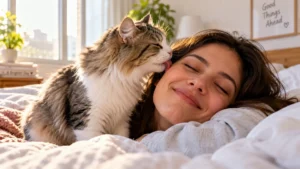
Bonding and communication. Purring is also how cats stay connected to whoever they trust. It starts back in kittenhood — newborns are blind and deaf, so purring is literally how they find their mother and let her know feeding is working. That bonding function never really disappears. It just shifts toward whichever people and animals your adult cat feels safest around.
My Cat’s Purr Suddenly Got Louder — Should I Worry?
This comes up constantly with owners, and honestly it doesn’t get talked about nearly enough elsewhere. One day your cat’s purr is a quiet hum, and then seemingly overnight it’s noticeably louder or more constant. What gives?
Most of the time, it’s nothing to panic over. A new pet in the house, a move, a schedule shift, a new baby — any of that can push a cat toward purring more, and louder, than they used to. Sometimes it’s even simpler. They just want more of your attention than usual lately.
That said, there are real medical reasons worth knowing too. Dental pain, changes in breathing, or hyperthyroidism (which shows up more often in older cats) can all crank the purring up. More on the age angle in a second.
The thing worth remembering: a sudden change by itself isn’t automatically a red flag. It’s when that change shows up next to something else — appetite dropping, energy dipping, behavior shifting — that it’s actually worth paying closer attention.
Does Purr Volume Change With Age?
Kittens. Purring shows up almost immediately, sometimes within days of birth, and at that stage it’s pure instinct, not a choice at all. A nursing kitten purrs so its mother can locate it, and she purrs right back to keep everyone calm and bonded. Honestly, it’s one of the first things a cat ever communicates.
Adult cats. Once they’re grown, purring turns into something a lot more flexible. Happy and relaxed, sure, but also hungry, anxious, or working up to asking you for something. The volume alone tells you less than whatever’s actually happening around it.
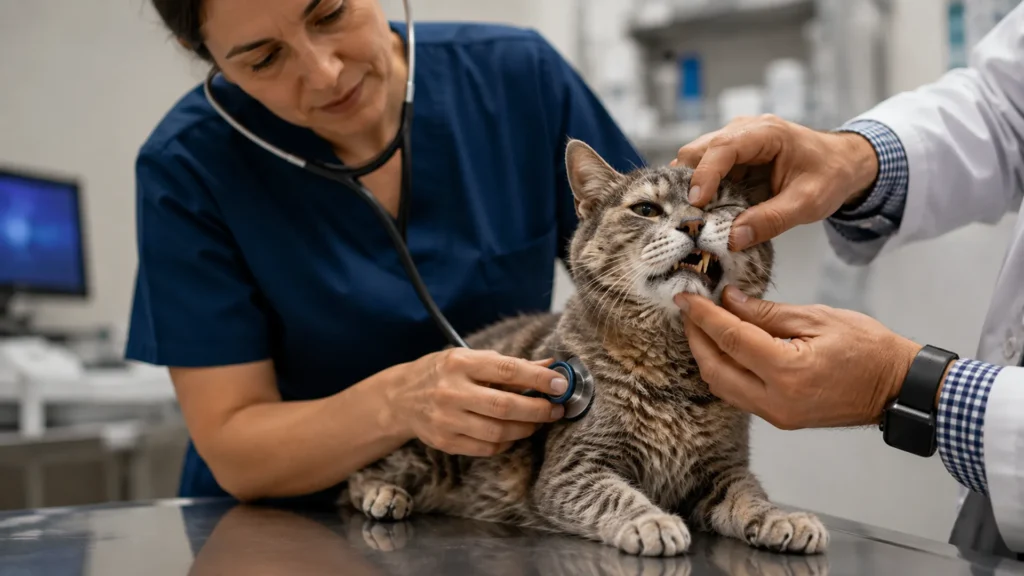
Senior cats. This is the part that gets almost no attention anywhere. Older cats can start purring louder, raspier, or more often, and it’s not always a good sign. Hyperthyroidism, dental disease, and arthritis are all pretty common in aging cats, and purring is one way they cope with that kind of discomfort. Because everyone defaults to assuming purring means happy, these changes slip past owners constantly. If your senior cat’s purr sounds different than it used to, it’s worth mentioning at your next vet visit, even if nothing else seems obviously wrong.
Does Your Cat Purr Differently Around Other Cats?
Got more than one cat at home? You’ve probably noticed the purring isn’t the same across every relationship in the house. And it’s not just people versus other cats either — kitten purring toward mom is pure instinct, while adult social purring is a lot more calculated and depends heavily on the situation.
In multi-cat households, purring can actually tell you a fair amount about who’s bonded with who. A cat that purrs more, or louder, around one specific housemate is usually telling you something real — that’s their favorite person, or their favorite fellow cat. Meanwhile, a cat still feeling out a newer or unfamiliar housemate will often hold back, purring less until trust actually builds. It works almost like a running trust meter playing out between them.
When Loud Purring Signals a Health Problem (Vet-Ready Checklist)
Here’s the part that trips up even attentive owners: purring is a self-soothing behavior, so a cat in genuine pain can purr just as loudly as one who’s totally content. That’s exactly why volume by itself tells you almost nothing. What actually matters is everything else happening around it.
Monitor at home (non-urgent):
- Purring alongside mild lethargy, lasting less than a day
- Appetite’s a little off, but they’re still eating and drinking normally
Schedule a vet visit soon:
- Appetite changes that stick around for several days straight
- Hiding a lot more than they normally would
- Grooming or licking one spot excessively
Seek care promptly:
- Purring alongside labored or rapid breathing
- Limping, avoiding movement, or flinching when touched
- No food or water for 24 hours or longer
If any of that sounds familiar, bring the list with you to the vet. It’ll help them get a clearer picture fast instead of you trying to remember every detail on the spot.
Quick FAQ
Why does my cat purr so loud at night?
Mostly it’s the silence doing the work — a purr that’d blend into background noise during the day stands out a lot more once the house goes quiet. Could be attention-seeking, could just be your cat settling in for sleep.
Is it bad if my cat’s purr is really loud?
Not by itself, no. Loud usually just means content. It only becomes worth worrying about when it shows up alongside other symptoms, like the ones listed above.
Can cats control how loud they purr?
Partly, yes. Some of it’s a conscious choice, especially when they’re trying to get your attention. The rest is more of a built-in response their body does on its own, whether they mean to or not.
Key Takeaway
So, why does my cat purr so loud? Most of the time, it’s a good thing — your cat is comfortable, content, and letting you know it in the only way they really can. But the real answer lives in the context around it: how sudden the change was, how old your cat is, and whether anything else seems off. Bookmark that checklist. You’ll want it the one time it actually matters.