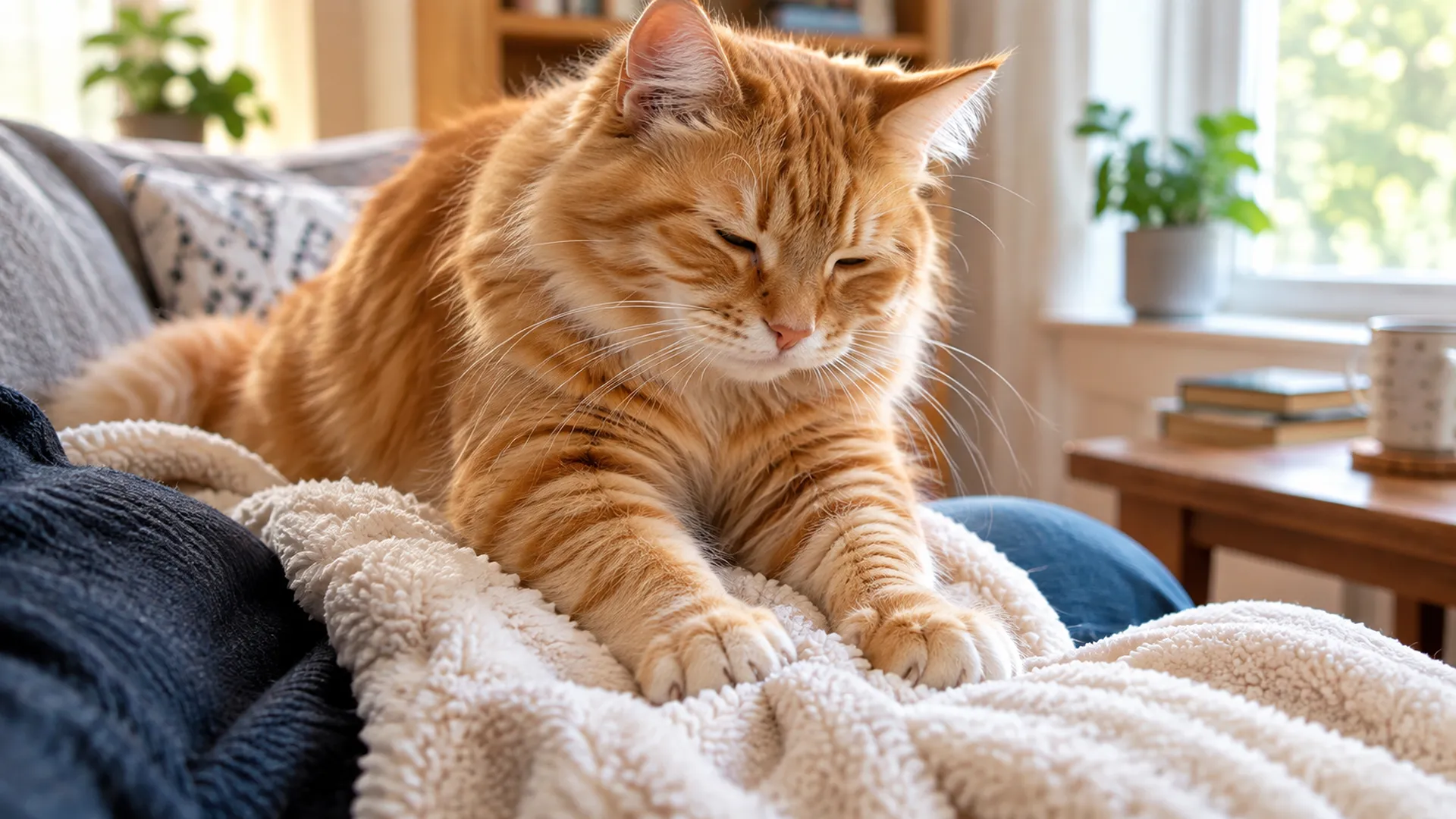
Your cat climbs onto your lap, and those paws start pressing into you, one after the other, like they’re working dough. Cat people call it “making biscuits.” If you’ve ever asked yourself why does my cat knead me, you’ve probably found the same one-line answer everywhere: it’s a leftover nursing instinct. True, but that’s not the whole picture. This is a closer look at why does my cat knead me specifically, what their claws are telling you, and when this habit is worth a call to the vet.
Why Does My Cat Knead Me? The Basics First
Kneading is that in-and-out paw motion cats do against something soft — your lap, a blanket, occasionally your face at 6 a.m. Most cats do it right before they settle in for a nap. If you’re wondering why does my cat knead me before it curls up and falls asleep, that timing isn’t random — it’s part of the same wind-down ritual. Two explanations cover most of it, and vets and behaviorists generally agree on both.
The nursing instinct. Kittens knead their mother’s belly to get the milk flowing. It’s wired in from birth. A lot of cats never drop the habit — it just resurfaces any time they feel safe enough to relax completely, which is really the short version of why does my cat knead me at all.
The stress-relief angle. Kneading also seems to be self-soothing, the cat version of tapping your foot or twirling a pen when you’re unwinding. It usually comes with purring, which is a good sign this is a comfort behavior, not a distress one.
Why Does My Cat Knead Me and Not Someone Else?
This is the real question behind the search, isn’t it. Not why do cats knead in general, but why does my cat knead me out of everyone in the house. Comes down to trust and scent. Cats gravitate toward kneading the person whose smell feels most familiar and safe, which is usually whoever feeds them, handles them the most, or just sits still long enough for the cat to commit to settling in.
Stillness matters more than people give it credit for. Cats read body language constantly, and a relaxed, unmoving posture tells them it’s safe to be vulnerable. That’s a big part of the answer to why does my cat knead me during quiet moments specifically — when you’re lying down, half-asleep, or zoned out watching TV, your body is sending “safe to approach” signals without you doing anything.
Even the body part isn’t random. A cat that always goes for your belly, your elbow, your knee has built a comfort association with that exact spot, probably from an early cuddle session that stuck. Once the pattern sets, cats rarely switch it up, and that habit is part of why does my cat knead me on the same spot every single time.
Claws In or Out? It Tells You Something
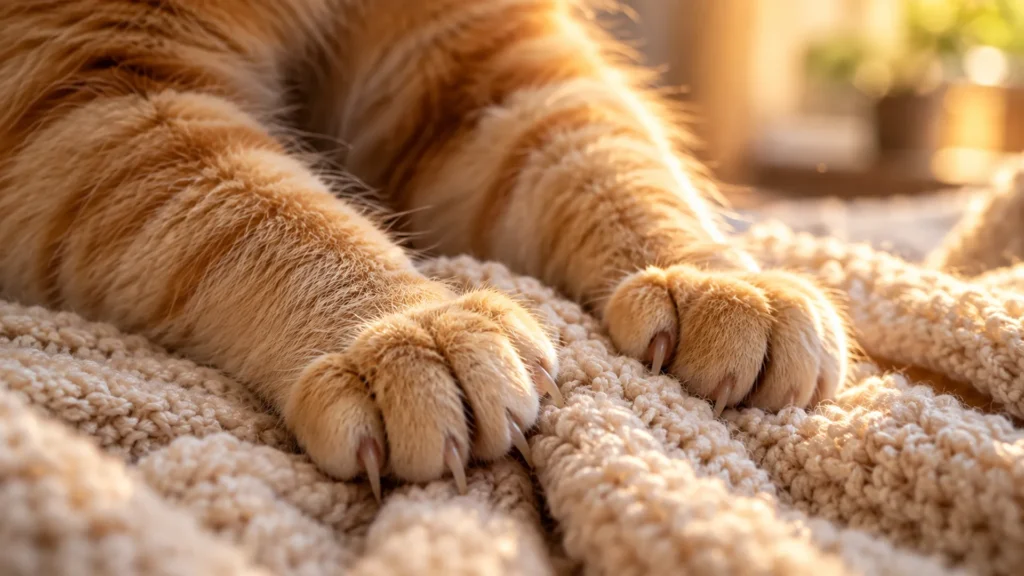
Not every kneading session feels the same, and the difference usually comes down to claws. Claws tucked in, motion controlled — that’s the relaxed, textbook version. Claws out is often a sign of a cat that’s a bit more worked up, or one who simply never refined their claw control past the kitten stage.
Neither version is a problem by itself. Plenty of cats knead with claws out their whole lives and are completely fine — it’s just their style, and honestly some cats never grow out of it no matter what you try. If it’s uncomfortable for you, though, two things actually help:
- Trim their nails on a regular schedule, especially if kneading sessions are frequent. (Our guide on how to trim your cat’s nails covers this step by step if you’ve never done it.)
- Put a folded blanket on your lap before they climb up, so they knead fabric instead of skin.
Both let your cat keep a behavior that clearly makes them happy, minus the wincing on your end. It’s a small fix, but it’s usually all people need once they understand why does my cat knead me hard enough to hurt.
Reading Your Cat’s Body Language While They Knead
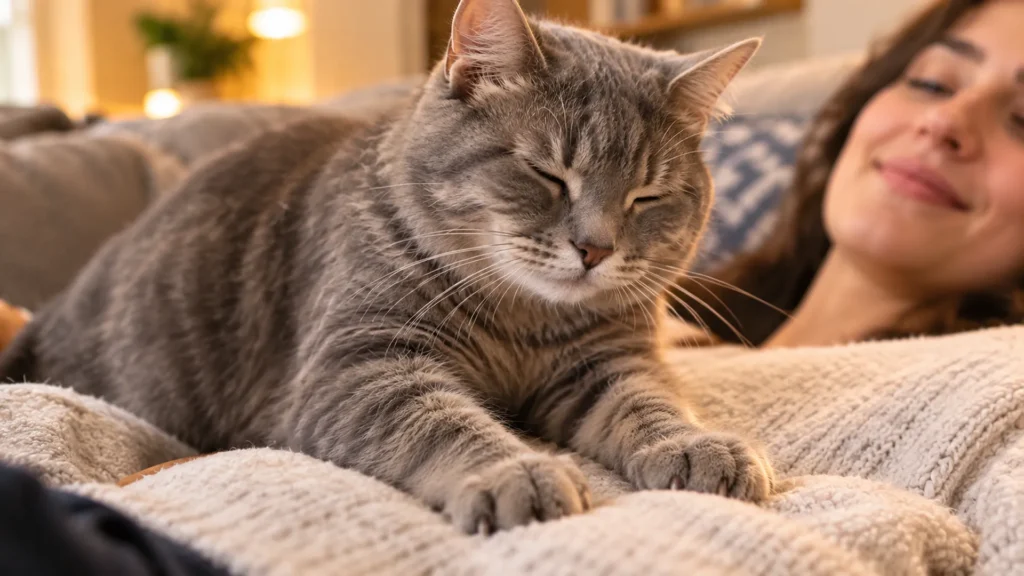
Kneading rarely happens in isolation. There’s usually other body language running alongside it, and that’s what actually tells you whether your cat is content or a little more wound up than usual.
| Signal | Content Kneading | Anxious/Compulsive Kneading |
|---|---|---|
| Tail | Loose, still, or gently curled | Flicking or tucked close to the body |
| Ears | Forward-facing or relaxed | Flattened or swiveling frequently |
| Purring | Steady and rhythmic | Absent, or sounds strained |
| Drool | Light and occasional | Excessive, paired with pacing |
Most of the time you’ll land in the content column, full stop. Kneading is one of the clearest “I trust you” signals a cat gives, and it’s the main reason the honest answer to why does my cat knead me is almost always a good one. But if you’re seeing the right-side signals stack up together, it’s worth paying closer attention instead of chalking it up to affection automatically.
Does Age or Early Weaning Change Why My Cat Kneads Me?
A lot of owners worry that heavy kneading means their cat got separated from its mother too young. I get why — it feels like a guilt trip wrapped in a cute behavior. But there’s no solid evidence tying kneading frequency to weaning age. Cats weaned early and cats weaned on the standard timeline both knead, plenty or barely at all, with no clean pattern between the two.
Some owners and breeders report that Burmese and Siamese cats knead more, or more intensely, than other breeds. Worth mentioning, but treat it as anecdotal — there’s no formal research backing it up as a real breed trait. The actual takeaway: if you’re still stuck on why does my cat knead me so much, it almost certainly just means a comfortable cat, not a cat with a rough start.
When Kneading Signals a Problem
Kneading is normal and healthy for the overwhelming majority of cats. But there are a few specific situations where why does my cat knead me stops being a cute question and starts being one worth mentioning at your next vet visit.
Sudden kneading in senior cats. If an older cat who never used to knead suddenly starts doing it a lot, that shift can sometimes point to discomfort or cognitive changes. Not an automatic red flag, but a sudden behavior change in a senior cat is generally worth checking out.
Compulsive or overgrooming-adjacent kneading. If it’s constant, hard for the cat to stop, or shows up alongside excessive vocalizing or pacing, it might be more about stress than contentment. Flag it if it’s new.
Kneading that turns aggressive out of nowhere. Occasional claws-out kneading is fine. Kneading that suddenly comes with biting that feels different from their usual behavior is worth ruling out as pain, particularly in the paws or joints.
None of this means something is automatically wrong. It just means these are the specific cases worth a conversation with your vet rather than waiting it out.
Kneading Other Pets or Starting the Habit as an Adult
In multi-pet homes, it’s not unusual to see a cat knead another cat, or even a dog, they’re bonded with. Same comfort-seeking behavior, just aimed at a companion instead of a person — generally a good sign the animals trust each other.
It’s also common for a cat that never kneaded as a kitten to pick it up later in life. A move, a new pet, a new family member, even hormonal shifts after spaying or neutering can bring it out for the first time. If your adult cat suddenly starts making biscuits out of nowhere, there’s nothing to worry about — it’s just a later chapter of the same why does my cat knead me story.
FAQs
Is kneading a sign of love?
Generally, yes. It usually means your cat feels safe and bonded with you.
Why does my cat knead and then bite me?
Usually mild overstimulation. They start relaxed, get a bit too worked up, and nip gently as a way of saying that’s enough.
Should I let my cat knead me?
In most cases, yes — it’s normal and healthy. If the claws bother you, redirect to a blanket.
Do all cats knead throughout their lives?
No. Some do it constantly, some rarely, some stop after kittenhood entirely. All of that is normal.
Why does my cat knead me and purr at the same time?
That combination is basically the clearest sign of contentment a cat can give you — kneading and purring together almost always mean total relaxation.
Bottom Line
Kneading is one of the plainer ways a cat tells you they feel safe with you. Whether it’s a kitten-hood holdover, a way to decompress, or just habit at this point, it’s almost always a good sign. Watch the claws, watch the body language, and pay attention if something changes suddenly. Next time you catch yourself wondering why does my cat knead me, the real answer is usually simple: you’re their favorite place to relax.