Here’s the short version of the cat kneading meaning: your cat is doing something it learned while nursing, and as an adult it mostly does it because it feels good and safe. That’s usually the whole story. Now and then there’s a side reason, like leaving a bit of scent or settling in after a stressful day.
If you live with a cat, you know the routine. They step onto your lap, start purring, blink at you slowly, and then the paws start going. Left, right, left. Claws through your jeans. It’s cute, and yes, it hurts a little.
We’ll go through the cat kneading meaning in the situations you’ll actually run into, check a few popular claims that don’t hold up, and cover the handful of signs that do need a vet.
Cat Kneading Meaning: What the Behavior Looks Like
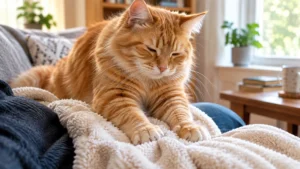
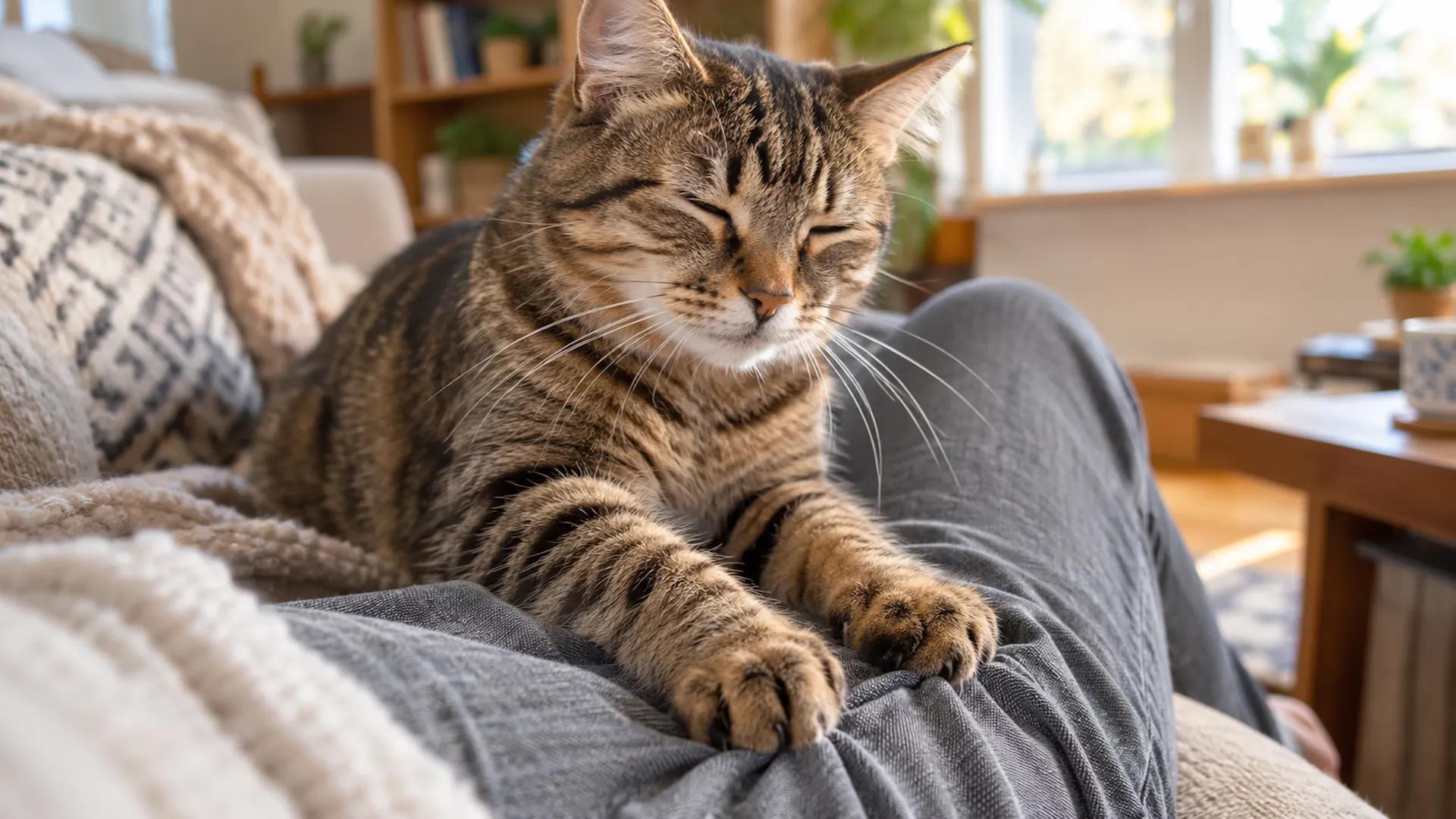
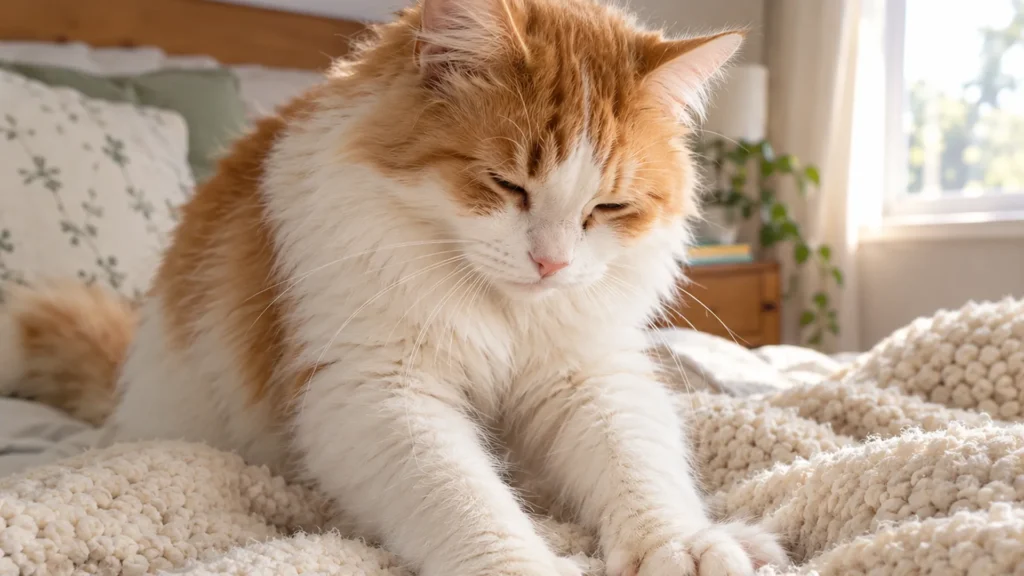
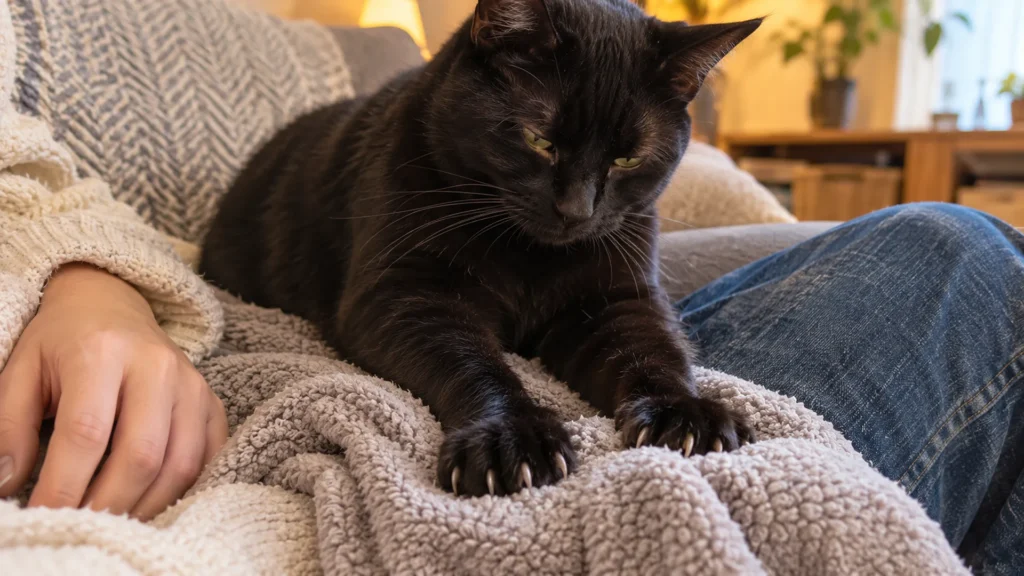
Kneading is when a cat presses its front paws into something soft, one paw after the other, in a slow rhythm. With each push the toes spread out and the claws usually come out a bit. When the paw lifts, they go back in.
Think of a baker pressing dough. That’s pretty much it, and it’s why people call it “making biscuits.”
Cats don’t all do it the same way. One cat keeps its claws in, another really goes for it. Some use their back paws too. Plenty of cats never knead, ever. None of that is a health issue. The cat kneading meaning doesn’t change with the style, and a cat that doesn’t knead can love you just as much.
Why Do Cats Knead? 6 Reasons, Rated by Evidence
A lot of articles list every reason like it’s been proven. Some have decent evidence behind them and some are basically guesses. The cat kneading meaning for your cat is usually a mix of a few, so we’ve marked each one honestly.
A Leftover Nursing Instinct (Well supported)
Newborn kittens knead their mother’s belly to get milk moving. Many cats simply keep doing it into adulthood. Researchers writing in The Conversation connect this to neoteny, which is when an animal holds on to baby behaviors as it grows up. Out of everything here, this is the part of the cat kneading meaning I’d put my money on.
Comfort and Self-Soothing (Well supported)
Most kneading happens when a cat is already relaxed, say halfway through a good chin scratch or just before sleep. The Scottish SPCA also points out that cats knead when they’re stressed, as a way to calm down. So on a bad day, the cat kneading meaning is less “life is great” and more “I need a minute.”
Scent Marking (Likely)
There are scent glands in a cat’s paw pads. Kneading presses out pheromones, which are chemical messages cats use with each other. That makes a small part of the cat kneading meaning a kind of signature: my bed, my blanket, my person.
Nest-Making Before Rest (Likely)
PetMD notes that wild cats sometimes knead grass and bedding before they lie down. When your cat pats a blanket flat and then flops onto it, it’s likely the same instinct, just indoors.
Stretching (Theory)
The paws and front legs get a workout, so a stretch might be part of the appeal. Sounds reasonable. Nobody’s proven it though.
Heat in Unspayed Females (Well supported)
Females that aren’t spayed often knead more while in heat, together with the other usual signs that they want to mate.
To be fair to the experts, the full cat kneading meaning is still a bit of an open question. A Kansas State University vet told Scientific American that some of these explanations are still just theories. Nobody knows for sure.
The Kneading Decoder: Cat Kneading Meaning by Situation
Where your cat kneads, and what else it’s doing at the time, tells you a lot more than a generic list. Since the cat kneading meaning shifts with context, use this table to match what you see.
| Situation | Likely meaning | What to do |
|---|---|---|
| On your lap or chest | Trust, bonding, scent-claiming | Enjoy it, and add a blanket if claws hurt |
| On a blanket + sucking it | Nursing-comfort behavior | Normal if occasional; watch for chewing or swallowing fabric |
| Kneading the air | Deep relaxation, often while lying on their back | Nothing needed |
| Kneading, then biting | Overstimulation | Stop petting and let them settle |
| Kneading + drooling | Extreme contentment, nursing reflex | Normal; mention it at the vet only if drooling happens outside kneading |
| Before sleep | Preparing a resting spot | Normal |
| Claws out vs. claws in | Level of relaxation or personal habit, not affection level | Manage claws (see fixes section) |
| On another pet | Bonding or comfort-seeking | Supervise if the other pet seems annoyed |
Why Does My Cat Knead Me?
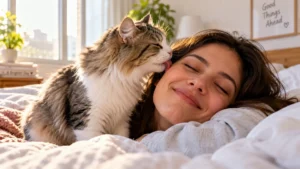
There was a perfectly good cushion right next to you. Your cat picked you. When it happens on your lap, the cat kneading meaning is mostly trust. One researcher writing in The Conversation puts it as your cat telling you you’re in its group. And because of those scent glands, you’re also getting quietly labeled as theirs.
Why Does My Cat Knead and Suck Blankets?
Some cats knead a soft blanket and suck on it at the same time, a lot like nursing. In this case the cat kneading meaning goes right back to being a kitten. Doing it now and then is fine.
What you want to watch for is chewing. If your cat is actually eating bits of fabric, that can block the gut, and that’s an emergency. Get to a vet.
Why Does My Cat Knead Then Bite Me?
Purring, kneading, then out of nowhere, a bite. Gentle nibbles can be normal. Harder bites, as Care.com explains, usually mean your cat is overstimulated, stressed, or uncomfortable. At that point the cat kneading meaning has turned into “okay, stop.” So stop petting and let them cool off.
Why Does My Cat Drool While Kneading?
A little drool during kneading tends to mean your cat is completely zoned out and happy, probably another leftover from nursing. If they drool when they’re not kneading, though, have a vet take a look at their teeth and mouth.
Cat Kneading Myths vs. Evidence
Some ideas about the cat kneading meaning get passed from site to site without anyone really checking.
Myth: “Cats weaned too early knead more.”
A few vet clinic blogs say so. WebMD says many cats knead regardless of how long they stayed with mom. The evidence isn’t strong either way, so a big kneader wasn’t necessarily taken away too early.
Myth: “Ragdolls and Siamese knead more than other breeds.”
It gets repeated a lot. We looked and couldn’t find published research supporting it. Individual personality and history seem to count for much more than breed.
Myth: “Kneading always means love.”
Most of the time, sure. But Scientific American reports that hurt cats sometimes knead and purr, maybe to comfort themselves. So the cat kneading meaning depends on the whole picture, not just the paws.
Myth: “Your cat thinks you’re its mother.”
That’s stretching it. Your cat knows you’re you. You just give it the same safe feeling it had as a kitten.
Kneading Across Life Stages and Sudden Changes
Do Kittens Knead Differently?
The movement is the same. The reason isn’t. For a young kitten the cat kneading meaning is very practical, because it’s how they get fed. As they grow, it drifts into comfort and communication.
Why Did My Cat Suddenly Start Kneading?
Often it starts after a cat gets closer to someone, or after something changes at home, like moving house or a new pet arriving. For unspayed females, heat is another possibility. If other behaviors change around the same time, check in with your vet.
Why Did My Cat Stop Kneading?
Cats’ habits change. One habit fading out isn’t a problem by itself. It’s only worth a closer look if it goes along with changes in mood, eating, or energy.
Why Does My Newly Adopted Cat Knead So Much?
This is usually a nice sign. For a rescue cat, the cat kneading meaning is often something like “okay, I think I live here now.” It’s trust starting to form.
Why Is My Senior Cat Kneading Less?
Older cats slow down, and stiff joints can make kneading less comfortable. If you’re also seeing stiffness or less jumping, bring it up at their next checkup.
When Should You Worry About Cat Kneading?
Not often. For most cats, the cat kneading meaning is just “I’m content.” Here’s a simple way to sort it.
Normal:
- Occasional kneading tied to rest, petting, or soft surfaces
- Kneading with purring and a relaxed body
Red flags (see a vet):
- A sudden, sharp increase in kneading with no obvious trigger
- Kneading combined with hiding, appetite changes, or litter box changes
- Fabric sucking that turns into chewing or swallowing
- Kneading alongside signs of pain, like limping, flinching when touched, or not wanting to jump
If you think stress is behind it, our guides on [cat anxiety], [cat separation anxiety], and [cat excessive grooming] go through the related signs.
When Kneading Hurts: Humane Ways to Manage the Claws
Understanding the cat kneading meaning is nice, but it won’t stop claws from stinging. Here’s how to keep your skin in one piece without stopping your cat.
- Keep a kneading blanket handy. Throw a thick blanket or a folded towel over your lap before your cat gets comfortable. They get to knead, you don’t get scratched.
- Trim nails regularly. If you only do one thing from this list, do this one. Our guide on [how to trim cat nails] shows you how.
- Try soft nail caps. These are little vinyl caps glued over the claws. They fall off as the nail grows, so you’ll need to replace them every few weeks.
- Redirect gently. Slip a cushion under their paws instead of pushing your cat away.
Please don’t punish or yell at a cat for kneading. It’s instinct, and punishment just teaches them you aren’t safe to be near. Declawing isn’t an option either. It’s surgery that removes the last bone of each toe, and many vets and animal welfare groups are against it because it can lead to long-term pain and behavior problems. We’ll say it straight: scratched legs or furniture don’t justify it.
FAQs
Should I stop my cat from kneading?
No. It makes them feel good. If it hurts, manage the claws with a blanket or regular trims.
Do male cats knead?
Yes. Only the heat-related kneading is limited to unspayed females. Males knead for comfort just like females do.
Is it bad if my cat never kneads?
No. Lots of cats show affection in other ways, like rubbing on you, headbutting, or slow blinking.
Why does my cat knead before lying down?
Probably the nesting instinct. It’s the same urge that makes wild cats flatten grass before resting.
Does kneading mean my cat is happy?
Usually. The most common cat kneading meaning is contentment, especially with purring and a loose, relaxed body.
Conclusion
Nine times out of ten, the cat kneading meaning is simple: your cat feels safe with you. Look at what else is going on, enjoy it, and save the worry for the red flags above. If you want more ways to read your cat, check out our guides on the [cat slow blink] and [cat headbutting].