Get up for a glass of water and your cat’s right behind you. Sit on the couch and there’s a cat on your lap in about four seconds. The moment the laptop opens, you get a headbutt to the chin, like clockwork. If you keep catching yourself thinking “why is my cat so affectionate?”, trust us, you’re not the only one. Most people just aren’t ready for a cat that acts like a velcro puppy.
Quick answer: So, why is my cat so affectionate? Nine times out of ten it’s trust. Your cat feels safe around you, and cats stay close to the people they’ve bonded with: rubbing on you, curling up on you, trailing after you. Affection is also how they get their scent on you, and yes, sometimes it’s just a sneaky way to ask for food or a game. If it started out of nowhere, though, heat, pregnancy, stress, getting older, or illness might be involved.
Is It Normal for a Cat to Be Very Affectionate?
It’s normal. Anyone who’s searched “why is my cat so affectionate” has probably run into the old idea that cats are cold little loners who only put up with us. For loads of cats, that’s just wrong. They get properly attached to the people they pick. Scientists actually tested this. In a 2019 study out of Oregon State University, roughly two-thirds of the cats were securely attached to their owners, pretty close to the numbers seen in dogs and human babies.
Some cats come out of the box as lap cats. Others want to be in the room with you, just not on top of you. It’s a mix of personality, genes, and how they were raised.
Here’s the part that matters, though. Don’t focus on how much affection your cat shows. Focus on whether it’s changed. If your cat has been a cuddler forever, that’s just your cat. If your standoffish cat suddenly turns into your shadow, that’s worth a second look.
Why Is My Cat So Affectionate? Common Reasons Explained
When a cat’s been sweet since the day you brought it home, the answer to “why is my cat so affectionate?” is almost always a happy one. These are the usual suspects.
They Trust You and Feel Safe
Honestly, for most people the answer to why is my cat so affectionate is trust, nothing more complicated. Cats are hunters, sure, but they’re small ones, and small animals get hunted. That’s why they’re always a little on edge. So when yours dozes off on your lap or rolls onto its back with its belly out, it’s dropping its guard around you, which for a cat is kind of a big deal. You’re also where the food, the warmth, and the safe home come from. Of course they want to hang around.
They’re Marking You With Their Scent
Cats have scent glands on their cheeks, chin, and forehead. Each time yours rubs its face on you, a bit of that scent gets left behind. It’s called “bunting,” and what it really means is your cat is tagging you as part of its group, its turf. Affectionate? Definitely. A little possessive? Also yes. There’s more on this in our cat headbutting guide.
It’s in Their Breed
Some breeds just like people more. A Ragdoll will often go completely floppy when you pick it up, and plenty of them actually enjoy being carried around. Siamese cats are chatterboxes that tend to follow you everywhere. Maine Coons earned the “gentle giant” nickname fair and square. Burmese cats are famous for craving company, and a Sphynx will sniff out the warmest lap or blanket in the house every time. If you’ve got one of these, the answer to “why is my cat so affectionate?” might just be in the DNA. Plenty of mixed breeds are just as cuddly, mind you.
They Were Well Socialized as Kittens
The first few weeks of a kitten’s life stay with it. The big window for socialization is roughly 2 to 7 weeks old, and kittens that get handled gently and often by people during that time usually grow up totally fine with being touched. Our kitten growth stages article covers this in more detail.
They Want Something
Let’s not kid ourselves. Sometimes the answer to “why is my cat so affectionate?” is dinner. Cats catch on fast. If leg-rubbing at 6 PM gets the bowl filled, you’ll be getting leg rubs at 6 PM for the rest of your life. Same deal with playtime and attention. Sticking to a regular cat feeding schedule can take the edge off that food-driven clinginess.
They’re Seeking Warmth and Comfort
Cats are heat seekers, and you’re a warm, soft, conveniently mobile cushion. That’s partly why so many cats get snugglier once the weather cools off and start claiming your lap, your chest, your pillow. They like you, don’t get us wrong. The warmth just doesn’t hurt.
They’re Bored or Under-Stimulated
For an indoor cat, you’re most of the entertainment. With nothing much else going on, they come looking for you. All that rubbing and following might just be code for “hey, play with me already.”
Why Is My Cat Suddenly So Affectionate?
If you’re asking “why is my cat so affectionate all of a sudden?”, it’s worth looking at what else has changed. A lot of the time it’s nothing. But hormones, stress, age, and health can all flip a cat’s behavior, so here’s a quick way to narrow it down:
| Cause | Other signs to look for | What to do |
|---|---|---|
| Heat cycle | Loud yowling, rolling, raised hindquarters | Talk to your vet about spaying |
| Pregnancy | Bigger appetite, weight gain, nesting | Book a vet checkup |
| Stress or change | Hiding, overgrooming, changes in routine | Keep routines steady, add safe spaces |
| Aging | Less activity, confusion, seeking warmth | Senior wellness checks |
| Illness or pain | Appetite changes, hiding, litter box changes | See your vet promptly |
Heat Cycle (Unspayed Females)
Unspayed females can go into heat as early as 4 to 6 months. When it hits, lots of them turn into total love bugs, rubbing on furniture, on your legs, on basically anything, rolling around the floor, yowling like something’s wrong, back end hiked up in the air. During breeding season it can come back every few weeks. Spaying ends the cycles and brings other health perks too.
Pregnancy
Some pregnant cats get way clingier than usual. You may also notice her eating more, slowly putting on weight, and, closer to the due date, nosing around for quiet, hidden spots to nest. If there’s any chance she’s expecting, your vet can confirm it and help you get ready.
Stress or Changes at Home
Cats love routine. A move, a new baby, a new pet, even you changing your work hours can knock them off balance. Some cats respond by hiding. Others do the opposite and stick to you for reassurance. Keeping meals and play on a predictable schedule helps more than you’d think. Our cat anxiety guide has more ideas for settling a stressed cat.
Getting Older
In senior cats, the answer to why is my cat so affectionate often has a lot to do with age. Their hearing or eyesight might be fading, they feel the cold more, and some go through cognitive changes that make them want their person close. It’s sweet, no question. It’s also a good reason to keep up with senior vet visits.
Illness or Pain
Don’t skip this bit. Some cats get needier when they’re sick, while others vanish under the bed. And a purr isn’t always a happy purr, since cats purr when they hurt or feel stressed too. If you’re asking “why is my cat so affectionate?” and you’re also spotting physical changes (eating less, drinking more, hiding, throwing up, litter box weirdness), don’t just assume it’s love. There could be a health problem, and a vet check is the safe call.
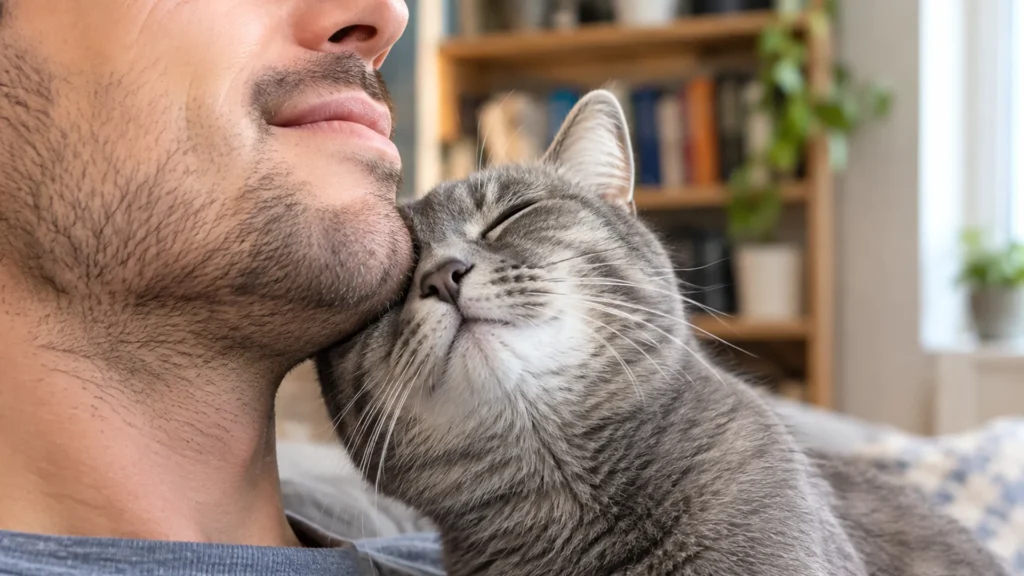
How Cats Show Affection (What Each Behavior Means)
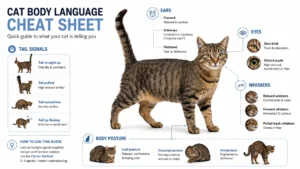
Part of answering “why is my cat so affectionate?” is knowing what cat affection looks like in the first place, and it isn’t always obvious. A quick cheat sheet:
- Purring: Usually contentment, but cats purr when stressed or unwell too. Look at what else is going on.
- Slow blinking: A calm, trusting look. A 2020 study found cats were more likely to walk up to people who slow blinked at them. See our cat slow blink guide.
- Kneading: A holdover from kittenhood, when kneading got the milk flowing. Grown cats mostly do it when they’re relaxed and happy.
- Headbutting and cheek rubbing: Scent marking and bonding rolled into one.
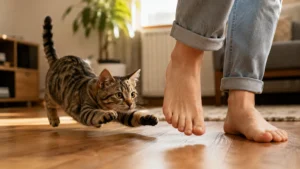
- Following you room to room: They want to be near you and keep an eye on what you’re doing.
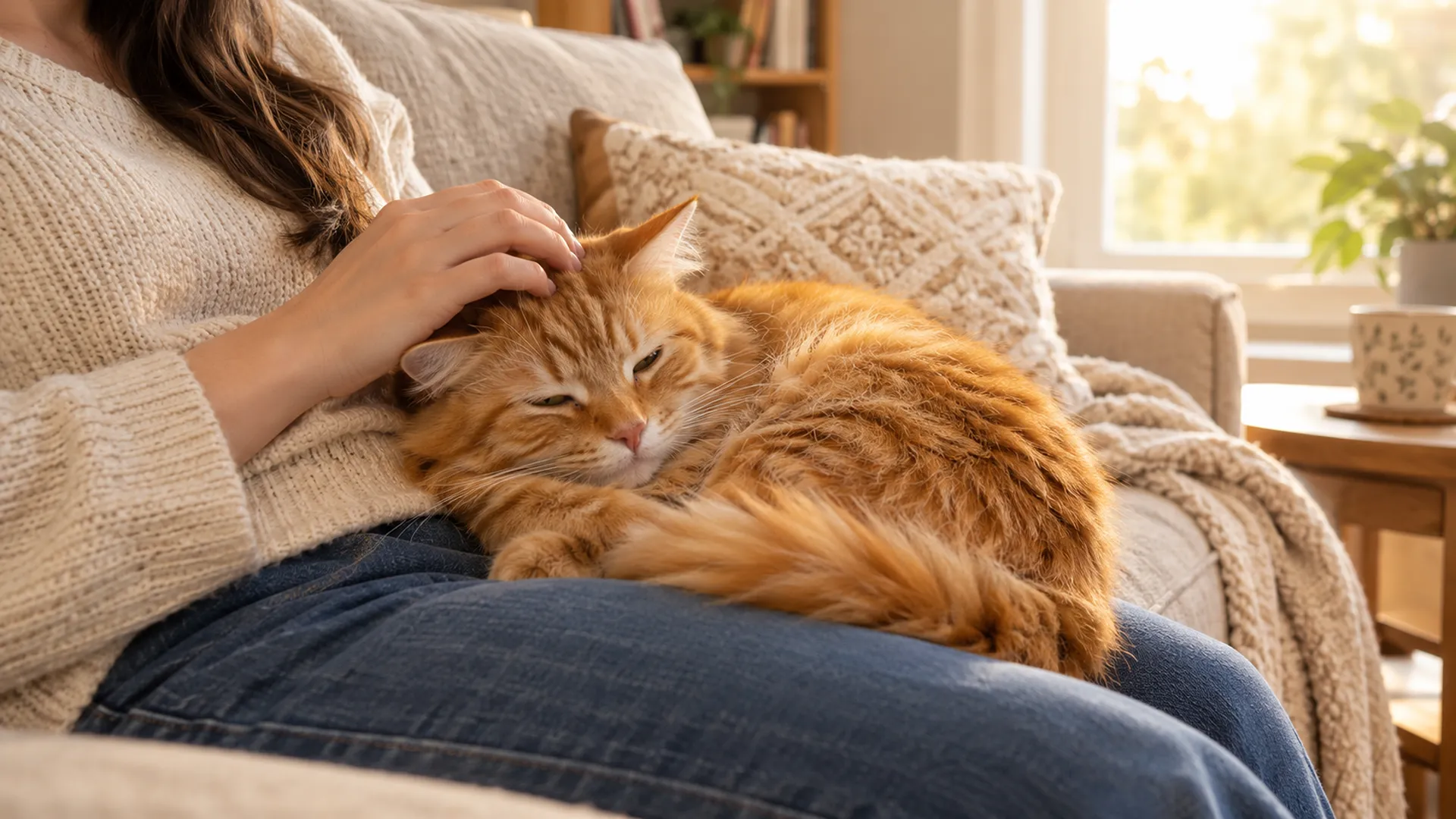
- Sleeping on or next to you: A sleeping cat is a vulnerable cat, so choosing you as a bed is a real compliment.
- Showing their belly: It means trust. It doesn’t always mean “rub me.” Lots of cats are touchy about their tummies, so watch for a twitching tail or ears going flat.
- Grooming or licking you: Cats groom the members of their group. Welcome to the club.
- Bringing “gifts”: A toy, or now and then a bug or a mouse, dropped at your feet. It’s hunting instinct, and they tend to share it with the people they’re closest to.
Affectionate vs. Clingy: When Is It Too Much?
Sometimes “why is my cat so affectionate?” is really a different worry: is this too much? A cat that loves you and a cat that falls apart without you aren’t the same thing.
A healthy, affectionate cat loves hanging out with you but is fine when you’re busy or out. It eats, plays, and sleeps normally, and being alone doesn’t bother it much.
A cat with possible separation anxiety gets upset when you leave, sometimes the second you pick up your keys. Watch for lots of meowing, destructive behavior, peeing or pooping outside the box, or grooming so hard that bald patches show up. That’s stress talking, not affection.
Sound like your cat? Our guides to cat separation anxiety and cat excessive grooming go through the signs and what you can do. And if your cat seems more anxious than loving, a chat with your vet is a smart first step.
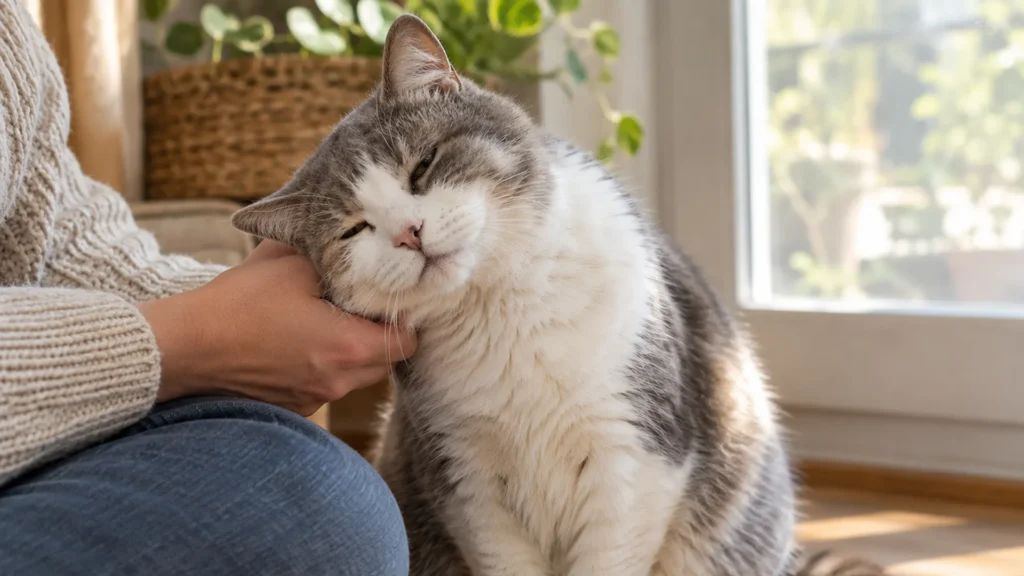
When to Call Your Vet
A few extra cuddles on their own usually aren’t anything to worry about. But if your “why is my cat so affectionate?” moment shows up alongside any of these, get a vet appointment booked:
- Eating or drinking more or less than usual
- Hiding or unusual tiredness
- Changes in litter box habits
- Weight loss or vomiting
- Unusual meowing or yowling, especially at night
- Sensitivity when you touch a particular area
- A sudden behavior change in a senior cat
Cats are experts at hiding pain and illness, so a behavior change is often the first clue you’ll get. Better to get it checked early than sit around guessing.
How to Respond to Your Affectionate Cat
Whatever the answer to “why is my cat so affectionate?” ends up being, a few easy habits go a long way toward keeping your bond solid:
- Let them set the pace. Give affection when your cat asks for it and learn where the limits are. Swishing tail or flat ears? That’s your cue to stop.
- Keep a daily play routine. A couple of short sessions with a wand toy burns off energy and scratches that hunting itch.
- Add enrichment. Window perches, puzzle feeders, and cat trees keep your cat busy when you can’t.
- Don’t reward demanding behavior. Paw on your face at 5 AM? Try not to cave. Redirect instead, and never punish.
- Build independence gently. For clingy cats, encourage little bursts of solo play and set up cozy spots that belong only to them.
FAQs
Are male or female cats more affectionate?
There’s no solid scientific evidence that one sex is more affectionate than the other. Personality, early socialization, and whether the cat’s been spayed or neutered usually count for more. Unspayed females in heat can seem extra lovey, but that’s hormones, and it passes.
Why is my cat only affectionate with me?
Cats usually bond hardest with whoever feeds them, plays with them, and knows when to back off. If that’s you, you earned it. Other people in the house can get there too, it just takes patience and calm, gentle handling.
Why is my cat more affectionate at night?
Cats are naturally most active around dawn and dusk. Evenings are also when you’re usually home and winding down, so your cat may treat it as your time together. A warm lap and a quiet house don’t hurt either.
Do cats become more affectionate after being spayed or neutered?
Spaying and neutering cut down on hormone-driven stuff like roaming, spraying, and heat cycles, and many owners find their cats calmer afterward. It won’t rewrite your cat’s personality, but a calmer cat is often an easier cat to bond with.
Final Thoughts
So, why is my cat so affectionate? Most of the time, it simply means your cat trusts you and enjoys your company. Scent marking, breed, and early socialization all feed into it too. The key is knowing what normal looks like for your cat. If the affection shows up suddenly and brings other changes with it, a quick vet visit will settle your mind. Want to understand your cat even better? Our cat anxiety guide will help you spot stress early.