It stings when a cat you love turns and hisses at you. But a hiss isn’t hatred, and it isn’t personal — it’s one of the oldest tools in a cat’s communication kit. Once you understand what’s driving the behavior, you can start repairing the moment and strengthening the bond underneath it.
What Does It Mean When a Cat Hisses?
A hiss is a sharp burst of air forced through an open mouth, and it’s almost always involuntary — a reflex, not a decision. It’s your cat’s way of saying, plainly, that something in this moment feels wrong.
Cats avoid physical confrontation when they can; a fight risks real injury, and their instincts favor a cheaper way out. A hiss is that cheaper way out — a boundary drawn in sound instead of claws, meant to end an encounter before it escalates. It comes from fear, discomfort, or a sudden spike of stress, not from spite.
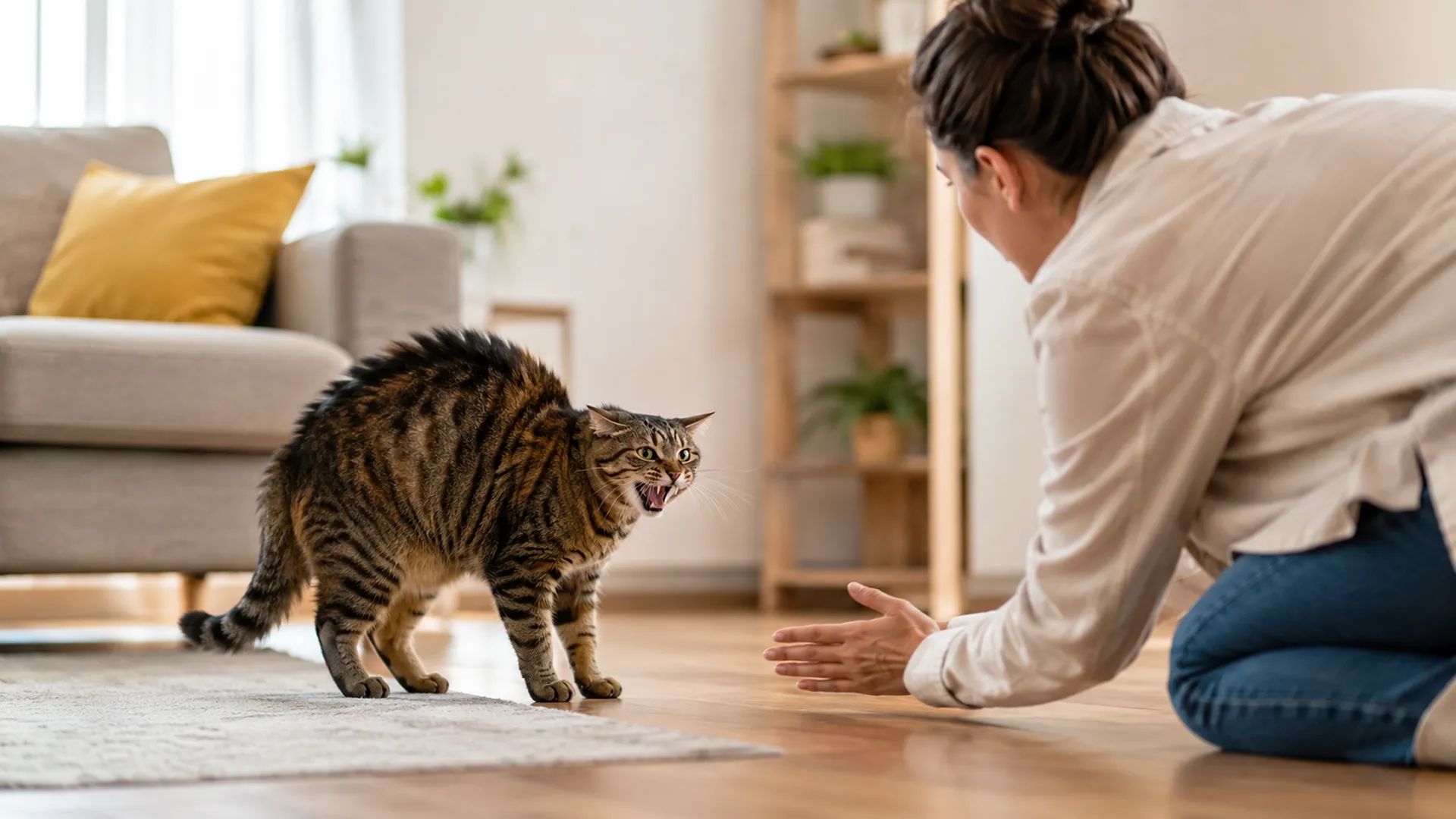
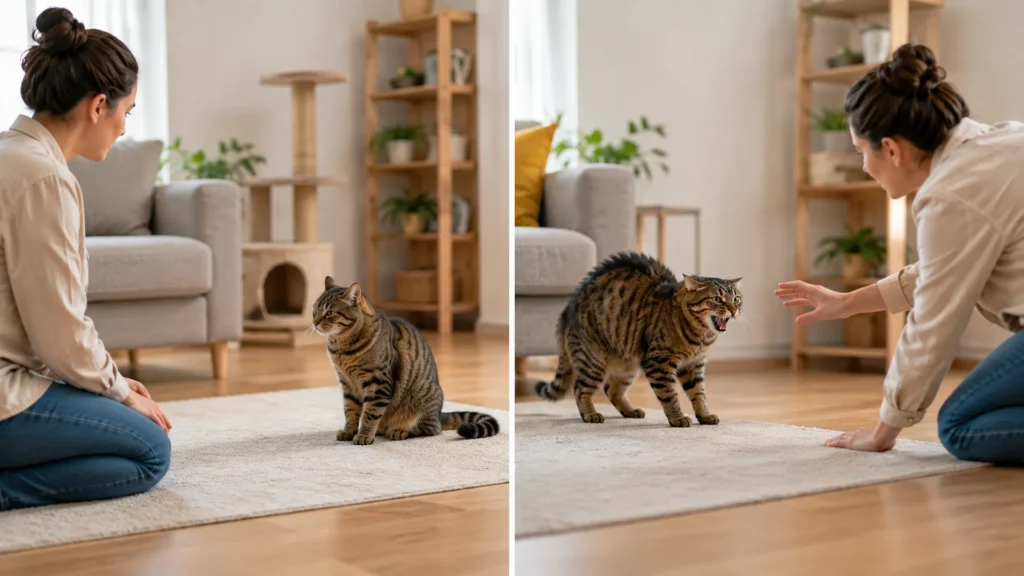
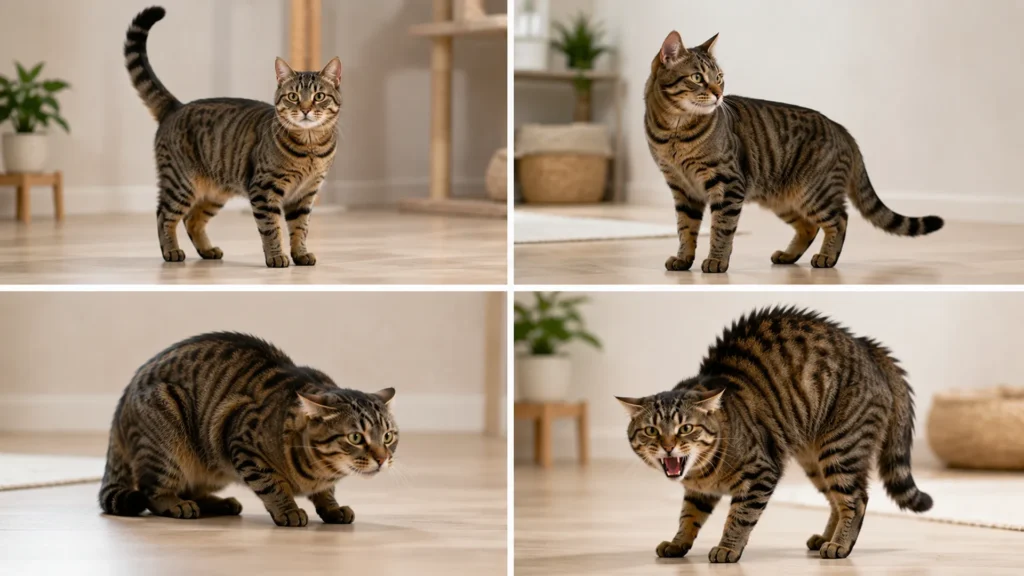
That distinction matters because hissing and aggression aren’t the same thing. A hissing cat is almost always playing defense: cornered, overwhelmed, trying to push the threat back rather than close the distance to it. You can read this in the body — ears pinned flat, back arched, fur puffed, tail twitching or lashing. It’s the posture of an animal trying to look bigger, not one gearing up to strike.
Why Does My Cat Hiss at Me? Common Reasons
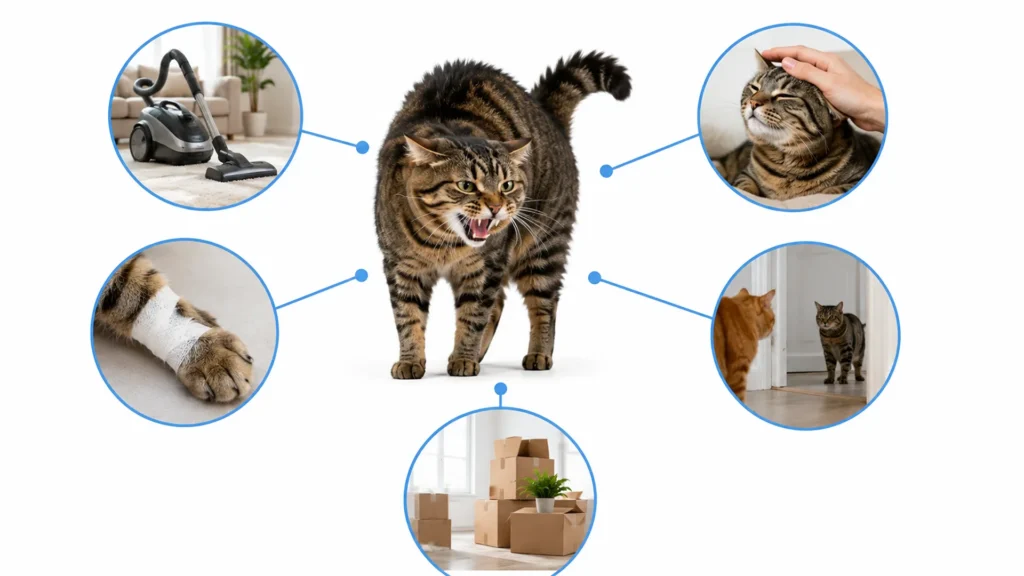
Fear or feeling threatened. This is the most common trigger by far. A quick approach, a hand reaching from an unexpected angle, or being cornered with no exit can all read as danger. So can loud noises — a dropped pan, a vacuum switching on — or anything unfamiliar entering their space, from a strange object to a bulky coat they don’t recognize on your body.
Pain or illness. A cat who hisses when touched, especially if the behavior is new, may be hurting. Cats hide pain well, and a hiss is often the first outward sign that something’s wrong — arthritis, a hidden injury, dental disease. A sudden change like this is a reason to call the vet, not just wait it out.
Overstimulation during petting. The classic scenario: a good cuddle session turns into a hiss out of nowhere. Prolonged petting, or contact with sensitive spots like the belly or the base of the tail, can tip a cat from enjoying touch to being overwhelmed by it.
Territorial or protective behavior. Cats are attached to their space exactly as it is. A new pet, an unfamiliar visitor, or even rearranged furniture can register as an intrusion worth warning off.
Stress and anxiety. A cat under chronic stress has less patience for anything, so the threshold for hissing drops. Moving house, a disrupted routine, or ongoing noise like construction outside can all wear that patience down over time.
What Should You Do If Your Cat Hisses at You?
How you respond in the first few seconds shapes what happens next. Skip the instinct to react — no yelling, no sudden movement. Back away slowly and let your cat retreat somewhere they feel safe to settle.
Once things have calmed down, work backward to the cause. Was the TV too loud? Did you brush past their food bowl? Naming the trigger is what lets you avoid it next time.
From there, rebuilding trust is a matter of patience: let your cat approach on their own schedule, use a soft voice and a high-value treat as an invitation rather than a demand, and resist the urge to force contact before they’re ready.
Whatever you do, don’t punish a hiss. Yelling, a water spray bottle, or physical correction won’t teach a cat anything except that you’re another thing to fear — and that undoes trust faster than almost anything else.
When Is Hissing a Sign of a Medical Problem?
Hissing is usually behavioral, but it can also be the first visible clue to a medical issue — particularly when it appears suddenly and without an obvious cause. Book a vet visit if you notice:
- A sudden shift in personality or temperament
- Limping, stiffness, or reluctance to jump
- Pain, growling, or hissing tied to touch in one specific spot
- Loss of appetite
- Hiding for long stretches
- Hissing on a daily basis with no clear trigger
How to Prevent Future Hissing
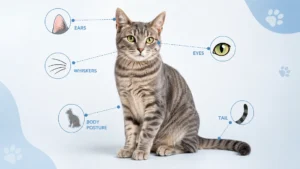
Read the early warning signs. A hiss is rarely the first signal — it’s usually the last one. Watch for the cues that come before it: ears sliding back, a tail tip flicking, pupils widening, a body that’s gone suddenly still and tense.
Let your cat set the terms of contact. Don’t corner them, scoop them up mid-nap, or push interaction when their body language says otherwise. Respecting a “no” now prevents a hiss later.
Build a predictable routine. Cats find security in sameness. Feeding, play, and litter box cleaning at consistent times each day lower their baseline stress, which makes them harder to startle into a defensive reaction.
Keep them mentally engaged. Boredom compounds stress. Cat trees, puzzle feeders, scratching posts, and regular play give that energy somewhere productive to go.
Frequently Asked Questions
Is it normal for cats to hiss at their owners? Yes — even deeply affectionate cats will hiss if startled, unwell, or pushed past a boundary. It reflects the moment, not the relationship.
Why does my cat hiss but not attack? Because the hiss is the strategy. It’s a warning meant to end the encounter peacefully, so a fight never has to happen.
Why does my cat hiss when I try to pet them? Usually overstimulation, or contact with a spot that’s sensitive or sore. Watch for tail flicking and ear position before it escalates to a hiss.
Should I hiss back at my cat? No. It won’t communicate anything useful to them — it will just read as a threat, which can provoke the very reaction you’re trying to avoid.
Can a friendly cat suddenly start hissing? Yes, and it’s worth taking seriously. An out-of-character hiss from an otherwise easygoing cat often points to pain, illness, or a stressor severe enough to override their usual temperament.
Conclusion
A hiss isn’t a verdict on your relationship — it’s information. Your cat is telling you, in the only language built for the moment, that they need space. Listen for the cause, respond with patience instead of correction, and loop in a vet when the behavior shows up out of nowhere. Do that consistently, and the bond holds.