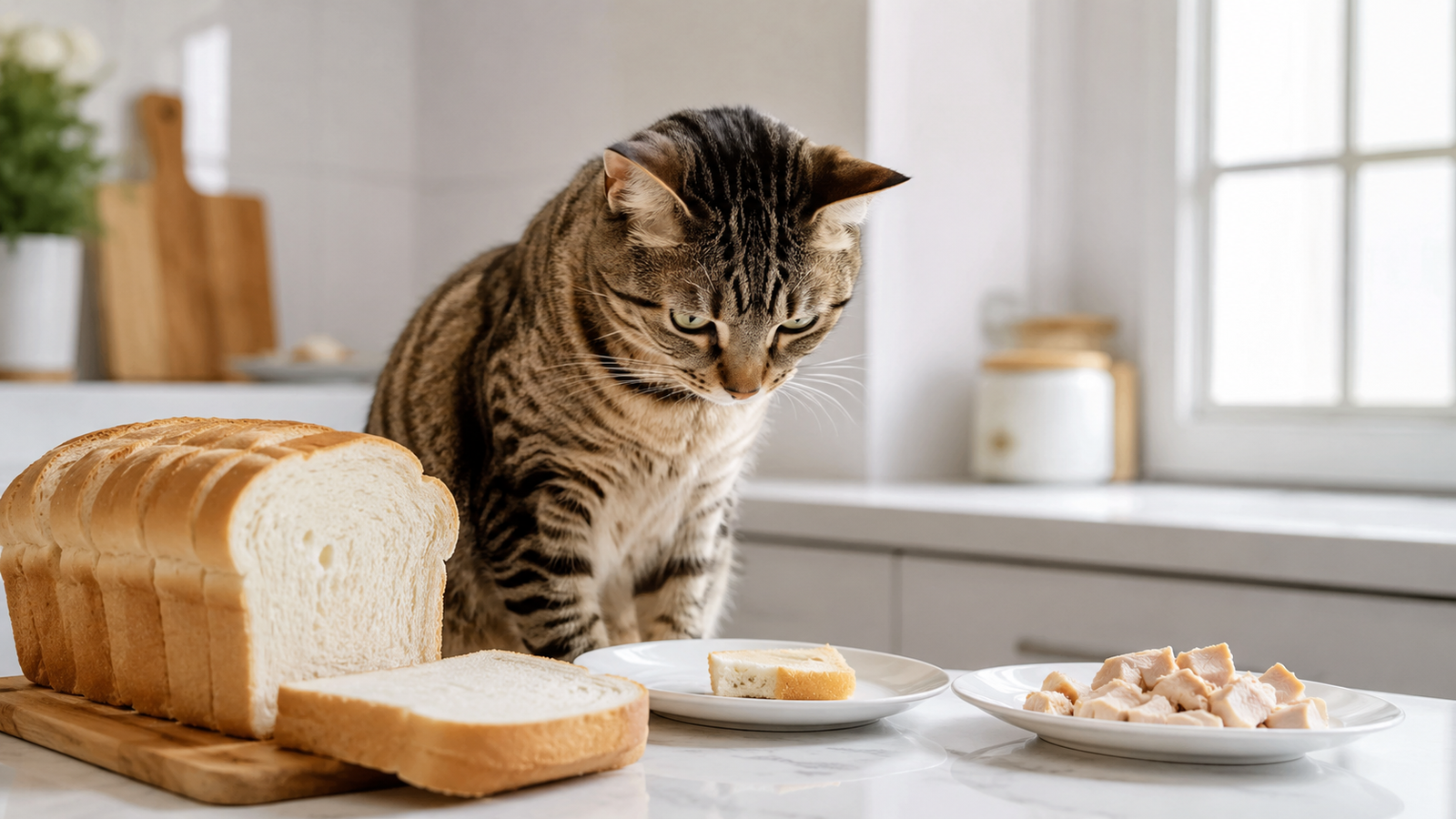
If your cat has ever eyed your morning toast with obvious intent, you’ve probably wondered whether it’s safe to share. The short answer: plain bread, in tiny amounts, won’t hurt most cats — but it isn’t good for them either. Some varieties, on the other hand, contain ingredients that are genuinely dangerous. Here’s what’s worth knowing before you break off a piece for your kitty.
Is Bread Actually Safe for Cats?
Plain baked bread isn’t toxic, so there’s no reason to panic if your cat steals a crumb off your plate. But cats are obligate carnivores — their bodies are built to run on meat, not grains, and they have no biological need for carbohydrates. A nibble of plain bread now and then is unlikely to cause harm, but it should never stand in for a balanced, meat-based diet. At best, it’s an empty-calorie novelty rather than a treat with any real upside.
Does Bread Offer Any Nutritional Value?
Not much. A cat’s digestive system is designed to extract energy from animal protein and fat, so the carbohydrates that make up most of a loaf of bread go largely to waste.
| Nutrient | Found in Bread | Benefit for Cats |
|---|---|---|
| Carbohydrates | High | Minimal — cats don’t rely on them for energy |
| Protein | Low | Poor quality, missing essential amino acids like taurine |
| Fat | Low | Limited use to felines |
| Fiber | Small amount | Mildly helpful for digestion, but better sources exist |
| Vitamins & Minerals | Small amounts | Too little to matter for daily needs |
Given this profile, a high-quality, meat-based cat food will always do more for your pet’s health than bread ever could.
Which Breads Are Safe, and Which Are Dangerous?
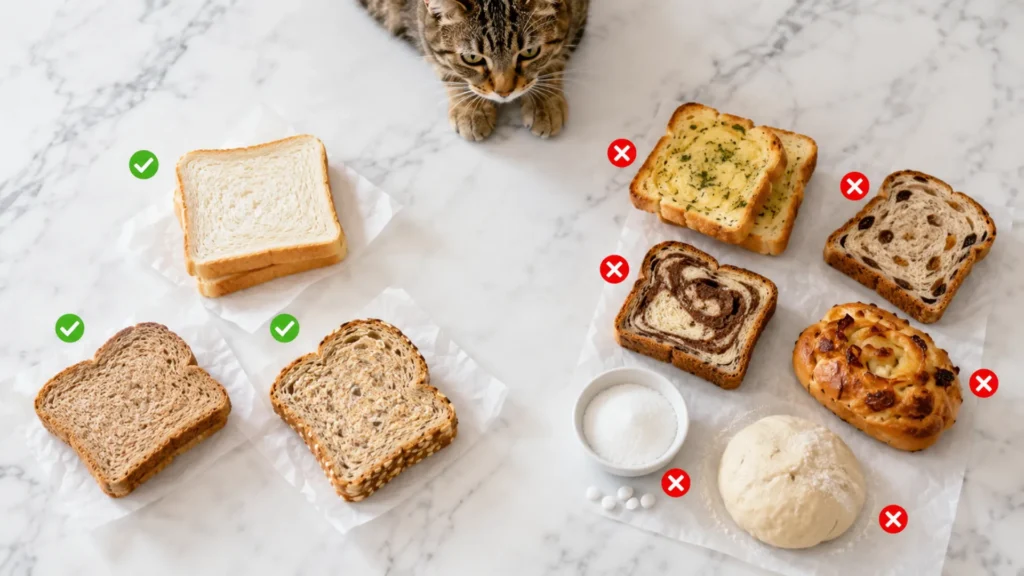
Not every loaf carries the same risk, and a few varieties can trigger a genuine medical emergency.
Generally fine in tiny amounts:
- Plain white bread
- Whole wheat bread
- Plain multigrain bread, provided it’s free of nuts or seeds that could pose a hazard
None of these offer any nutritional benefit — think of them as harmless filler at best.
Never feed your cat:
- Garlic or onion bread — both belong to the Allium family and can destroy a cat’s red blood cells, leading to severe anemia.
- Raisin bread — raisins and grapes are linked to sudden, irreversible kidney failure in cats.
- Chocolate bread — the theobromine in chocolate is toxic to a cat’s heart and nervous system.
- Bread containing xylitol — this sugar substitute triggers a dangerous insulin spike and can cause liver failure.
- Raw yeast dough — a double threat. It expands in the warmth of the stomach, risking severe bloating or rupture, while the fermenting yeast produces alcohol that can lead to poisoning.
What Happens If Your Cat Eats Bread?
The outcome depends heavily on quantity and ingredients. A small piece of plain bread will typically pass without any noticeable effect. A larger amount is more likely to cause digestive upset — cats struggle to break down heavy carbohydrates, so expect possible vomiting, diarrhea, gas, or bloating.
If the bread contained something toxic, such as garlic, raisins, or raw dough, treat it as an emergency. Don’t wait to see if symptoms appear — call your vet or an animal poison control center right away.
How Much Bread Is Too Much?
When it comes to sharing bread, less is always better — a single bite no bigger than a fingernail is plenty, and it shouldn’t become routine. As a general rule, treats of any kind should stay under 10% of a cat’s daily calories. Kittens are the exception: it’s best to skip bread for them entirely, since their developing bodies need nutrient-dense food to build strong bones and muscle, and a stomach full of bread leaves less room for what actually matters.
Better Treats Than Bread
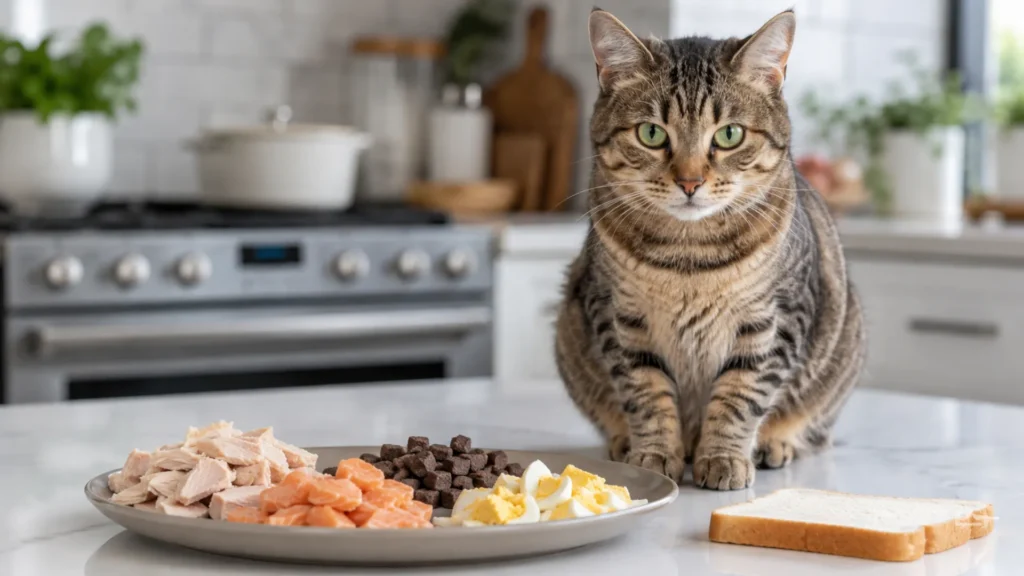
If you want to share something with your cat, choose foods that actually support their biology instead of just filling space. Since cats thrive on protein, consider:
- Cooked chicken or turkey, plain and skinless
- Plain cooked salmon or tuna
- Freeze-dried meat treats — beef, chicken, or liver
- High-quality commercial cat treats
- Cooked eggs, scrambled or boiled, in small amounts with no salt or butter
These options align with a cat’s natural dietary needs and are easier on digestion than bread ever will be.
Watching for a Bad Reaction
Even plain bread can upset a sensitive stomach, so keep an eye on your cat for about 24 hours after they’ve snuck a piece. Signs of trouble include:
- Vomiting
- Diarrhea
- Loss of appetite
- Unusual lethargy
- Excessive drooling
- Abdominal discomfort, such as hunching or crying when touched
If any of these persist for more than a few hours — or if you suspect raw dough was involved — contact your vet without delay.
Frequently Asked Questions
Can kittens eat bread? No. Kittens need nutrient-dense, high-protein food to support rapid growth, and filling their small stomachs with bread crowds out what they actually need.
Can cats eat toasted bread? A small piece of plain, unbuttered toast is no more or less safe than soft bread — it’s just as low in nutritional value and should stay an occasional taste rather than a habit.
Can cats eat bread crust? Crust isn’t toxic, but it’s tougher to chew and digest. A large piece can pose a mild choking risk or minor stomach irritation.
Can cats eat bread with butter? Skip it. Butter is heavy in dairy fat, and since most adult cats are lactose intolerant, it can bring on diarrhea, vomiting, or stomach pain.
Why does my cat like bread? It could be the smell of yeast, the texture, or simple curiosity — some cats just want whatever’s on your plate.
Is moldy bread dangerous for cats? Yes, and seriously so. Mold produces mycotoxins that can cause tremors, seizures, or worse in cats, so moldy bread should never be an option.
The Bottom Line
Plain bread won’t poison your cat, but it offers almost nothing in the way of nutrition for an obligate carnivore. The real danger lies in what’s mixed in — garlic, raisins, and raw yeast dough among them — so it pays to know what’s in the loaf before you share. When in doubt, reach for a protein-based treat instead. If your cat does manage to snag a small piece of plain bread, there’s usually no cause for concern; just watch for anything out of the ordinary over the next day.