Every domestic cat body language guide I’ve ever read does the same thing: hands you a list. Ears mean this. Tail means that. Eyes mean something else entirely. Cool, except that’s not how cats actually communicate. They fire off several signals at once, and you only get the real answer when you look at all of them together. A flicking tail alone? Barely useful. That same flicking tail next to wide pupils and ears pinned back is a totally different message.
So this isn’t another checklist. It’s a breakdown of how the signals actually combine, what changes if you’ve got multiple cats, when “weird” behavior is actually a vet visit, and where most people go wrong by treating their cat like a small, furry dog.
Why One Signal Never Tells the Whole Story in Domestic Cat Body Language
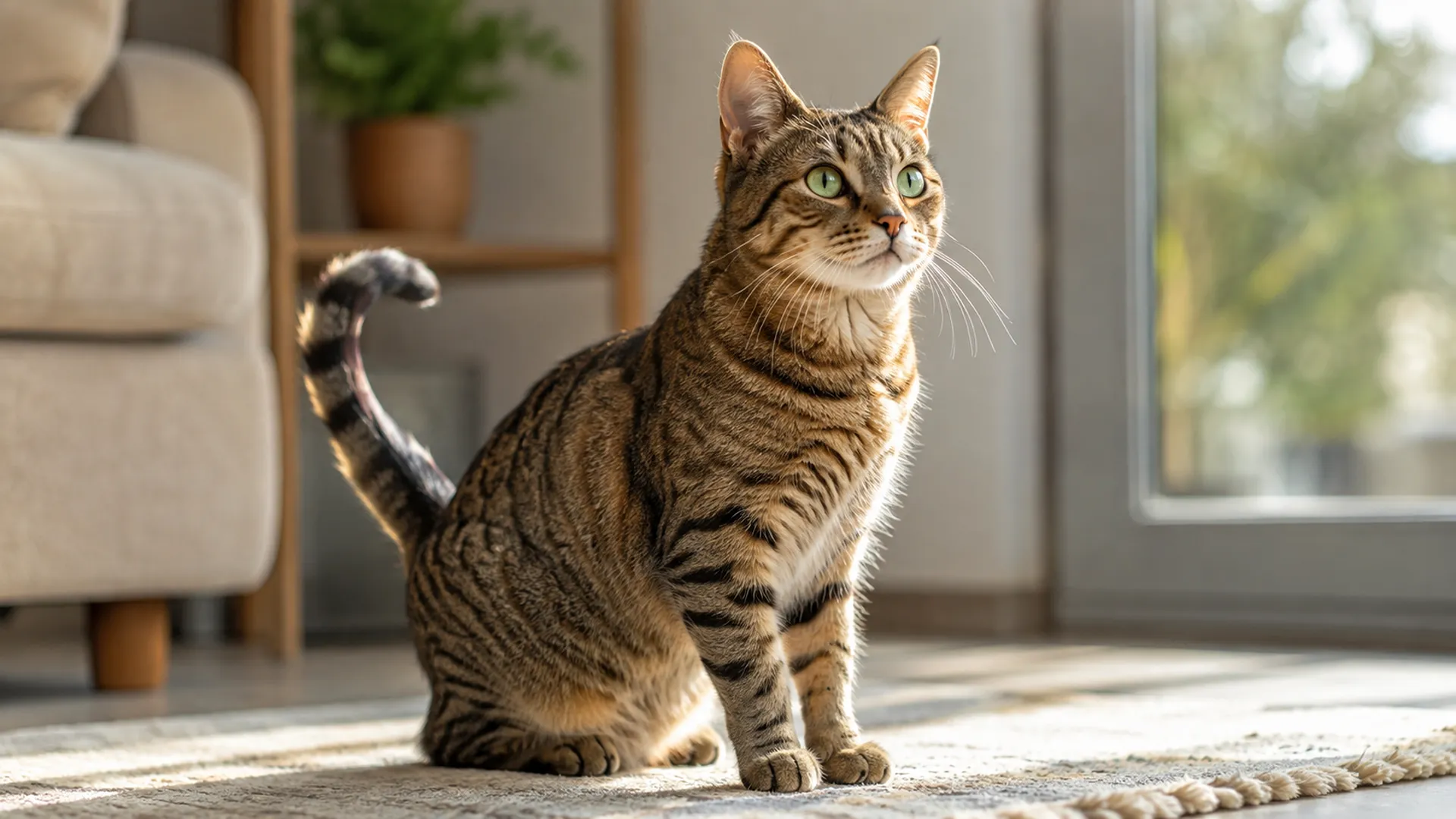
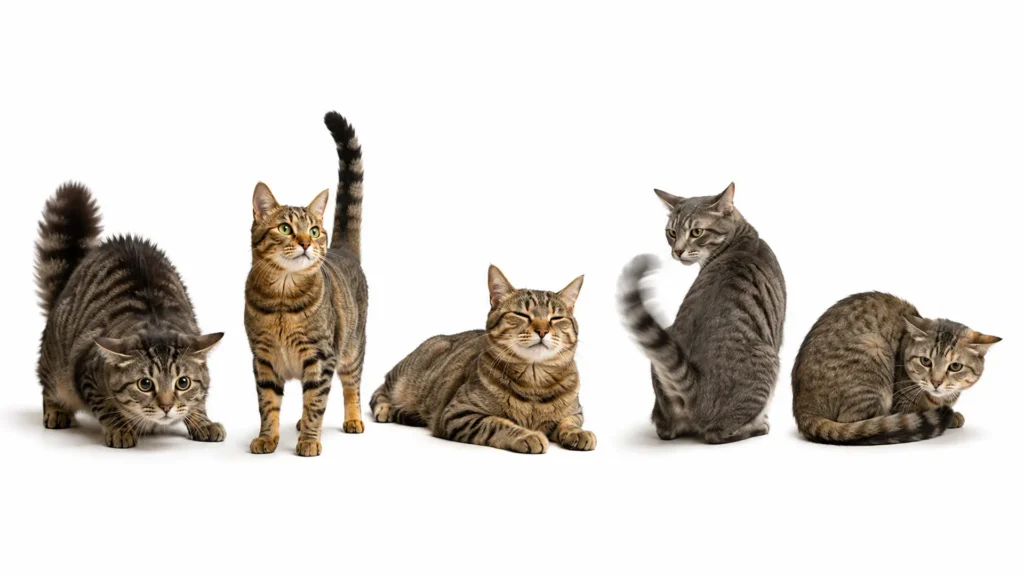
Here’s the part nobody explains well: ears, tail, eyes, and posture move independently of each other, and any one of them can mean different things depending on what the rest of the body is doing. Flattened ears might mean your cat is scared. Or it might mean they’ve spotted a bird and are locked in. The tail usually breaks the tie.
I’ve watched people misjudge their own cat constantly because of this. They catch one signal — say, a stare, or a flick — decide they know exactly what’s happening, and react on that alone. Wrong move. You have to look at the whole animal, not one body part in isolation. That’s the entire premise of reading domestic cat body language properly, and it’s what the next section is built around.
The Signal Combinations That Actually Matter
Think of these as the sentences cats build out of body parts. Once you recognize the pattern, you stop guessing.
Fear or Defensive Aggression
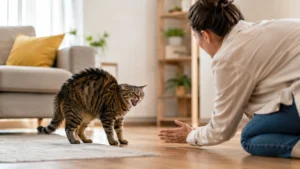
Ears back or flattened. Tail puffed. Body low, crouched. Pupils dilated.
This cat isn’t picking a fight — it feels trapped. The puffed tail and blown pupils are a stress response, an attempt to look bigger while staying ready to bolt. Don’t go in for a comforting pet here. Back off, lower your own body, and let them come to you on their own time.
Playful and Confident
Ears forward. Tail up with a slight hook at the top. Whiskers loose and pointed forward. Sometimes a full play bow — front legs down, back end up.
This is an invitation, not a warning. The whiskers are the real tell here — a genuinely defensive cat won’t have loose, forward whiskers. If play starts tipping into something rougher, check the ears and tail first. They shift before anything else does.
Content and Trusting
Slow blinks. Loose, relaxed body. Belly exposed. Tail in a soft sway instead of a flick.
About as chill as a cat gets. One thing I always tell people: a shown belly is not a “rub me here” sign, no matter how tempting it looks. It’s a vulnerability display. Reach for it and plenty of cats will grab your hand on reflex. It’s trust, not an invitation.
Overstimulated and About to Bite
Tail flicking or thumping. Skin rippling along the back. Ears twitching or swiveling. Pupils darting.
This is the one owners blow past constantly, mostly because it shows up mid-pet, right after everything seemed totally fine. Your cat wanted attention thirty seconds ago and genuinely meant it. Now they’re done. Once the tail starts going and the skin starts rippling, stop. Pushing through it rarely ends well.
Anxious or Unwell — Not Just Shy
Ears sideways or back. Body tucked in tight. Tail wrapped close. Blinking less than normal.
Could be anxiety. Could also be an early sign something’s physically off — cats are notoriously good at masking illness. If this posture hangs around for more than a day, don’t brush it off. More on when to actually worry a bit further down.
Stop Reading Your Cat Like a Dog
If dogs were your first pets, your instincts are actively working against you here. A lot of domestic cat body language looks like dog behavior on the surface and means the opposite underneath. Three mix-ups cause most of the trouble.
Dog logic: a wagging tail means excitement and happiness. Cat reality: a swishing or thrashing tail almost always means irritation, and the faster it moves, the more space they want.
Dog logic: eye contact is friendly. Cat reality: a hard stare reads as a challenge. Want to actually signal trust? Do the opposite — soften your eyes and blink slowly. Most cats will blink back, and honestly, it’s one of the better ways to talk to them.
Dog logic: walking straight up to say hi is polite. Cat reality: a fast, head-on approach feels rude, sometimes threatening. Cats prefer you come in slow and sideways, letting them make the call.
Drop these three habits and your cat will likely warm up to you faster than you’d expect.
Does This Change With Age or Breed?
Not every cat “talks” the same way. A few things shift how easy — or hard — the signals above are to read.
Kittens haven’t developed control yet, so everything comes out bigger and messier. The sideways hop — arched back, puffed tail, bouncing sideways — shows up a lot, along with clumsy pouncing. Looks dramatic. It’s usually just excitement.
Senior cats go quieter overall. Less tail movement, more stillness, subtler everything. This is exactly why older cats get misread — a cat that looks “fine” and calm might actually be in pain and simply not moving enough to show it. Any sudden change in a senior cat’s usual stillness is worth a second look.
Flat-faced breeds — Persians, Scottish Folds, that type — have less visible ear and facial movement, and those are two of the biggest emotional tells in cats generally. With these breeds, you’re better off leaning on tail position and posture, because the face just won’t give you as much.
Cat-to-Cat Body Language: Play, Bonding, or a Real Fight
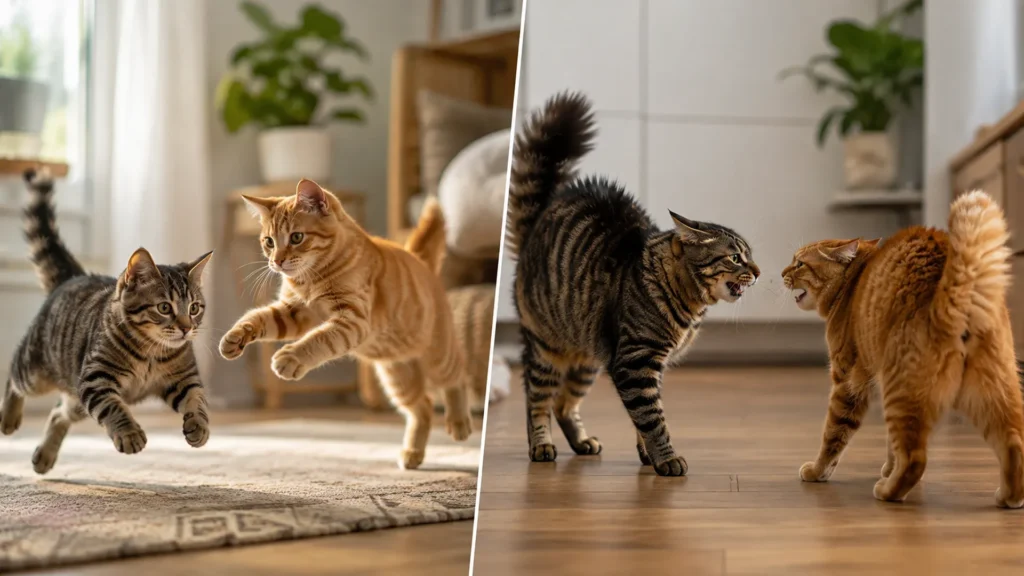
Multi-cat household? You’ve probably frozen mid-chase wondering if you need to intervene. Here’s the actual difference.
Signs it’s play:
- Roles switch — chaser becomes the chased and back again
- There are pauses where both cats visibly relax
- Claws stay in
- Mostly quiet, maybe an occasional thump
Signs it’s a real fight:
- One cat locks a hard stare and won’t break it
- Low growling or yowling, not quick squeaks
- One cat does all the chasing, no swapping
- Both cats have flattened ears and low, tense bodies
Signs it’s bonding, not conflict at all:
- Mutual grooming
- Tails wrapped together
- Sleeping while touching
- Cheek rubs
My rule of thumb: if the chase or wrestling goes past a minute or two without a pause, or you hear real growling, separate them. Don’t wait to see how it resolves on its own.
Vet Red Flags vs. Normal Cat Weirdness
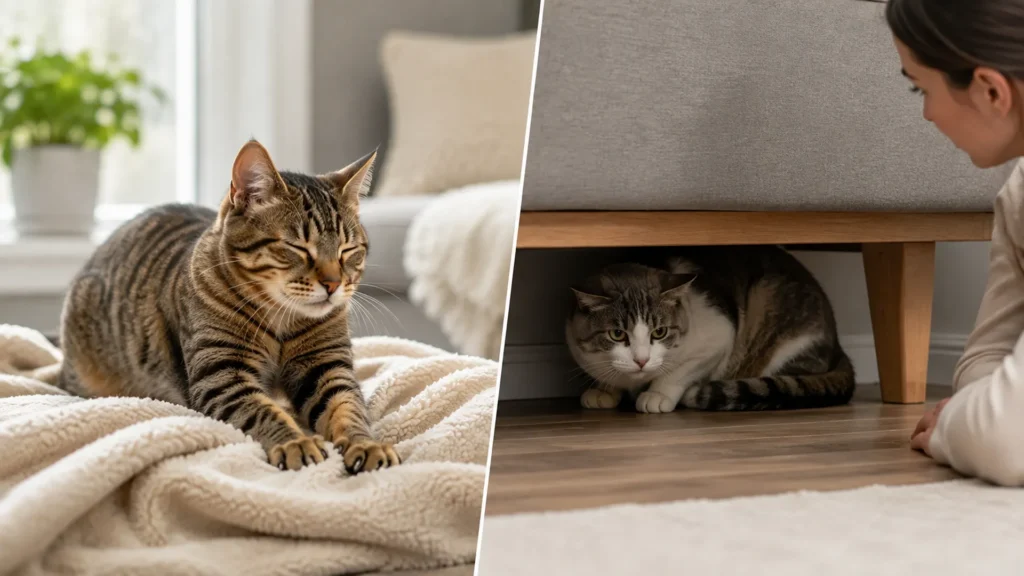
Cats do a lot of stuff that looks alarming and isn’t. The skill is telling the harmless quirks apart from the ones that mean something’s actually wrong.
| Normal Quirk | Possible Medical Red Flag |
|---|---|
| Kneading / “making biscuits” | Hiding + hunched posture for 24+ hours |
| Chattering at birds | Head pressing against walls or furniture |
| Slow blinking | Uneven pupil size |
| Occasional tail puff | Dragging or limp tail |
| Sleeping in a tight loaf | Sudden reluctance to jump or move |
The single quirk is almost never the problem — a sudden change in behavior is what should actually worry you. A cat that’s always kept to itself isn’t necessarily sick. But a normally social cat suddenly hiding all day, especially combined with labored breathing or skipped meals, needs a vet the same day. Trust the shift more than any single moment.
Quick Reference: What Is My Cat Telling Me Right Now?
Some days you just need a fast answer, not a full article. Pick your cat’s ear position, tail position, and general posture in the tool below and get an instant read grounded in the same domestic cat body language patterns covered above.
Bookmark it. This is meant to be checked in the moment, not read once and forgotten.
FAQ
Why does my cat show me their belly but bite when I touch it?
It’s a trust signal, not an invitation. The belly is vulnerable, and plenty of cats still defend it out of instinct even mid-display.
Is purring always a sign of happiness?
Nope. Cats purr when anxious or in pain too, sometimes as self-soothing. Check the rest of the body before assuming they’re content.
Why does my cat’s tail twitch while being petted?
Usually means they’ve hit their limit. Overstimulation, not enjoyment.
Can cats understand human body language?
To a real degree, yes. Cats pick up on tone, posture, and facial expressions over time, especially with people they see often.
The Bottom Line
Reading domestic cat body language isn’t about memorizing a list — it’s about reading the ears, tail, eyes, and posture as one conversation instead of four separate ones. Keep this guide (and the quiz tool) handy for the next time your cat gives you that blank, unreadable stare. Want more guides like this one? Subscribe below.