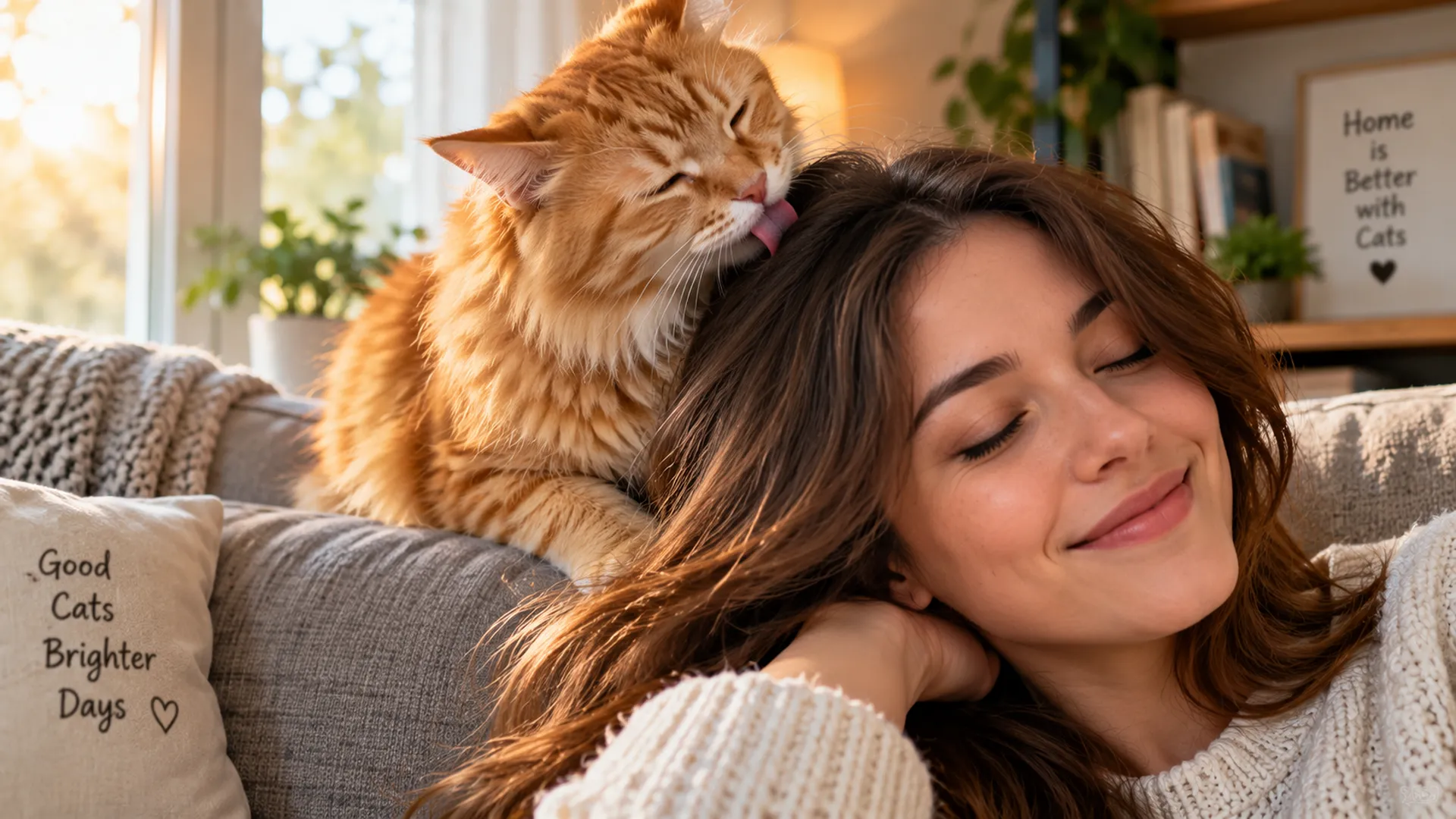
Milo used to climb up the back of the couch just to get at my hair. Every evening. Same spot, same time, for about two years. If that sounds familiar and you’ve been typing why does my cat lick my hair into Google at some strange hour of the night, you’re fine. This is one of the most common things cat owners ask about, and the answer is usually much simpler than people expect.
Not always, though. Let’s get into it.
Why Does My Cat Lick My Hair? The Real Reasons
There’s no single clean answer. Ask a handful of vets and you’ll get overlapping explanations — some instinct, some scent, some just quirks specific to your cat.
Bonding and Social Grooming
Cats groom each other to hold onto social bonds. Vets call it allogrooming, though the term doesn’t really matter. Watch two cats who genuinely like each other and you’ll notice they go for the head and face first — the parts neither one can reach on their own. That’s what your cat’s doing to you. You’ve been let into the circle, basically, and your scalp happens to be the one spot they can actually do something about. If your cat picked your hair over everything else in the house, take it as a compliment.
Scent and Taste: Sweat, Salt, and Whatever’s Left in Your Shampoo
Cats like salt. Sweat leaves behind a faint salty residue, whether that’s from exercise, a warm day, or just sleeping under blankets all night. Then there’s whatever’s still sitting in your hair from your last shower — coconut shampoo, a vanilla conditioner, whatever you happened to use — and suddenly your hair smells like something worth checking out. People gloss over this part of why does my cat lick my hair pretty often, but it actually matters once you get into which products are safe and which aren’t. More on that down below.
Comfort and Self-Soothing
Not really about you, if we’re honest. Licking triggers an endorphin release, and for a lot of cats that turns into a default way of relaxing or working through stress. Kind of like a person tapping their foot without noticing. Usually harmless. Worth remembering anyway, since it’s the same mechanism behind licking that tips into anxious or compulsive territory.
Why Some Cats Do This and Others Never Will
My sister’s cat hasn’t licked anyone’s hair once in eight years. Mine did it nightly. The gap usually traces back to early life and personality rather than luck. Kittens weaned too soon, or bottle-fed, sometimes carry grooming and suckling instincts into adulthood and redirect them toward their owner.
Cats living solo often lean on their person for the social grooming they’d normally get from another cat. In multi-cat homes, that instinct tends to go toward the other cats instead, so owners notice it less. Sometimes it really is just temperament — some cats are more affectionate, some more mouth-oriented — and that alone answers why does my cat lick my hair while a friend’s cat wouldn’t dream of it.
Why Does My Cat Lick My Hair at Night or While I’m Asleep?
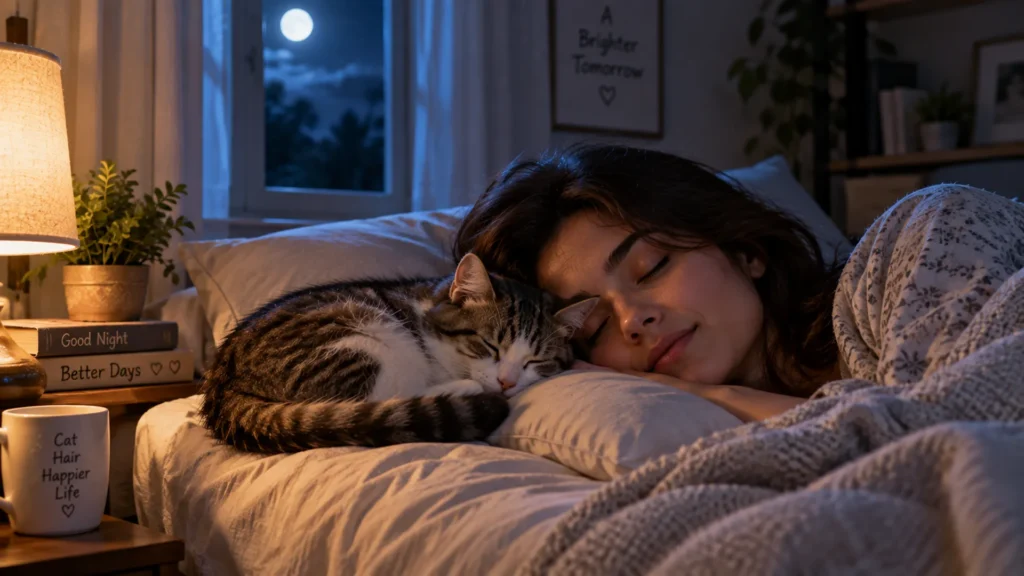
This version of the question comes up a lot, and there’s an actual reason behind it. Cats feel most comfortable grooming something that’s staying still. Movement interrupts the process, or reads as disinterest. A sleeping owner is calm, quiet, going nowhere — which makes bedtime the easiest window for this.
If it’s cutting into your sleep, a few small changes help. Moving the last feeding closer to bedtime tends to work well, since cats with full stomachs usually settle down instead of chasing your hair. A short play session before bed burns off energy that would otherwise go into licking. And if you need a quick fix for the next few nights, covering your hair overnight does the job while you sort out the routine.
Affectionate, Anxious, or Compulsive? How to Tell the Difference
Most hair-licking isn’t worth losing sleep over. Still, it helps to know where the line sits between a harmless habit and something worth watching.
The Quick Self-Check Table
| Type | Frequency | Context | Signs to Watch For |
|---|---|---|---|
| Affectionate | Occasional, a few minutes | While you’re relaxed, resting, or being petted | Calm body language, purring, nothing else unusual |
| Stress/Displacement | Spikes around specific triggers | After loud noises, visitors, household changes | Licking rises with the trigger, eases once it passes |
| Compulsive/Medical | Frequent, hard to interrupt | Happens no matter the mood or setting | Licking objects too, hairballs, bald patches, skin irritation |
Red Flags That Mean It’s Time to See a Vet
A few signs push this from quirky into concerning: licking that starts suddenly out of nowhere, visible fur loss, skin that looks red or raw, or licking paired with other stress behaviors like hiding or skipping meals. Cats can’t tell you outright that something’s wrong. A shift like this is usually the closest thing to a warning you’ll get.
Is It Safe to Let Your Cat Lick Your Hair?
For most cats, most of the time, an occasional lick isn’t a problem. A couple of things are still worth knowing rather than just assuming.
Hairball and Ingestion Risk
If your cat gets carried away and actually swallows hair, it can contribute to a hairball, or in rarer cases a blockage, especially with longer hair. Doesn’t happen often. Still enough reason not to let licking slide into chewing.
Hair Products That Are Actually Dangerous to Cats
This one deserves more than a passing warning, because some of what’s in your bathroom cabinet is genuinely risky if your cat gets a taste of it. Minoxidil, used in some hair growth treatments, is highly toxic to cats and can be fatal even in small amounts — if anyone in your house uses it, keep your cat away from treated hair entirely. Tea tree oil shows up often in dandruff shampoos and “natural” products, and it’s toxic too, capable of causing anything from drooling to more serious neurological symptoms.
A lot of essential oils used for fragrance fall into that same category, since cats process these compounds very differently than we do. Leave-in conditioners and heavily fragranced styling products are worth a second look as well, since that appealing scent is exactly what draws cats in to lick them off. If you use any of these, keep your hair covered until the product’s fully dry or rinsed out, and check the label — or ask your vet — if you’re unsure about a specific ingredient.
How to Gently Redirect the Behavior
If the hair-licking has crossed into genuinely annoying territory, the fix isn’t punishment. It’s steering the instinct somewhere else.
A Step-by-Step Redirect-and-Reward Method
- Figure out the trigger first — bedtime, cuddle time, or just whenever you sit still too long.
- The moment licking starts, offer a substitute — a lick mat, a toy, a treat, anything your cat actually likes.
- Reward the redirect, not the licking. Praise happens once they’ve switched over, not while your hair’s still involved.
- Give it a week or two before expecting real change. Cats run on routine, and this only works with consistency, every time, not just when you remember.
This works with your cat’s instincts instead of fighting them. In my experience, it holds up far better long-term than pushing your cat away or spraying yourself with a scent they hate.
FAQ
Does my cat licking my hair mean they love me?
Pretty much, yes. Cats tend to groom only people they trust, so if you’re still stuck on why does my cat lick my hair, trust is most of the answer.
Why does my cat only lick certain people’s hair?
Usually scent, comfort, and closeness of the bond — or sometimes it’s just whatever product that person happens to use.
Should I stop my cat from licking my hair?
Occasional licking is fine to let happen. Step in once it turns excessive, disruptive, or involves a product that isn’t safe.
Why does my cat lick my hair and then bite it?
A little nibbling afterward is a normal extension of grooming. If it turns rough or frequent, that’s usually overstimulation, not aggression.
Key Takeaway
Nine times out of ten, why does my cat lick my hair comes down to one thing: trust. Keep an eye on the red flags above, and if something still feels off, our guides on cat anxiety and excessive grooming go deeper into what might actually be going on.