
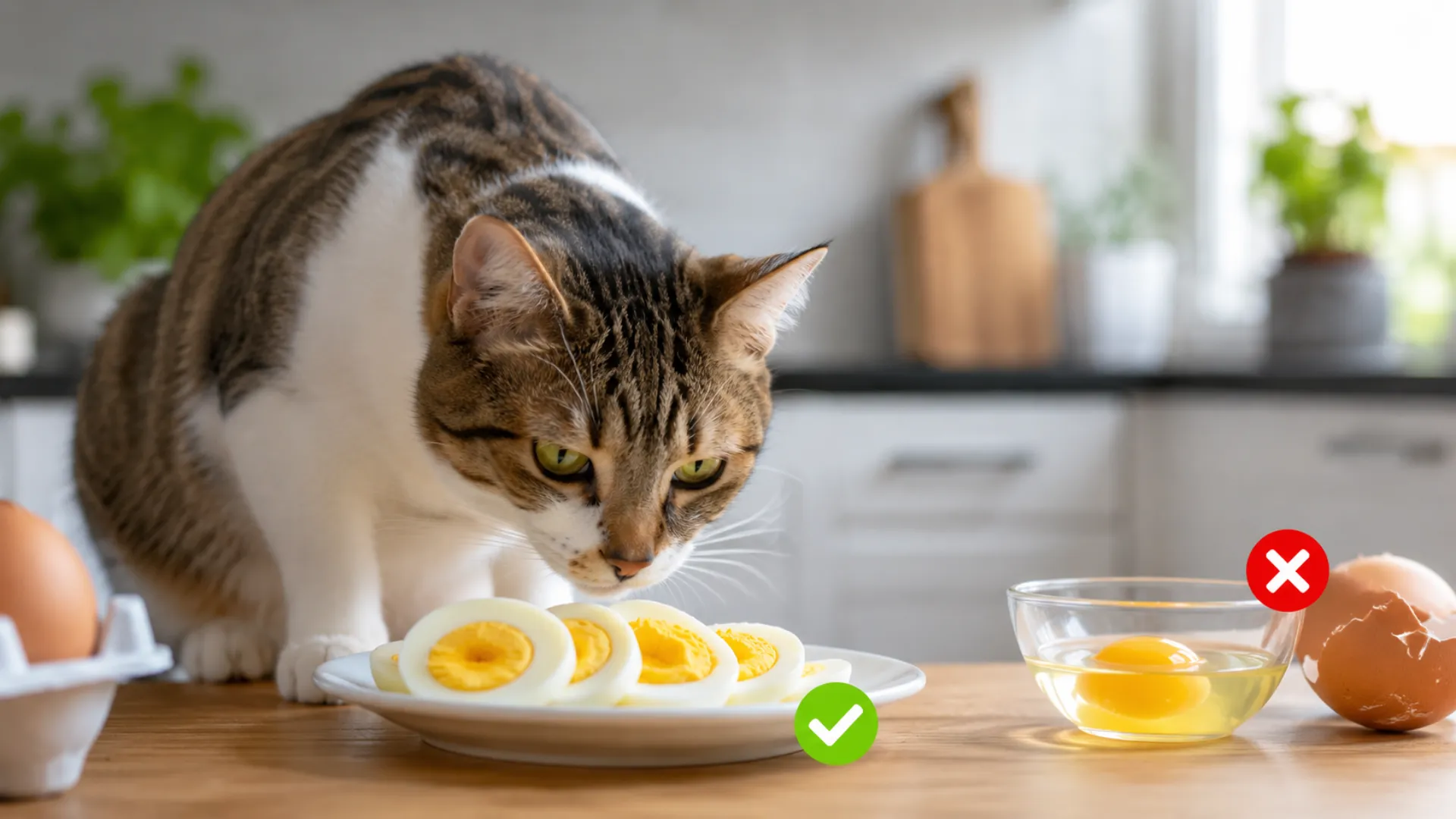
Yes, cats can eat eggs — but only when fully cooked and served in small amounts. Eggs deliver high-quality protein and a useful range of nutrients, yet they work best as an occasional treat rather than a dietary staple. Below is what you need to know about the benefits, the risks, proper portions, and safe preparation.
Are Eggs Safe for Cats?
Eggs are safe for cats as long as they’re cooked all the way through. Cats are obligate carnivores built to process animal protein efficiently, so a cooked egg digests easily. That said, eggs don’t supply the full nutrient profile a cat needs to thrive, so they should never substitute for a commercially balanced diet.
A properly formulated cat food delivers precise ratios of vitamins, minerals, and amino acids — ratios that too much egg can throw off. Treat eggs as an occasional bonus, not a meal.
Nutritional Benefits of Eggs for Cats
Fed correctly, eggs bring real nutritional value to a cat’s diet.
High-quality protein. Eggs offer a pure, easily digestible protein source that supports lean muscle and helps keep cats active.
Vitamins and minerals. Eggs supply several micronutrients that support daily bodily functions:
- Vitamin A – supports vision and immune health
- Vitamin D – aids calcium absorption and bone strength
- B12 and riboflavin – support energy metabolism
- Selenium and iron – support healthy blood and cell function
Healthy fats. The fat in eggs is a concentrated energy source that also benefits skin condition and coat shine.
Amino acids. Eggs contain taurine, an amino acid essential to feline heart and eye health — but not in quantities sufficient to meet a cat’s needs on their own. This is another reason commercial cat food can’t be replaced by eggs alone.
Risks of Feeding Eggs to Cats
Eggs come with a handful of hazards worth watching for.
Raw eggs. Never feed raw eggs to a cat. They carry a real risk of Salmonella or E. coli contamination, which can cause food poisoning, vomiting, and diarrhea — in your cat and in your household.
Biotin deficiency. Raw egg whites contain avidin, a protein that binds to biotin (vitamin B7) and blocks its absorption, which can eventually affect skin and coat health. Cooking neutralizes avidin entirely, so this risk disappears once the egg is heated through.
Allergic reactions. Some cats are allergic to eggs, just as some people are. Watch for vomiting, diarrhea, intense itching, or skin redness after a first taste.
Calorie density. A whole egg packs a surprising number of calories for an animal a cat’s size — roughly equivalent to a person eating several donuts. Regular overfeeding can lead to weight gain and digestive upset.
Which Types of Eggs Can Cats Eat?
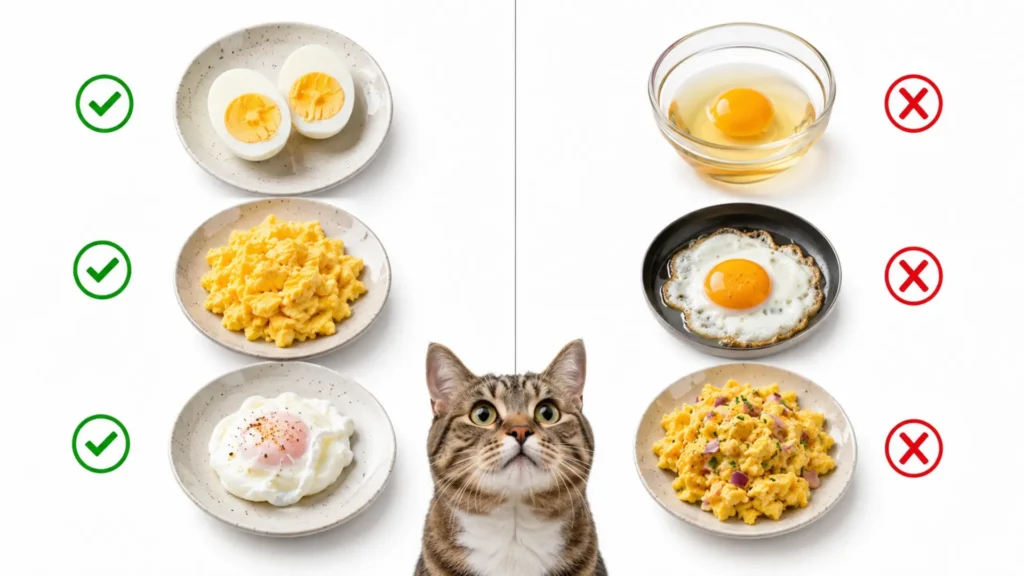
Preparation matters as much as the egg itself.
Boiled eggs are the safest choice — hard- or soft-boiled, fully cooked, with nothing added.
Scrambled eggs are fine if cooked completely plain in a non-stick pan, with no butter, milk, salt, or spices.
Poached eggs work too, provided both white and yolk are cooked firm with no runny sections.
Fried eggs aren’t recommended — the butter or oil used to fry them adds fat and calories a cat doesn’t need and can upset digestion.
Raw eggs should be avoided entirely, for the bacterial and biotin-related reasons already covered above.
Whites versus yolks: both are fine in moderation. Whites are lean, low-fat protein; yolks carry most of the vitamins and fat. A small mix of both works well.
How Much Egg Can a Cat Eat?
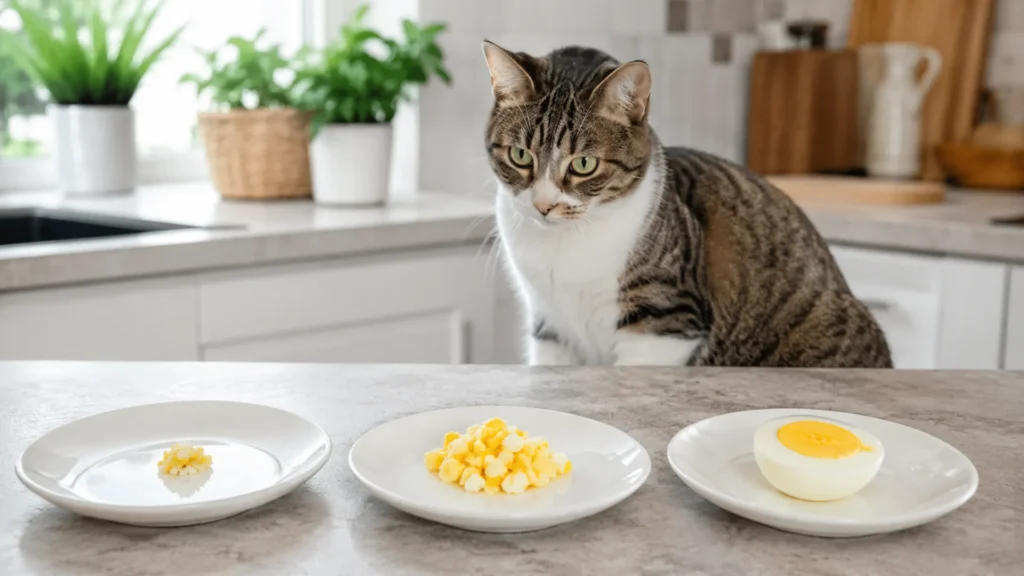
Treats should stay under 10% of a cat’s daily calories, which keeps egg portions modest.
| Cat Size | Recommended Portion | Frequency |
|---|---|---|
| Kitten | A small bite, with vet approval | Occasionally |
| Small adult | 1–2 teaspoons | Once weekly |
| Average adult | 1 tablespoon | 1–2 times weekly |
| Large adult | Up to ½ egg | 1–2 times weekly |
Introduce eggs gradually — start with a crumb-sized portion and watch your cat’s digestion over the next day before offering more.
How to Prepare Eggs Safely for Cats
- Cook it through. No runny whites or yolks.
- Keep it plain. Skip salt, pepper, garlic, onion, butter, and oil — many common seasonings are toxic to cats.
- Let it cool. Serve at room temperature to avoid burning your cat’s mouth.
- Cut it small. Bite-sized pieces reduce the risk of choking and make the egg easier to eat.
Signs Your Cat May Not Tolerate Eggs
After a first try, watch for:
- Vomiting or gagging
- Loose stools or diarrhea
- Excessive scratching or grooming
- Swelling around the face or paws
- Ear irritation or redness
- Sudden loss of appetite
If any of these appear, stop feeding eggs and check in with your veterinarian.
Frequently Asked Questions
Can kittens eat eggs?
Only in tiny amounts, and only with a vet’s go-ahead — a kitten’s digestive system is more sensitive than an adult cat’s.
Can cats eat eggs every day?
No. Daily eggs add unnecessary calories and can unbalance their regular diet.
Can cats eat egg yolks?
Yes, cooked yolks are safe and nutrient-dense, though higher in fat than whites.
Can cats eat egg whites?
Yes — cooked whites are a lean, low-fat protein source.
Can cats eat scrambled eggs?
Yes, as long as they’re plain, with no butter, milk, or seasoning.
Can cats eat boiled eggs?
Yes — this is the simplest and safest preparation.
Can cats eat raw eggs?
No, due to Salmonella risk and biotin interference.
Are eggs good for sick cats?
A plain cooked egg can sometimes tempt an appetite-less cat to eat, but check with your vet first.
Final Verdict: Should You Feed Eggs to Your Cat?
Fully cooked eggs make a nutrient-rich, occasional treat for most cats. Serve them plain, in small portions, and never raw — and let them complement a balanced diet rather than replace it.