If you’ve ever seen a cartoon cat lapping up a saucer of milk, you probably grew up thinking it was totally normal. But here’s the truth: most adult cats shouldn’t drink cow’s milk, since many are actually lactose intolerant. In this guide, we’ll break down why milk can upset your cat’s stomach, which dairy products are safer, and what you should offer instead to keep your feline happy and healthy.
Can Cats Drink Milk? The Short Answer
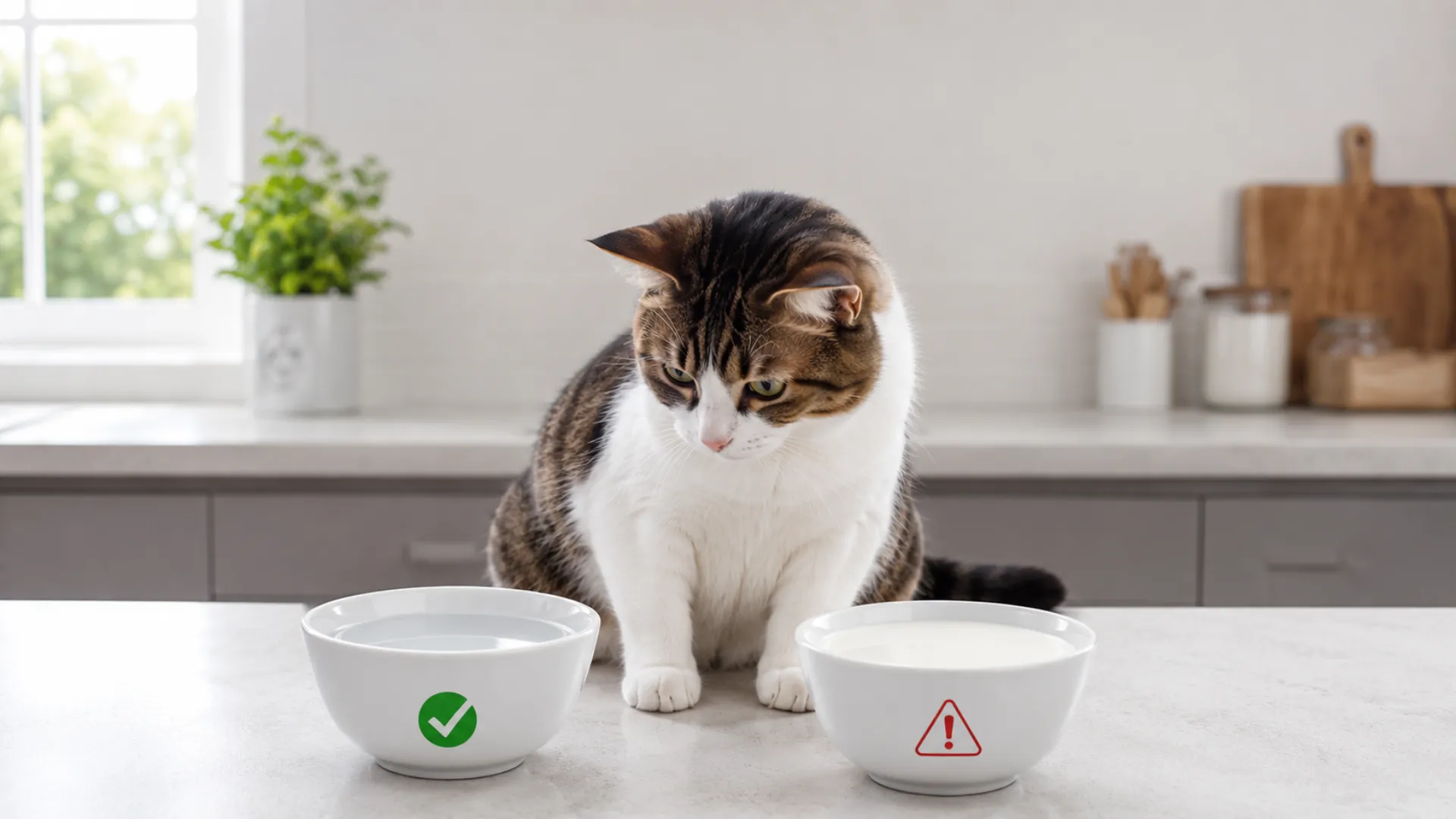
Most cats are lactose intolerant, so milk isn’t really safe for them, at least not in any regular amount. A small lick here or there probably won’t hurt a healthy adult cat, but it can easily lead to an upset stomach, gas, or diarrhea, since cats lose most of their ability to digest lactose after they’re weaned.
That’s why veterinarians generally advise against giving cats milk as a regular treat or drink. It offers little nutritional benefit and comes with unnecessary digestive risks. Water should always be a cat’s main source of hydration, plain, fresh, and always available.
Why Do Cats Like Milk?
It’s the Fat and Protein They Enjoy
Cats are drawn to milk mainly because of its smell and richness. The fat and protein in milk make it smell appealing to a cat’s sensitive nose, which is why they often come running the moment a bowl is poured. But liking the taste isn’t the same as it being good for them. Many cats actually struggle to digest milk properly, even if they enjoy drinking it. So while it might seem like a treat they love, it doesn’t offer any real nutritional benefit and can sometimes cause more harm than good.
The Myth Behind Cats and Milk
The idea that cats and milk go hand in hand comes largely from cartoons, storybooks, and old farming traditions. For years, farm cats were given saucers of fresh milk, and pop culture picked up on that image, cementing it in our minds as completely normal.
Why Most Adult Cats Are Lactose Intolerant
What Is Lactose?
Lactose is simply the natural sugar found in milk. To digest it, the body needs an enzyme called lactase, which breaks lactose down so it can be absorbed properly. This works well for kittens, but the story changes as cats grow up.
What Happens After Kittens Are Weaned?
Kittens are born with plenty of lactase because they rely on their mother’s milk for nutrition. But once they’re weaned and start eating solid food, their bodies naturally produce less of this enzyme. Without enough lactase, milk becomes much harder to break down and digest properly.
Signs Your Cat Can’t Digest Milk
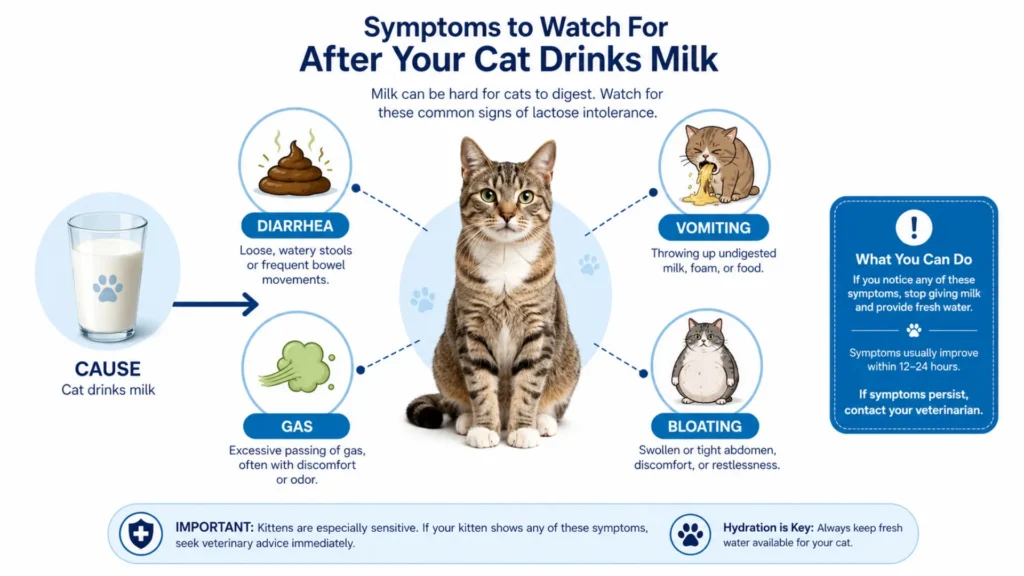
When lactose isn’t digested well, it sits in the gut and can cause some uncomfortable side effects, including:
- Diarrhea
- Vomiting
- Gas
- Bloating
- Stomach discomfort
If you notice these signs after your cat drinks milk, it’s a pretty clear indication their body isn’t handling it well.
Can Kittens Drink Milk?
Mother’s Milk Is Best
For very young kittens, nothing beats their mother’s milk. It’s packed with the exact nutrients, antibodies, and energy they need during those critical early weeks of growth and development.
Why Cow’s Milk Isn’t Suitable for Kittens
Cow’s milk might seem like a natural substitute, but it isn’t. It doesn’t match the nutritional profile kittens need, and it contains lactose levels their developing digestive systems often struggle to process, leading to upset stomachs.
When Kitten Milk Replacer Is Needed
In cases where a kitten is orphaned or rejected by its mother, a veterinarian-approved kitten milk replacer is the safest option. These are specially formulated to mimic mother’s milk far more closely than any milk found in your fridge.
Which Types of Milk Are Safe for Cats?
Cow’s Milk
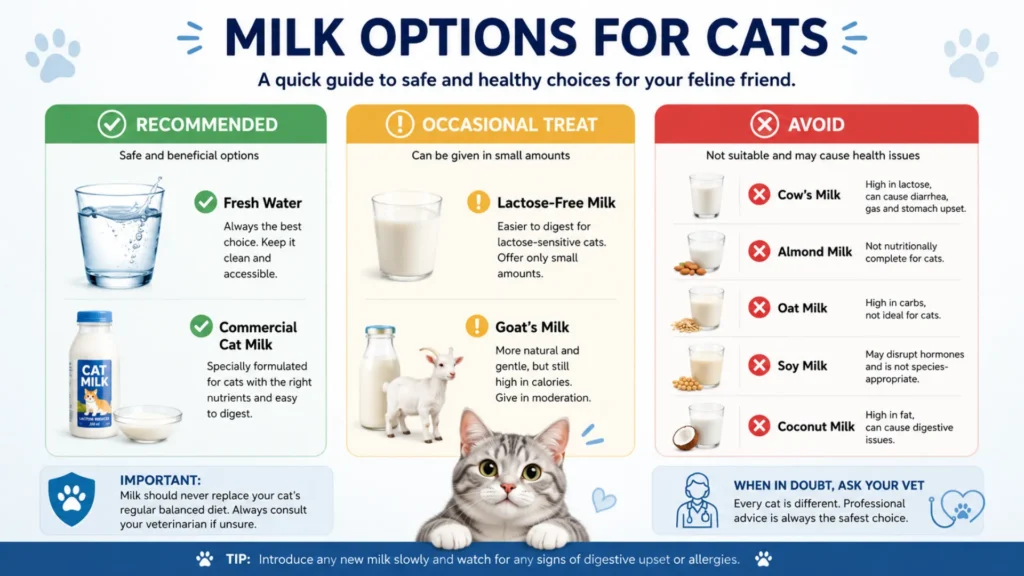
This is usually not recommended for cats of any age. It’s high in lactose, and since most adult cats have low lactase levels, it often leads to digestive upset.
Goat’s Milk
Goat’s milk still contains lactose, though sometimes in slightly lower amounts than cow’s milk. It can be offered in very small quantities occasionally, but it’s not something to rely on regularly.
Lactose-Free Milk
Lactose-free milk is generally tolerated better since the lactose has already been broken down. That said, it isn’t nutritionally necessary for cats and offers little real benefit beyond being a treat.
Cat Milk Sold in Pet Stores
These products are specifically formulated for feline digestion, often with reduced or removed lactose. They’re made with cats in mind, making them a safer occasional option compared to regular dairy.
Plant-Based Milks
Options like almond milk, oat milk, soy milk, and coconut milk aren’t ideal for cats either. They don’t offer the nutrients cats need, may contain added sugars or thickeners, and provide no real dietary value for an obligate carnivore.
Comparison Table: Milk Options for Cats
| Safe (Occasional Treat) | Occasionally Safe (Small Amounts) | Avoid |
|---|---|---|
| Cat milk (pet store formula) | Goat’s milk | Cow’s milk |
| Lactose-free milk | — | Almond milk |
| Oat milk | ||
| Soy milk | ||
| Coconut milk |
What Should You Do If Your Cat Drinks Milk?
If It Was Only a Small Amount
Don’t panic. A small lick or taste usually isn’t a major concern for most cats. Just keep an eye on them for the next several hours.
Watch for Signs of Stomach Upset
Over the next 24 hours, watch for diarrhea, vomiting, or unusual lethargy. These symptoms often show up fairly quickly if a cat’s system is reacting to the lactose.
When to Contact Your Veterinarian
Reach out to your vet if you notice:
- Severe vomiting
- Persistent diarrhea
- Signs of dehydration
- Unusual weakness
These symptoms could indicate something more serious than simple lactose sensitivity.
Healthy Alternatives to Milk
Instead of milk, stick to options that actually support your cat’s health. Fresh, clean water should always be their main source of hydration. High-quality wet cat food adds moisture and nutrition to their diet. A cat-safe broth, free of onion, garlic, or excess salt, can be a nice occasional treat. And if you want to give milk once in a while, commercial cat milk is a much gentler choice than dairy from your fridge.
Frequently Asked Questions
Can cats drink lactose-free milk?
Yes, in small amounts. It’s easier to digest than regular milk, though it still isn’t something cats need nutritionally.
Can cats drink goat’s milk?
In small quantities, occasionally. It still has lactose, so it’s not a safe daily option for most cats.
Can cats drink almond milk?
It’s best avoided. Almond milk offers no real nutritional value for cats and can sometimes upset their stomach.
Can cats drink oat milk?
Not recommended. It doesn’t align with a cat’s dietary needs and may contain added ingredients that aren’t cat-friendly.
Can cats drink milk every day?
No. Even cats that tolerate milk in small amounts shouldn’t have it daily, as it can lead to digestive issues over time.
Why do cats seem to love milk?
Many cats are drawn to milk’s fat content and creamy taste, not because their bodies actually need it or digest it well.
Final Verdict: Should Cats Drink Milk?
Key Takeaways:
- Most adult cats are lactose intolerant.
- Milk should never replace water.
- Small amounts may not harm every cat, but regular feeding isn’t recommended.
- If offering milk as a treat, choose cat-specific products for safety.