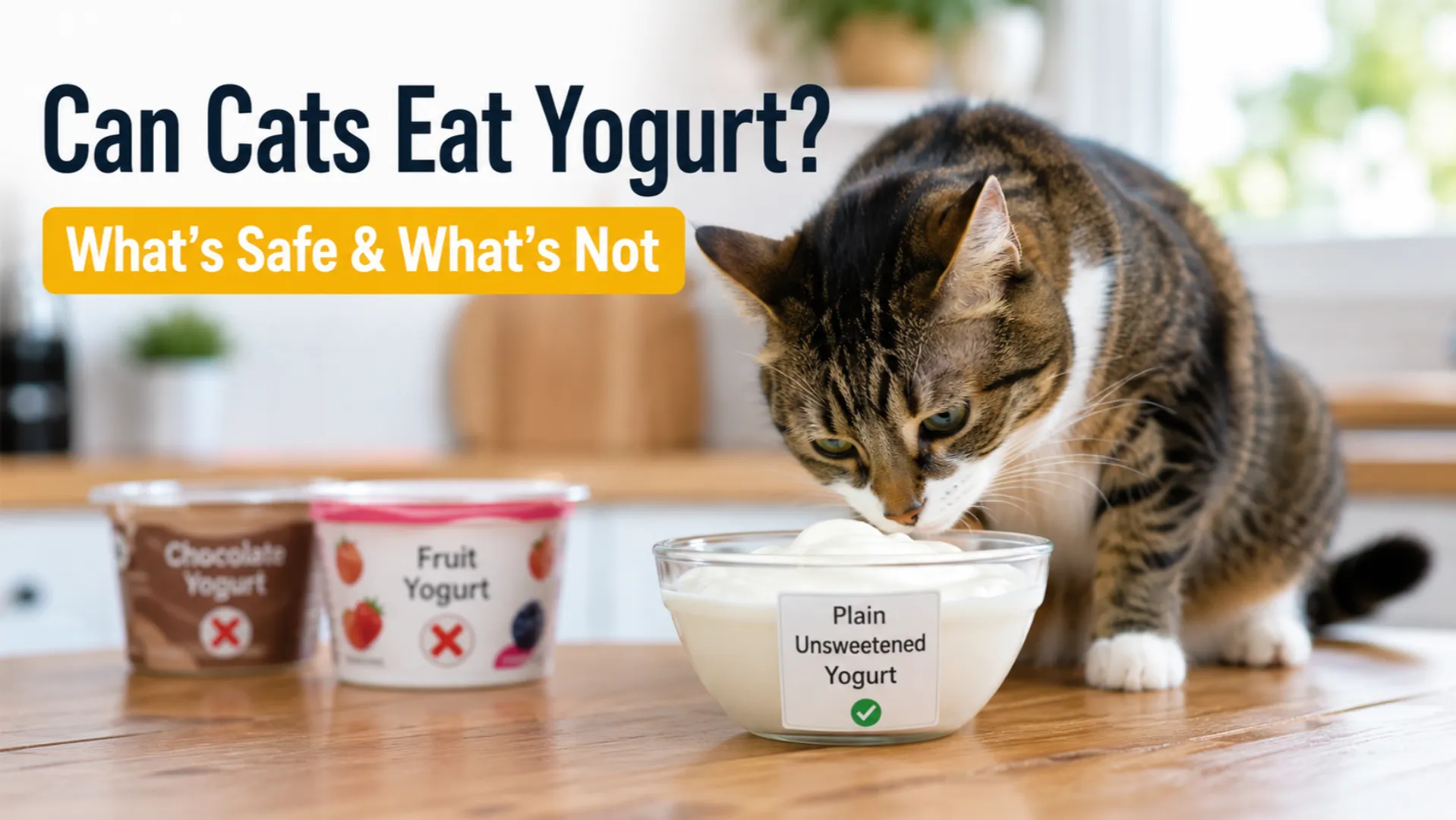
If your cat has ever stuck their nose into your yogurt cup, you’re probably wondering whether it’s okay to share a little. The short answer: plain, unsweetened yogurt is generally safe for most cats in small amounts, though it’s not something they actually need. Some cats handle dairy just fine, while others end up with an upset stomach from even a modest taste.
Flavored yogurts are a different matter entirely — the added sugar and artificial sweeteners they often contain can cause real problems. Here’s what’s safe, what to avoid, how much is reasonable, and what to do if your cat overdoes it.
Can Cats Safely Eat Yogurt?
Yogurt isn’t the same as regular milk, and that difference matters. During fermentation, bacteria break down much of the lactose in milk and convert it into lactic acid, so yogurt ends up with less lactose than milk does. That’s why some cats who can’t tolerate a saucer of milk might still manage a small taste of plain yogurt without issue.
Even so, individual tolerance varies widely. Most cats produce far less lactase — the enzyme that digests lactose — once they’re past kittenhood, and even yogurt’s reduced lactose load can bother a sensitive stomach. Others sail through it with no trouble at all. There’s no way to predict in advance how your particular cat will react, so treat the first try as an experiment, not a routine.
Is Yogurt Actually Good for Cats?
Plain yogurt does bring a few useful nutrients to the table: protein for muscle maintenance, calcium for bones and teeth, and vitamin B12 for nerve function and metabolism. It also contains probiotics, though their benefit for cats specifically is far less established than it is in humans.
None of this makes yogurt necessary. A complete, balanced cat food already covers everything your cat needs, so yogurt won’t fill a nutritional gap — it’s simply an optional extra, not something they’re missing out on.
The Risks of Feeding Yogurt to Cats
Lactose intolerance is the big one. Most adult cats lose a good portion of their lactase production after weaning — this is the norm, not the exception. When a lactose-intolerant cat eats yogurt, the undigested lactose pulls water into the intestines and ferments in the gut, which is exactly what leads to the digestive upset described below.
Added sugar and artificial sweeteners rule out flavored and sweetened varieties altogether. Extra sugar offers no benefit and can contribute to weight gain over time. More seriously, some sugar-free yogurts are sweetened with xylitol, which is toxic to pets and can trigger a dangerous drop in blood sugar. Always check the label before offering any yogurt to your cat.
Fat and calories add up quickly in a small animal, and full-fat yogurt is no exception. Regularly feeding rich, high-fat dairy can lead to weight gain and may upset the stomach of cats who are sensitive to fatty foods.
Watch for diarrhea, vomiting, gas, bloating, or general stomach discomfort after feeding yogurt. If any of these show up, stop offering it and see how your cat recovers.
Which Types of Yogurt Are Safest?
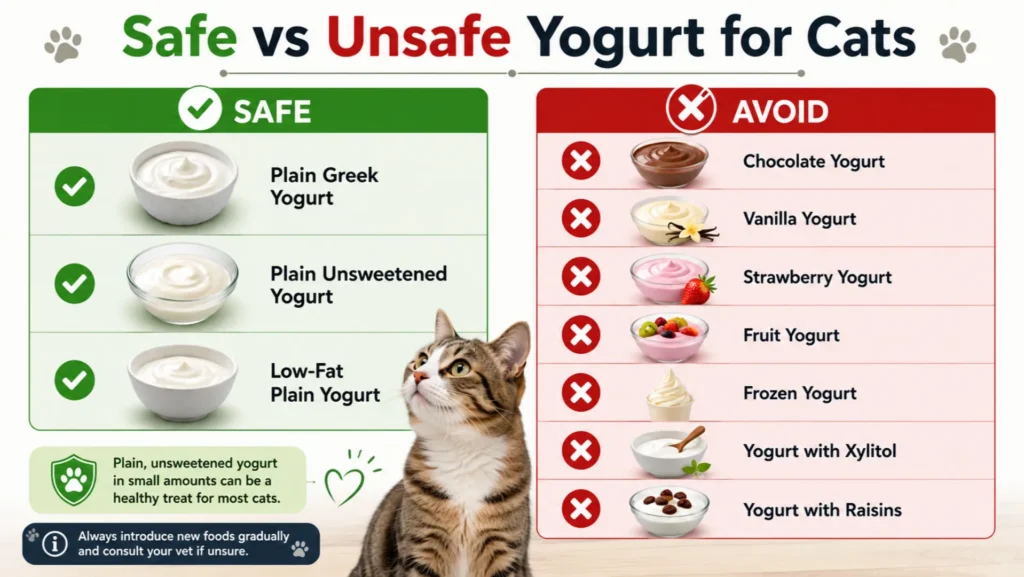
Plain Greek yogurt is strained further during processing, which removes more whey and lactose than regular yogurt retains — making it a slightly easier option for cats who can tolerate small amounts of dairy.
Plain, unsweetened yogurt without any added sugar or flavoring can be offered in small amounts, but it should stay an occasional snack rather than a regular part of the diet.
Low-fat yogurt may also work, as long as it has no added sugar or artificial sweeteners — though “low-fat” alone doesn’t guarantee it’s cat-friendly, so check the label regardless.
Steer clear of flavored, vanilla, chocolate, fruit, and frozen yogurts, along with any yogurt containing xylitol, raisins, or chocolate.
How Much Yogurt Can Cats Eat?
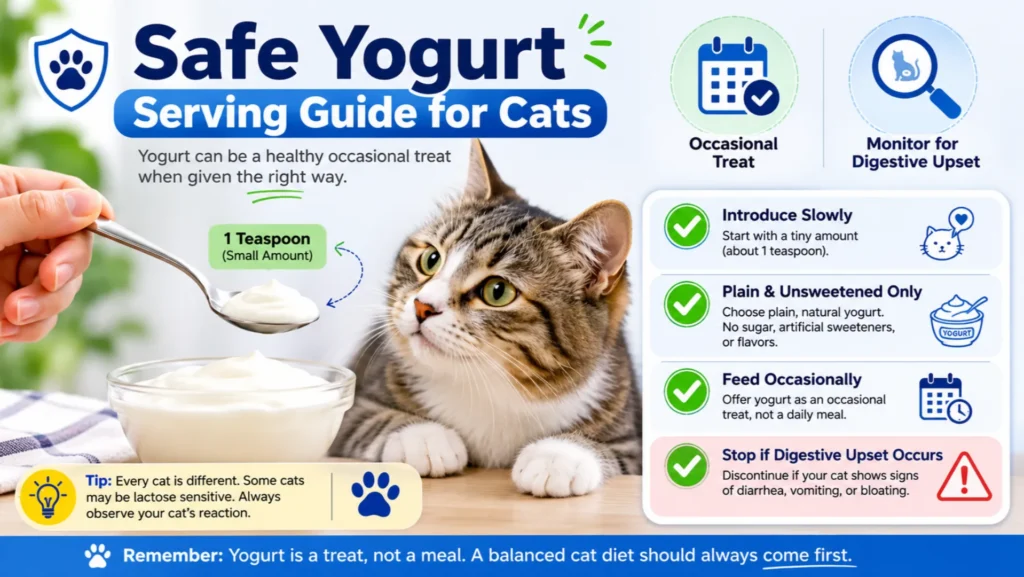
If you want to try it, start small — a half-teaspoon is plenty for a first taste. Offer it occasionally rather than daily, and stick to plain, unsweetened varieties.
Afterward, watch your cat for the next day or so for diarrhea, vomiting, or unusual gas. If they seem fine, an occasional small taste is probably safe going forward. If not, it’s best to leave yogurt off the menu entirely.
Can Kittens Eat Yogurt?
Kittens have different nutritional needs than adult cats, and their digestive systems are more sensitive. They do produce lactase while nursing, but that doesn’t make cow’s-milk products or yogurt a good idea — kitten-specific food is formulated to support healthy growth and should remain their main source of nutrition. It’s best to skip yogurt for very young kittens altogether.
What If Your Cat Eats Too Much?
If your cat sneaks a larger amount of plain yogurt than intended, mild symptoms like soft stool or occasional gas can usually just be monitored at home — make sure fresh water is available and keep an eye on them over the next several hours.
Call your vet, though, if you see repeated vomiting, ongoing diarrhea, lethargy, or obvious discomfort. This becomes urgent if the yogurt contained xylitol or chocolate, since both are toxic to cats and can require immediate care.
Frequently Asked Questions
Can cats eat Greek yogurt?
Yes, in small amounts. The extra straining process leaves it with less lactose than regular yogurt, making it a somewhat easier option for cats who tolerate dairy.
Can cats eat vanilla yogurt?
No. It usually contains added sugar and flavoring that offer no nutritional benefit and can upset a cat’s stomach or contribute to weight gain.
Can cats eat strawberry yogurt?
It’s not recommended. Fruit yogurts typically carry added sugar and sometimes other ingredients unsuitable for a cat’s digestive system.
Can cats eat probiotic yogurt?
It’s essentially comparable to regular plain yogurt for cats — the probiotic benefits specific to cats aren’t well established, so it’s not a must-have.
Why does my cat like yogurt?
Cats are often drawn to the smell and creamy texture of dairy. That doesn’t mean their body handles it well — just that they find it appealing.
Conclusion
Plain, unsweetened yogurt can be a safe occasional treat for many cats, though it’s never a necessity. A balanced cat food already provides complete nutrition, so dairy stays purely optional. Skip flavored, sweetened, or xylitol-containing varieties, since these can genuinely harm your cat, and check with your veterinarian first if you’re ever unsure about introducing a new food.