You catch your cat looking relaxed, eyes half-shut, mouth soft — and for a second it really does look like she’s smiling at you. You’re not imagining the expression, but you’re reading it slightly wrong. Cats don’t smile the way people do, yet the moment still means something. Here’s what’s actually happening on that face, how cats really signal contentment, and when a “smile” is worth a second look.
Do Cats Actually Smile?
Human smiles come from specific facial muscles that pull the corners of the mouth upward — a social signal we’re wired for from birth. Cats have no equivalent muscular setup. Their faces evolved for hunting and for communicating with other cats, not for mimicking human expressions, so a “smiling” look is almost always a coincidence of bone and muscle structure rather than a deliberate expression.
It’s also worth remembering that a cat’s face is only part of the story. Ears, tail, posture, and vocalizations all work together to signal mood, and a relaxed mouth on its own can be misleading — it might mean happy, but it can just as easily mean neutral, sleepy, or even in pain. Behaviorists generally recommend reading the whole cat rather than fixating on the mouth.
Why Your Cat’s Face Looks Like It’s Smiling
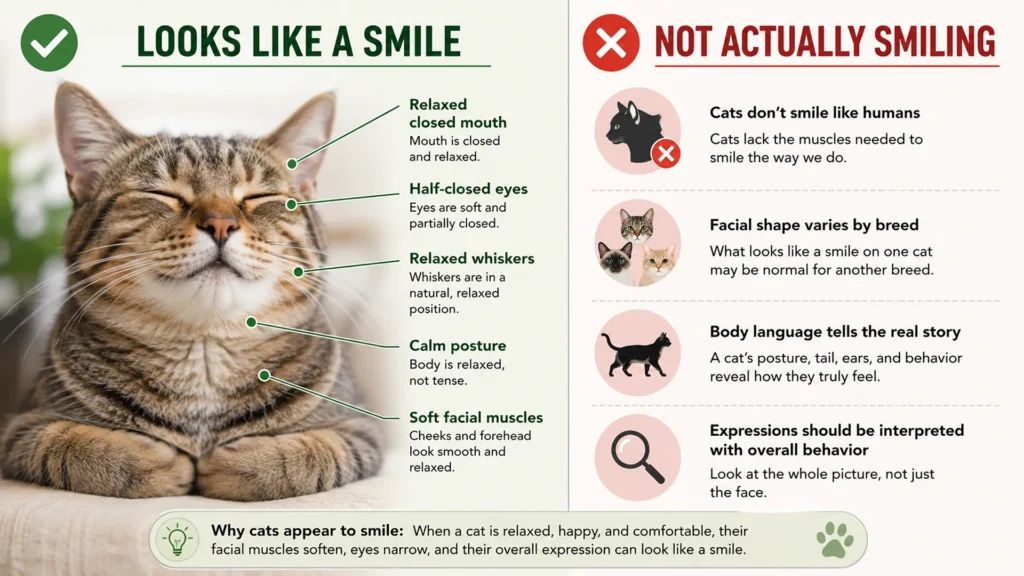
A few things create that smiley illusion:
- Relaxed muscles. When a cat is calm, its facial muscles loosen, often puffing out the cheeks and softening the mouth into something that resembles a content little grin.
- Squinty or half-closed eyes. This soft-eyed look, especially paired with your gaze, is one of the strongest signs of a relaxed, trusting cat.
- Natural face shape. Some cats simply have “smiley” bone structure and jaw shape — they look this way whether they’re delighted, bored, or mildly annoyed. It’s an accident of anatomy, not a mood report.
How Cats Actually Show Happiness
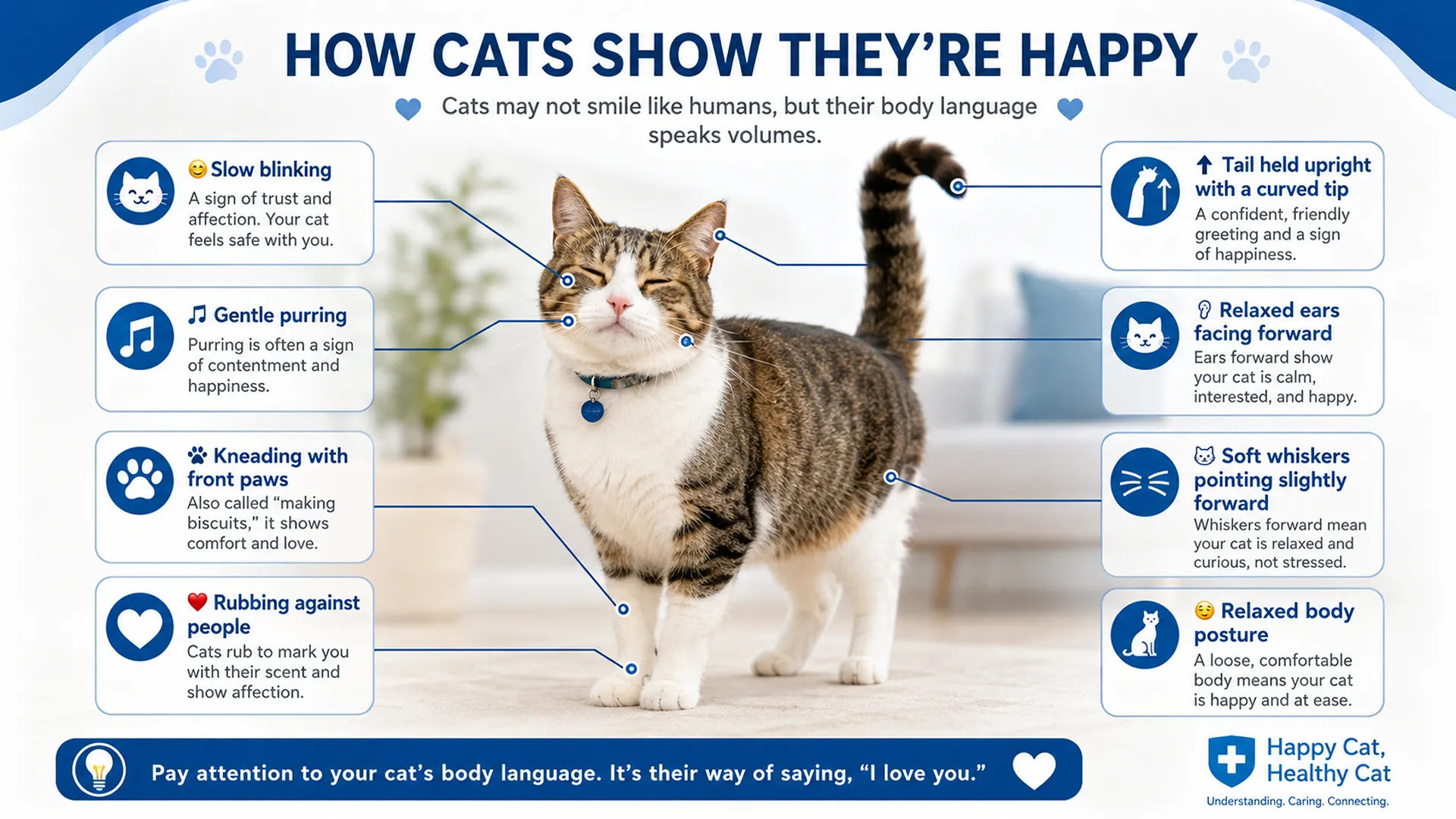
Since a smile isn’t part of a cat’s emotional vocabulary, look instead for these behaviors:
- Slow blinking. Sometimes called the “cat kiss,” a slow, deliberate blink aimed at you is one of the clearest signals of trust a cat can give. Blink slowly back and many cats will return the gesture.
- Purring. Usually a sign of contentment, though cats also purr when anxious, in pain, or self-soothing — so weigh it alongside their other body language rather than trusting it alone.
- An upright, hooked tail. A tail held high with a slight curve at the tip is a classic “happy to see you” signal.
- Kneading. That paw-pushing motion on blankets or your lap is a holdover from kittenhood, when it stimulated milk flow while nursing; adult cats keep it as a comfort behavior.
- Rubbing against you. This does double duty — marking you with scent and expressing affection — and is a strong sign of a bonded cat.
- Loose, forward-facing body language. Ears forward or slightly to the side, whiskers relaxed rather than pinned back, and an easy posture all point to a cat that feels safe.
When a “Smile” Signals a Problem
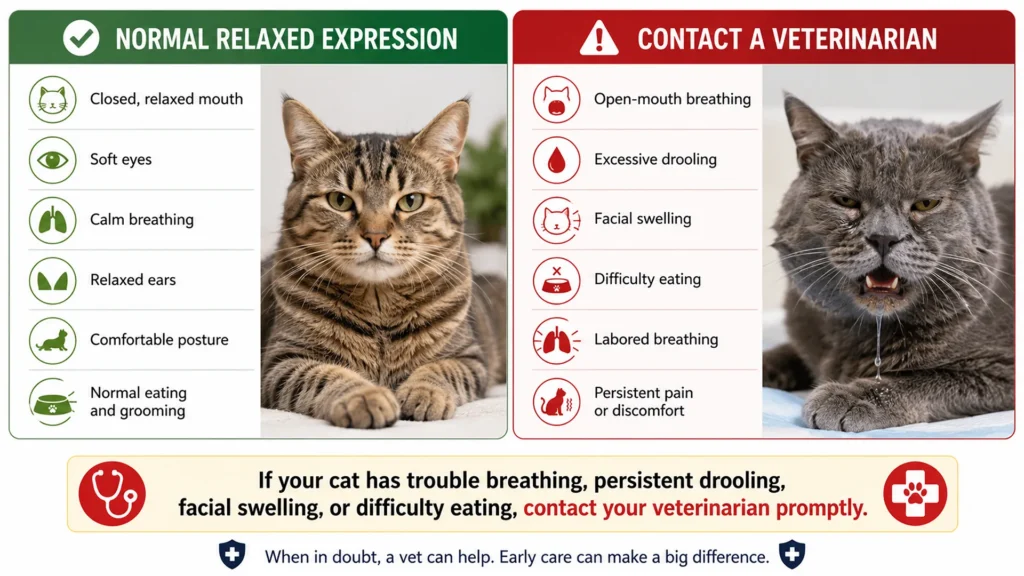
Not every mouth expression is harmless. Watch for these instead of assuming contentment:
- Open-mouth breathing
- Excessive drooling
- Difficulty eating or chewing
- Facial swelling
- Signs of tooth pain
- Labored or noisy breathing
Any of these can point to dental disease, respiratory trouble, or pain, and deserve a vet visit rather than a shrug.
Some Breeds Look Like They’re Smiling All the Time
Certain breeds — British Shorthair, Scottish Fold, Exotic Shorthair, Persian, and Ragdoll among them — have rounded faces, flat features, or naturally upturned mouths that create a permanent smile-like look, regardless of what’s actually going on with them. A Persian can appear to be beaming while feeling completely neutral, or mildly annoyed.
The same illusion shows up during sleep: a fully relaxed jaw, combined with the slight facial twitching that can come with dreaming, often produces an especially peaceful, smile-like expression — even though nothing about it is a conscious smile.
How to Tell If Your Cat Is Genuinely Happy
Skip the facial expressions and look at patterns over time instead:
- Eats normally and consistently
- Plays and shows interest in toys or activity
- Uses the litter box without issues
- Enjoys interaction and affection on its own terms
- Keeps up healthy grooming habits
- Shows relaxed, comfortable body posture
Frequently Asked Questions
Do cats smile with their eyes?
In a sense — slow blinking and soft, half-closed eyes are strong signs of trust, even without a “smiling” mouth.
Can kittens look like they’re smiling too?
Yes, kittens show the same relaxed, smiley expressions as adults when they’re comfortable.
Do cats recognize when I smile at them?
They can learn to associate your smile with good things happening, but they’re not reading it as an expression the way another person would.
Final Thoughts
Cats don’t smile like we do, but they’re far from expressionless. Slow blinks, a hooked tail, purring, and loose body language all tell you far more about how your cat feels than the shape of its mouth ever could. Learn to read those signals, and you’ll understand your cat — and the bond between you — a lot better.