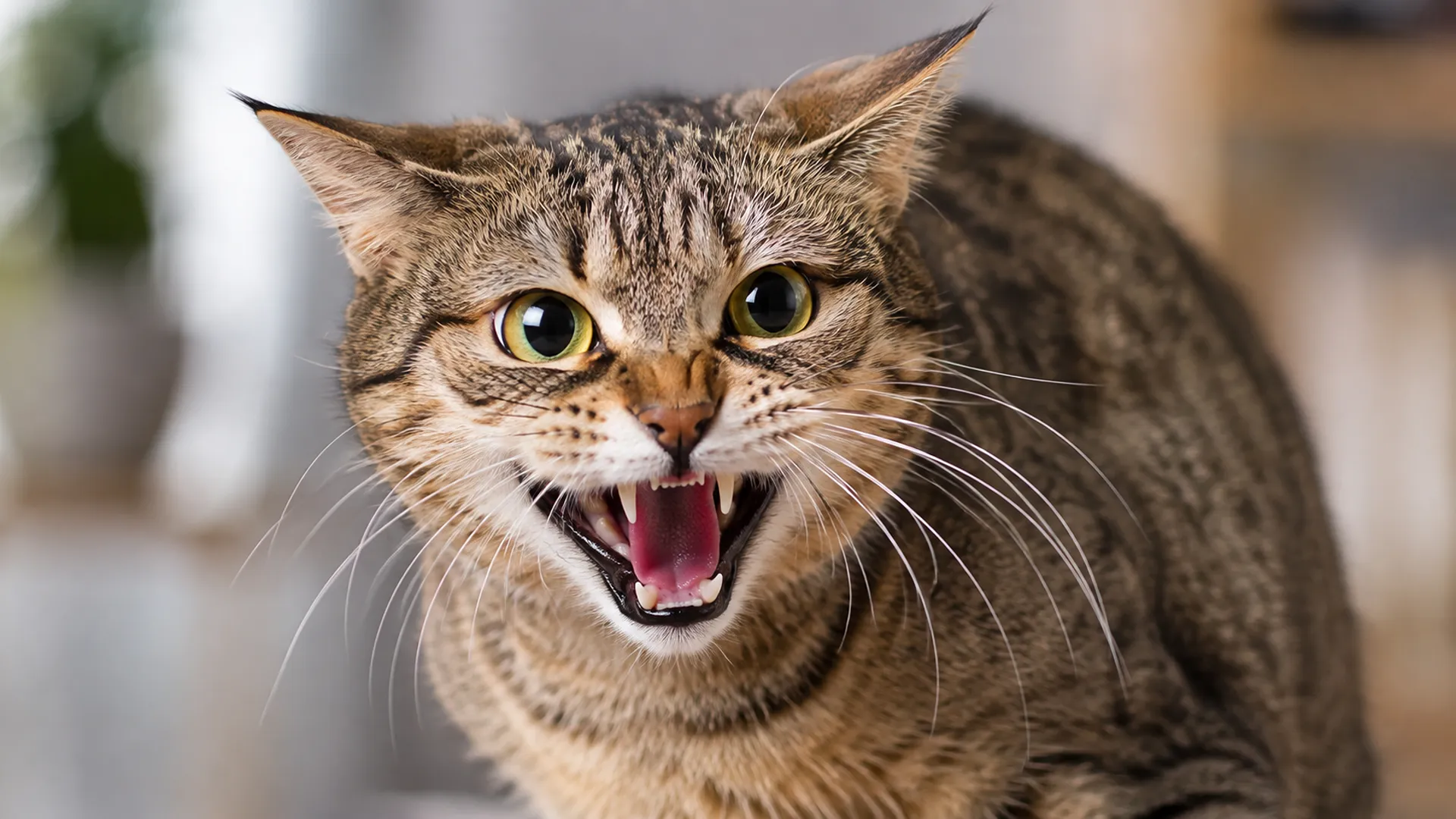
Here’s the truth though: it’s almost never about you doing something wrong. A hiss is loud and startling, sure, but it’s really just your cat’s version of a warning light. Something feels off to them right now, and they need a little room. Cats don’t have words for “back off” or “not right now,” so this is the sound that fills in for that. Once that clicks, the question shifts from “does my cat hate me” to something more useful — why does my cat hiss at me in this particular moment, with this particular trigger.
Why Does My Cat Hiss at Me? The Most Common Reasons
A few things tend to be behind it. Maybe you’ve been petting them a bit too long and they’ve hit their limit. Maybe there’s a smell or a person in the mix that feels unfamiliar. Pain is a big one too, and it gets overlooked constantly. Sometimes it’s just stress from something changing at home, or fear from somewhere else entirely getting dumped on whoever’s standing closest — which, let’s be honest, is usually you. And every so often it really is just personality. Some cats hiss at the drop of a hat. Working out which one applies to your cat is basically step one.
Find Your Situation: What’s Your Cat Hissing At?
There’s almost always something specific setting it off, even if it’s not obvious right away. See which of these fits.
Hisses only when you pet or pick them up. This is petting-induced aggression. It throws people off because the cat seemed completely fine just seconds before. There’s a threshold, and once they hit it, that’s it. Watch the tail — a twitch, or skin rippling along the back, usually means you’re about thirty seconds from a hiss.
Hisses at a new baby, partner, or roommate. Cats don’t love change. A new person in the house means new smells, new noise, new patterns in a space that used to feel predictable. It’s territorial, not a judgment on the new person or on you. Let your cat get used to them at their own pace and it tends to work itself out.
Hisses at you after a vet visit or grooming. People genuinely don’t expect this one. You’re the same person, but you smell like the clinic now, or like other animals, or whatever shampoo just got used on you. For a minute, you smell like a total stranger to your cat. It’s a startle response more than anything, and it fades once your normal scent comes back.
Sudden hissing with no clear trigger. If this is new and it’s coming out of nowhere, don’t just chalk it up to a mood. This kind of sudden shift is often a sign something physical is going on — arthritis, dental pain, that sort of thing, especially if it happens when they’re touched or moved. Worth a vet visit rather than a wait-and-see.
Hisses only at one specific person or in one room. If it’s always the same person or always the same spot, there’s usually a memory attached to it somewhere. Maybe something startled them there once. This one tends to improve with slow exposure and patience. Forcing it just makes it worse.
Reading the Warning Signs: Body Language Before a Hiss
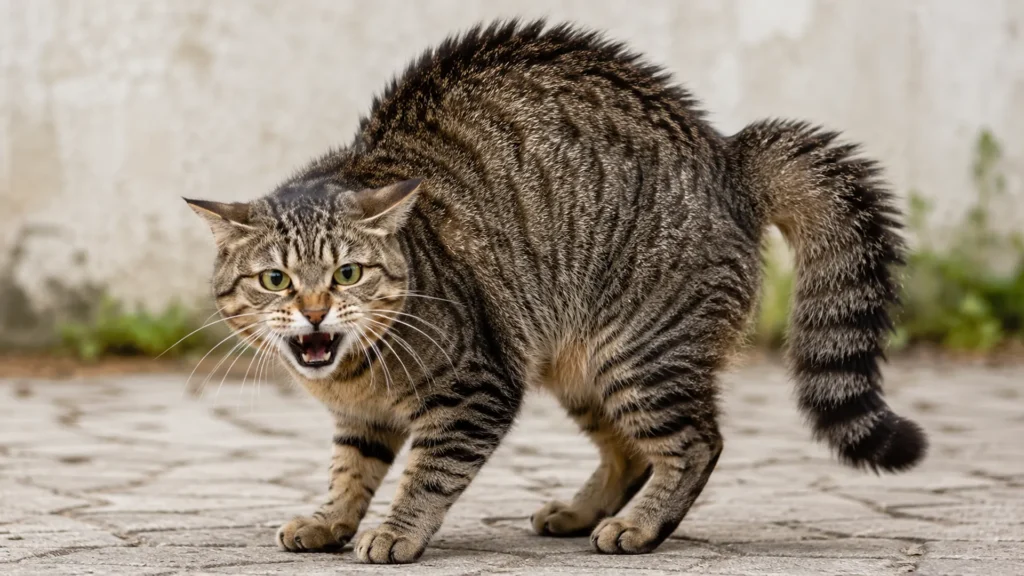
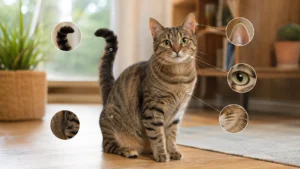
A hiss doesn’t usually just appear from nowhere. There’s a build-up, and if you catch it early enough you can back off before things go further. Ears pinned back or sideways, a lowered or arched back, pupils wider than they should be for the lighting, a tail that’s puffed or flicking around. Whiskers pulled in tight is another one. On its own none of these means much, but a few together usually mean your cat is already past comfortable.
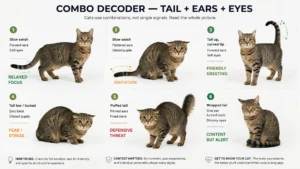
Hiss-Decoder Chart
Match what you’re seeing — body language plus the situation — to the chart below for a quick read on the likely cause and what to try next.
What NOT to Do When Your Cat Hisses
How you react in that moment matters just as much as knowing the cause. A few common reactions actually make things worse.
- Don’t punish them. Yelling or spraying water just adds more fear to whatever already set them off. That tends to make things worse, not better.
- Don’t corner them. A cat that feels trapped is far more likely to swat or bite.
- Don’t stare them down. Eye contact reads as a challenge to a cat, even when you don’t mean it that way.
- Don’t force contact or try to comfort them right then. It feels like the caring thing to do, but it usually raises their stress instead of lowering it.
- Don’t hiss back. Might seem funny, but your cat won’t take it that way, and it just sets back whatever trust you’re rebuilding.
Honestly the boring option works best here. Step back, give them space, let them decide when they’re ready to come back.
How to Rebuild Trust: A 5-Day Plan
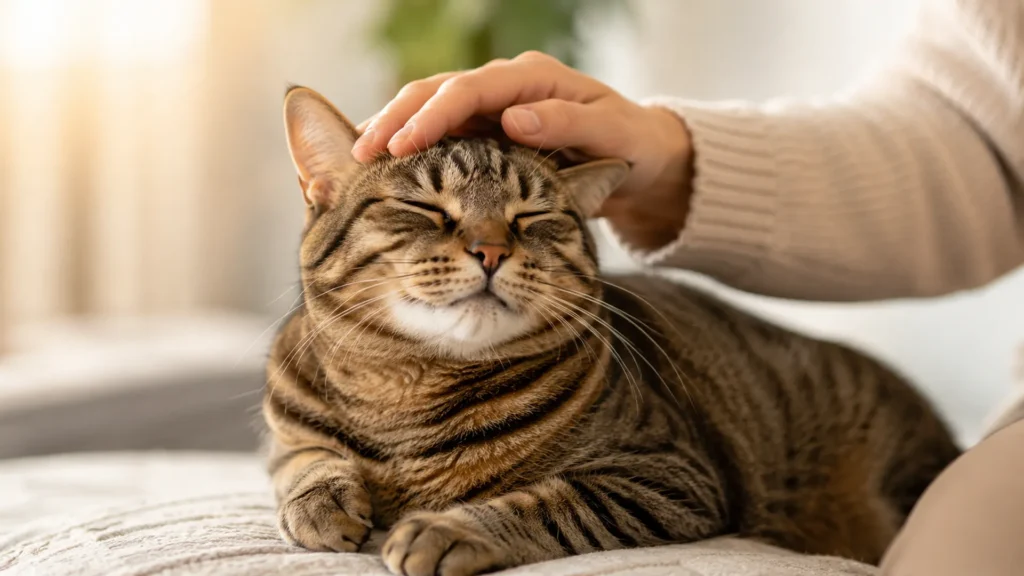
“Give them space” is fine advice but it’s kind of vague. Here’s something with more shape to it. Every cat moves at their own speed though, so this is a guide, not a countdown.
Day 1–2: Give space, no direct eye contact. Let your cat approach you first. Skip the staring. Move a little slower than usual, keep your voice down, and try not to hover over them all day. This stretch is mostly just letting their stress levels come back down.
Day 3: Reintroduce low-pressure presence. Sit in the room with them, at a distance, without reaching over or trying to call them. Read a book, scroll your phone, whatever. Just be there. This shows your cat you’re not a threat without asking anything of them.
Day 4: Offer treats or play without touching. Toss a treat their way, or wave a wand toy a few feet off. You’re building a good association with you being close by, without needing to touch. If they take the treat or go for the toy, that’s a real sign of progress.
Day 5 and beyond: Bring touch back slowly. If things have been calm, hold out a hand and let them come sniff it. Let them make the first move. Keep any petting short. A quick, gentle pet beats a long one every time. Stop the moment you notice tension, not after.
Signs your cat is warming back up: slow blinks (their version of a smile, basically), a loose relaxed tail instead of a puffed or tucked one, and them actually coming toward you instead of avoiding the room. Purring, kneading, curling up nearby. All good signs. If you’re seeing any of that, you’re headed in the right direction.
When Hissing Is a Medical Emergency, Not a Behavior Problem
Sudden hissing with no clear cause is worth paying attention to. Cats are notoriously good at hiding pain, and things like arthritis, dental disease, or hyperthyroidism can turn an easygoing cat into one that hisses the moment you touch them. Neurological problems can shift behavior fast too, sometimes practically overnight.
Get in touch with your vet if it started suddenly, if your cat reacts only when you touch one specific area, or if there are other changes too, like eating less, hiding more, or limping around. No obvious trigger and nothing’s really changed at home? That’s exactly when it’s worth ruling out something medical, rather than assuming it’s just a phase. I’d rather hear “your cat’s fine” from a vet than guess wrong and miss something.
Multi-Cat Households: When Your Cat Hisses at Another Pet, Not You
Sometimes you’re just in the wrong place at the wrong time. In homes with more than one cat, a lot of hissing is really about them sorting out territory between themselves, and you just happen to be nearby. If it’s really aimed at another pet, give each animal their own space and their own food and litter setup, and don’t push them together before they’re ready. Slow reintroductions tend to go a lot better than just letting them work it out.
FAQs
Will my cat forgive me for something that scared them?
Yeah, pretty much always. Cats don’t hold grudges the way people do. Once the scary thing is gone and they feel okay again, they go right back to normal.
Is it normal for a cat to hiss at their owner sometimes?
Yes. An occasional hiss here and there is normal, especially if they’re startled or overstimulated. It’s the frequent or sudden stuff that’s worth looking into.
Should I hiss back at my cat?
Better not to. It won’t make your point, and it can just stress out a cat that’s already on edge.
Why does my cat hiss at me but not my partner?
Usually comes down to routine, scent, or who tends to initiate touch more. Rarely personal, and it can change.
Key Takeaways
If you’re still wondering why does my cat hiss at me, here’s the short version: it’s communication, not a sign they’ve stopped loving you. Figure out which situation fits, remove the trigger where you can, and rebuild things slowly rather than rushing it. And if the hissing came out of nowhere, check with a vet before anything else.