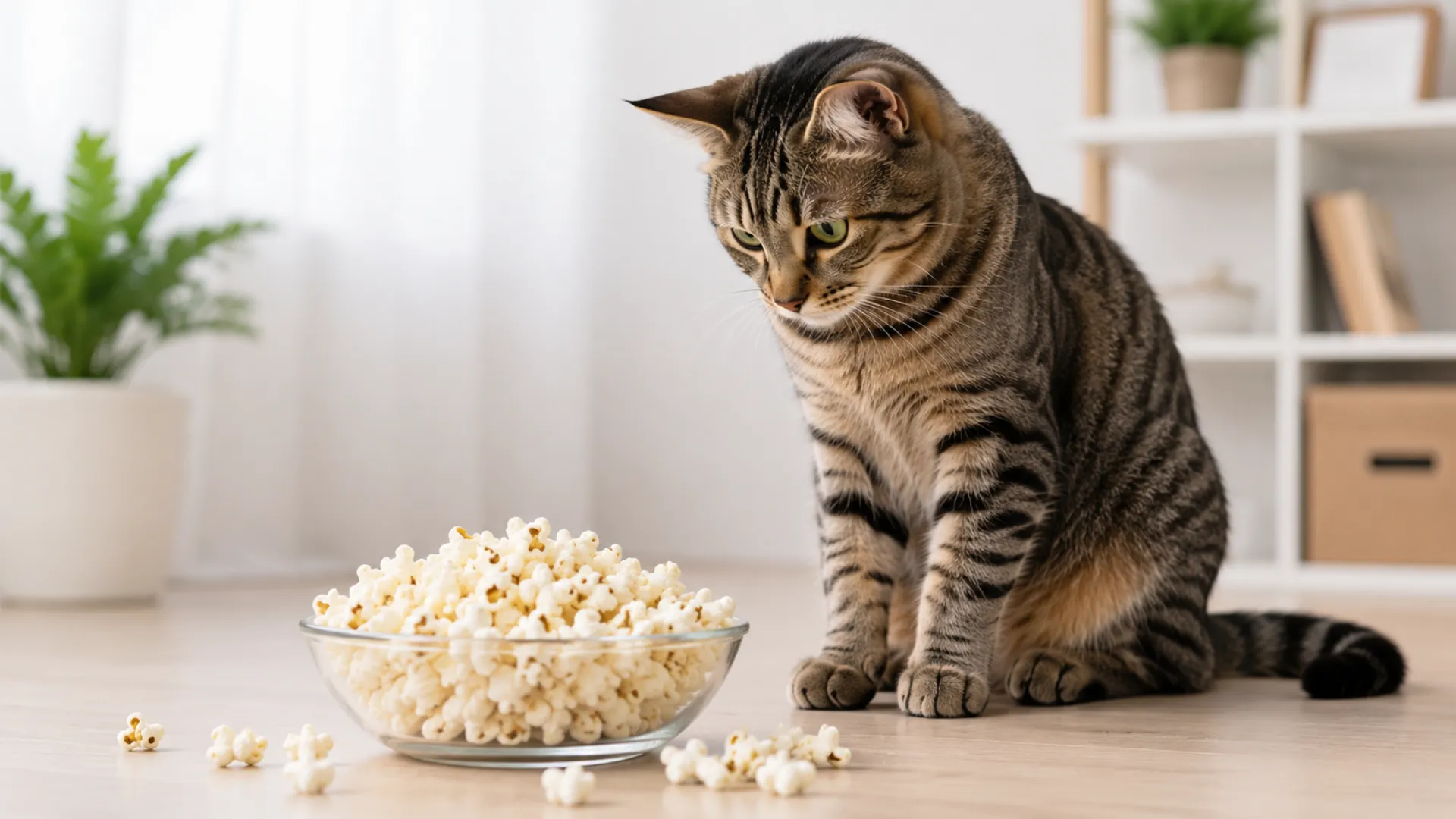
Plain, air-popped popcorn is generally safe for cats in small amounts, but buttered, salted, or flavored versions are not. There’s also a mechanical risk to consider: unpopped or partially popped kernels can lodge in a cat’s throat, so anything you share should be fully popped and offered only occasionally.
Is Popcorn Toxic to Cats?
Corn itself isn’t toxic — it’s a common ingredient in many commercial cat foods, so a bit of plain popcorn won’t poison your cat. But cats are obligate carnivores, built to run on animal protein rather than grains, so popcorn offers essentially no nutritional value to them. It’s empty calories from their body’s perspective.
The real risk usually isn’t the corn — it’s what comes with it. Butter, salt, and seasonings account for most popcorn-related dangers, and the carbs and fiber in corn aren’t something cats digest well in any quantity. That’s why even the plain version should stay a rare nibble rather than a habit.
Risks of Feeding Popcorn to Cats
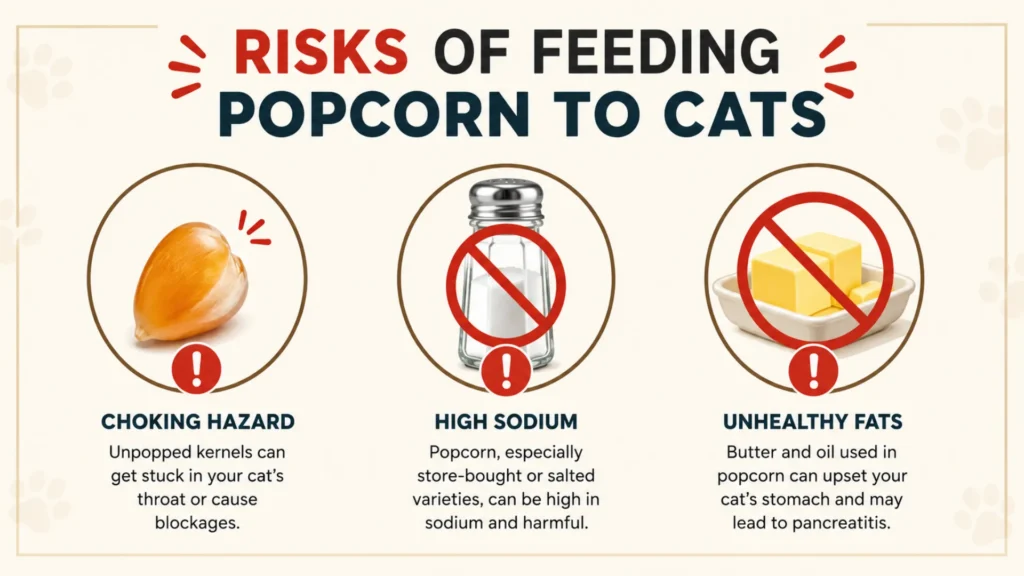
Choking hazard. Unpopped or partially popped kernels are hard and irregularly shaped — a poor combination with a cat’s airway. Small cats, or cats that tend to gulp their food, face extra risk here.
Butter, salt, and seasonings. This is where flavored or movie-style popcorn becomes genuinely dangerous. Salt can cause sodium toxicity, since cats need only trace amounts. Butter and oil add fat that can trigger pancreatitis. Garlic and onion powder — common in seasoned popcorn — are toxic to cats even in small doses, which rules out flavored varieties entirely.
Digestive upset. Cats don’t process carbohydrates and fiber the way people do, so even a few unseasoned pieces can cause vomiting or diarrhea, especially in a cat trying popcorn for the first time.
What Kind of Popcorn Is Safest for Cats?
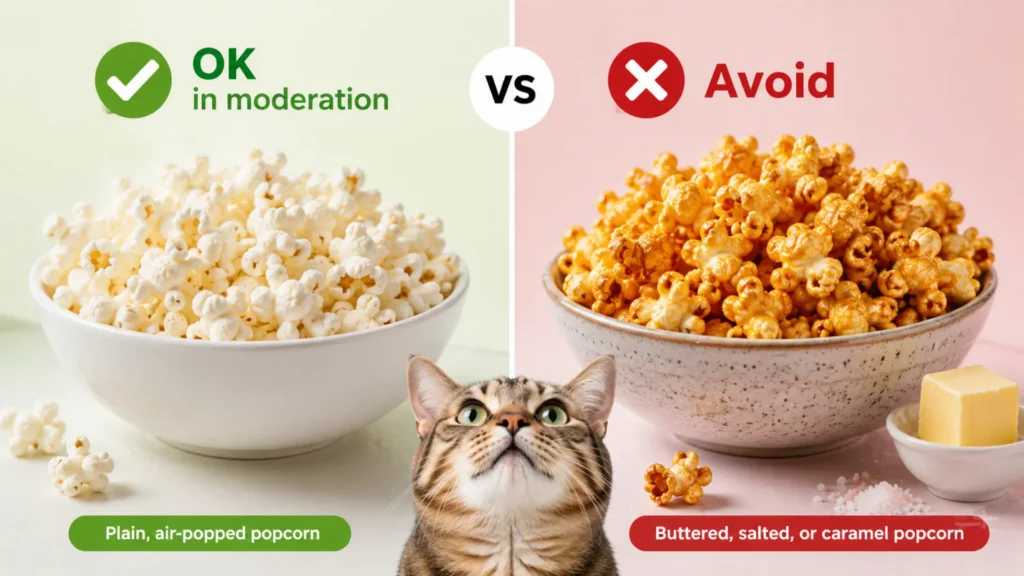
If you do want to share some, keep it minimal:
- Plain, air-popped only — skip anything stovetop-fried or from a flavored microwave bag
- No butter, oil, salt, sugar, or seasoning
- Fully popped kernels — inspect each piece and discard any that aren’t
- A piece or two, occasionally — never a regular treat
Signs of a Bad Reaction
Watch for:
- Choking symptoms — gagging, pawing at the mouth, visible distress right after eating
- Digestive symptoms — vomiting, diarrhea, or lethargy in the hours that follow
- Sodium poisoning signs (if butter or salt were involved) — excessive thirst, tremors, disorientation
Mild digestive upset can usually be watched at home, but choking, tremors, or disorientation call for prompt veterinary attention rather than a wait-and-see approach.
What to Do If Your Cat Eats Popcorn
A small piece of plain popcorn usually just needs monitoring — no intervention required. If choking seems likely, check whether you can safely see and remove the object; if your cat can’t breathe or you can’t clear it quickly, head to a vet immediately rather than continuing to try at home.
If the popcorn was buttered, salted, or seasoned — or your cat ate a large amount of any kind — call your vet or a pet poison control hotline right away. Keeping that number saved in your phone before you need it is a smart precaution.
Healthier Alternatives
Since cats thrive on protein, these treats align better with their biology:
- Cooked plain chicken or fish, cut small, unseasoned
- Commercial treats formulated for feline nutrition
- Cat grass or other cat-specific snacks
Unlike carb-heavy popcorn, these actually match how a cat’s digestive system is built to work.
Frequently Asked Questions
Can kittens eat popcorn?
No — kittens face a higher choking risk and have more sensitive digestion than adult cats.
Is caramel or kettle corn worse than plain popcorn?
Yes. The added sugar and fat make both riskier than the air-popped version.
How much popcorn is too much?
More than a piece or two, or feeding it with any regularity, isn’t advisable.
Can popcorn kill a cat?
Rarely, but severe choking or acute sodium toxicity can become life-threatening in serious cases.
Key Takeaways
- Plain, air-popped popcorn can be an occasional treat in tiny amounts
- Buttered, salted, or flavored popcorn should be avoided entirely
- Always check for unpopped kernels before offering any
- Contact your vet immediately if you notice choking, vomiting, or unusual symptoms