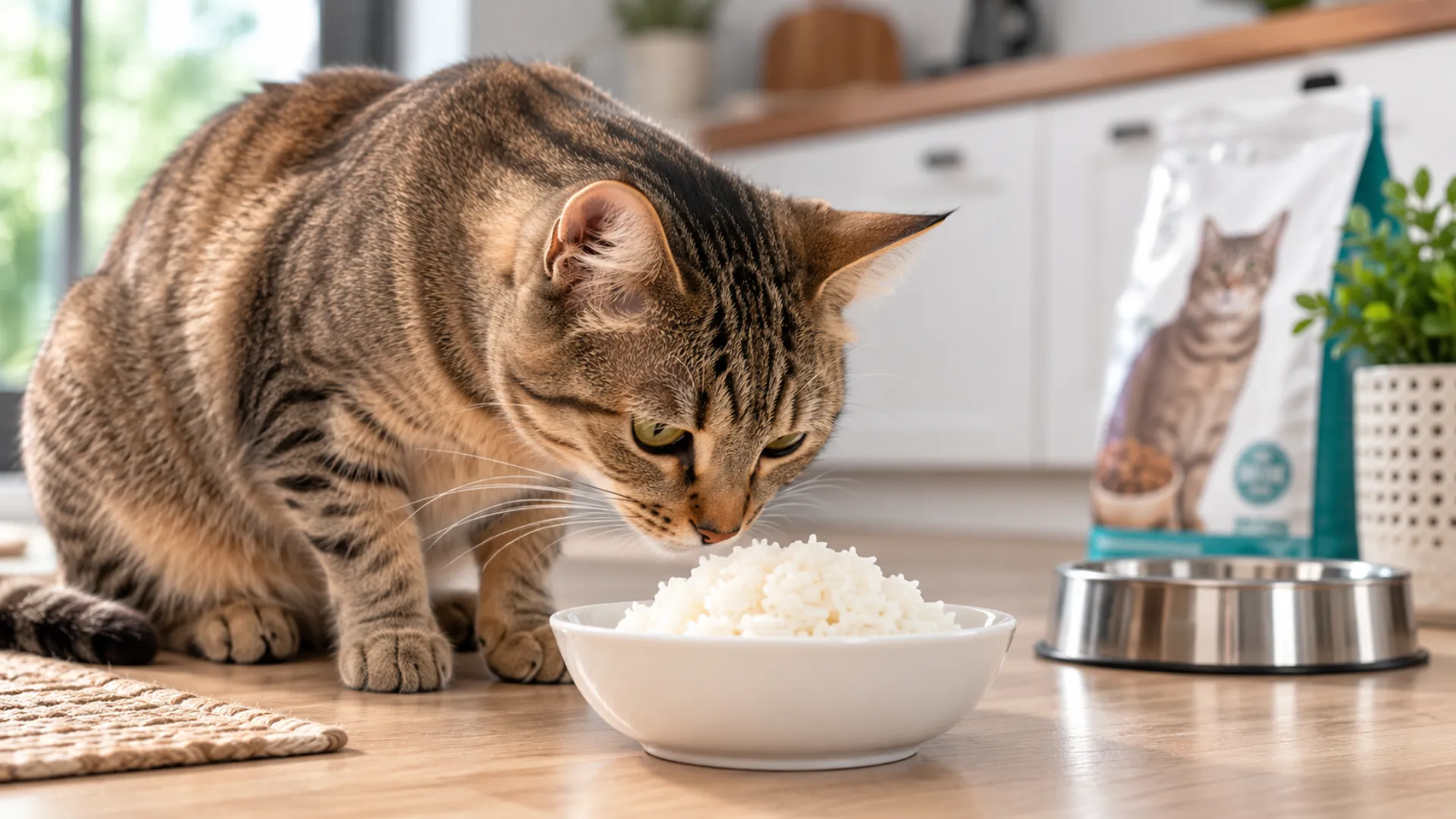
If your cat has ever eyed the rice on your dinner plate, you’ve probably wondered whether it’s safe to share a bite. The short answer: plain cooked rice won’t hurt your cat in small amounts, but it has no place in their regular diet. Here’s what you need to know about feeding rice to a cat, including which types to choose, how much is too much, and when it might actually help.
Is Rice Good for Cats?
Rice isn’t toxic to cats, but it isn’t doing them any favors either. It’s a staple of the human diet, yet it offers little in the way of the vitamins and minerals a cat actually needs.
That’s because cats are obligate carnivores — their bodies are built to run on animal protein, not grains. Nutrients like taurine come from meat, and cats have no biological need for carbohydrates. So while a few grains of rice won’t cause harm, they also won’t contribute anything useful to your cat’s health.
You may still spot rice on the ingredient list of commercial cat food, and there’s a reason for that: manufacturers use it as an easily digestible carbohydrate and a binding agent that helps kibble hold its shape. In that context, it’s a functional filler in an otherwise balanced formula — not a food you need to add on your own.
Types of Rice Cats Can and Cannot Eat
Not all rice affects a cat’s stomach the same way. Preparation and grain type both matter.
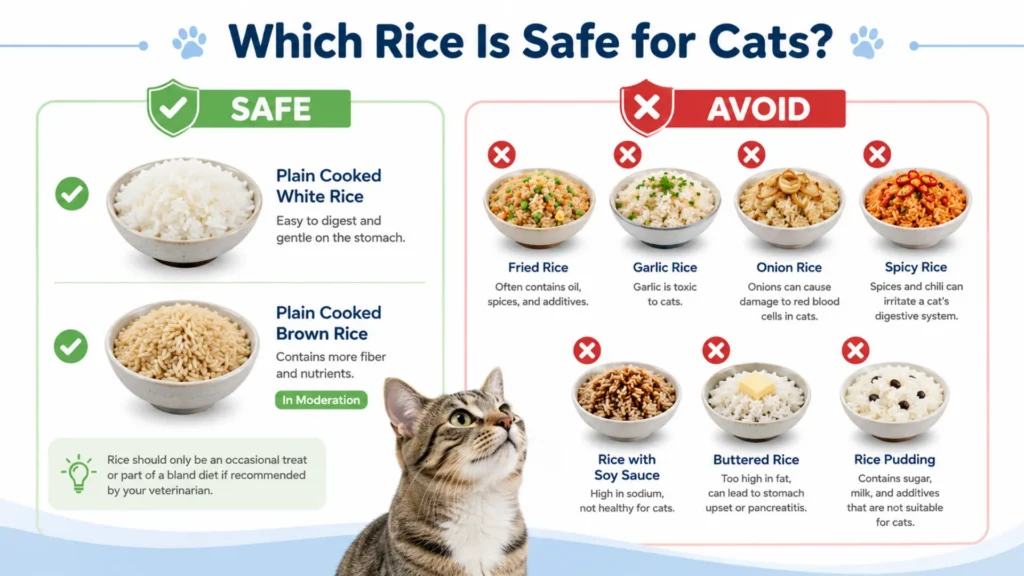
Plain white rice is the safest choice. Because its outer husk has been removed, it’s soft and easy for a cat’s digestive system to break down. A small bite now and then won’t cause problems.
Brown rice is a different story. Its fibrous outer layer makes it more nutritious for humans but harder for a cat’s short digestive tract to process. It isn’t toxic, but it’s more likely to cause bloating, so keep portions minimal if you offer it at all.
Seasoned or restaurant-style rice dishes should be avoided entirely. This includes fried rice, garlic rice, onion rice, spicy rice, rice cooked in butter or soy sauce, and rice pudding. Onions and garlic are especially dangerous — they can destroy a cat’s red blood cells — while heavy spices, oils, salt, and dairy (like the milk in rice pudding) can trigger pancreatitis or serious stomach upset.
How Much Rice Can Cats Eat?
Rice should stay an occasional extra, not a meal replacement. As a general guideline, treats of any kind shouldn’t exceed 10% of a cat’s daily calories — for most cats, that means a single teaspoon of plain cooked rice mixed into their regular food is plenty. Anything more starts to crowd out the protein-rich nutrition they actually need.
Can Rice Help Cats With Upset Stomachs?
Veterinarians sometimes recommend a small amount of plain white rice for a cat with mild diarrhea, since it’s bland and gentle on the stomach and can help firm up stool. That said, it isn’t a cure-all. If your cat is vomiting repeatedly or has diarrhea that doesn’t clear up quickly, skip the home remedy and call your vet — cats can dehydrate fast, and the underlying issue may need proper treatment.
What Happens If a Cat Eats Too Much Rice?
A cat that regularly eats too much rice can run into real trouble. Because their digestive systems aren’t equipped for heavy carbohydrate loads, overeating rice often leads to gas, bloating, and diarrhea, and in some cases the added fiber can cause constipation instead. The extra calories also add up over time, contributing to weight gain and displacing the protein a cat’s body actually relies on — creating a nutritional imbalance that undermines their overall health. If your cat gets into a large amount of rice and then stops eating or using the litter box, contact your vet.
Safe Ways to Serve Rice to Your Cat
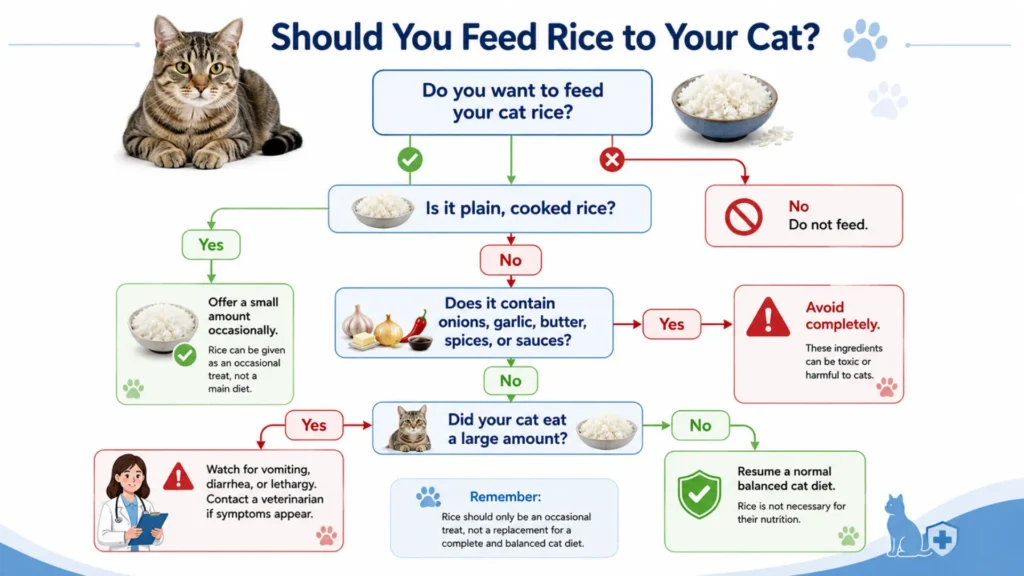
If you do decide to share some, a few simple precautions go a long way:
- Cook the rice thoroughly until it’s fully soft.
- Serve it completely plain — no salt, onions, garlic, spices, or sauces.
- Let it cool to room temperature before offering it, so you don’t burn your cat’s mouth.
Frequently Asked Questions
Can kittens eat rice?
It’s best to avoid it. Kittens grow quickly and need calorie- and protein-dense food; rice fills their small stomachs without providing what they need to develop properly.
Can cats eat rice every day?
No. Daily rice consumption can lead to nutritional deficiencies and weight gain. Treat it as a rare novelty, not a habit.
Can cats eat rice and chicken?
Yes — plain boiled chicken with plain white rice is a classic bland-diet combination vets often recommend for cats recovering from a mild stomach bug.
Can diabetic cats eat rice?
No. Its high carbohydrate content can spike blood sugar quickly, which is risky for a cat managing diabetes.
Can cats eat basmati or jasmine rice?
Both are fine in small amounts, as long as they’re cooked plain with no oil or salt. Neither offers any real nutritional advantage over standard white rice.
Final Verdict
A few bites of plain cooked rice won’t harm a healthy cat, but it’s not something their diet needs. Skip anything seasoned or restaurant-style, keep portions small, and if your cat sneaks a taste of flavored rice or shows unusual symptoms afterward, check in with your vet.