Cats do sweat, but barely, and what little moisture they produce does almost nothing to bring their temperature down on a hot day. Instead of relying on sweat glands the way humans do, cats have developed an entirely different toolkit for staying cool. Knowing how that system works makes it much easier to tell the difference between a cat lounging comfortably on a cool tile floor and one that’s genuinely overheating. This guide covers where cats actually sweat, the other methods they use to regulate body temperature, the warning signs of heat distress, and practical ways to keep them safe when temperatures rise.
Do Cats Sweat?
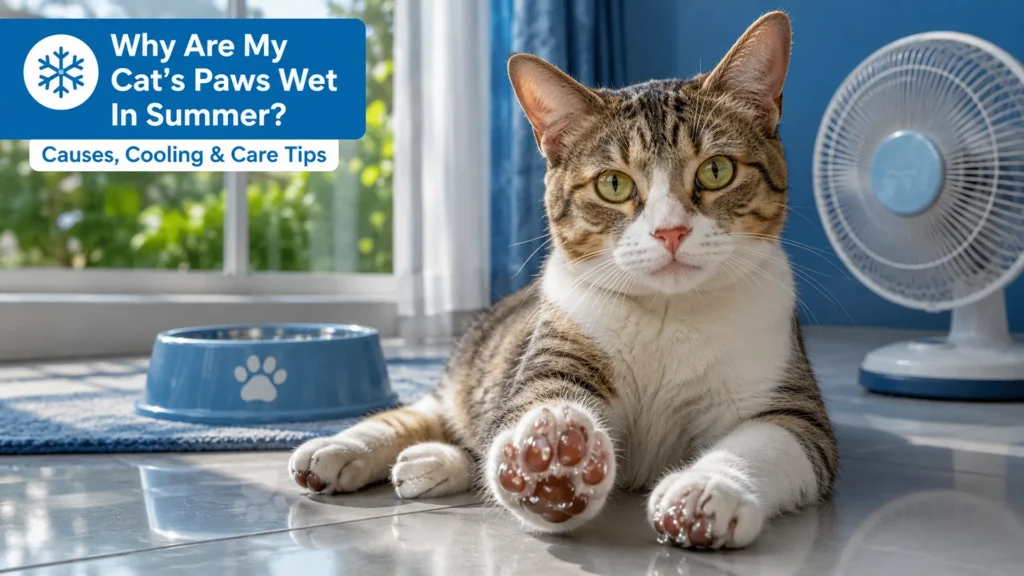
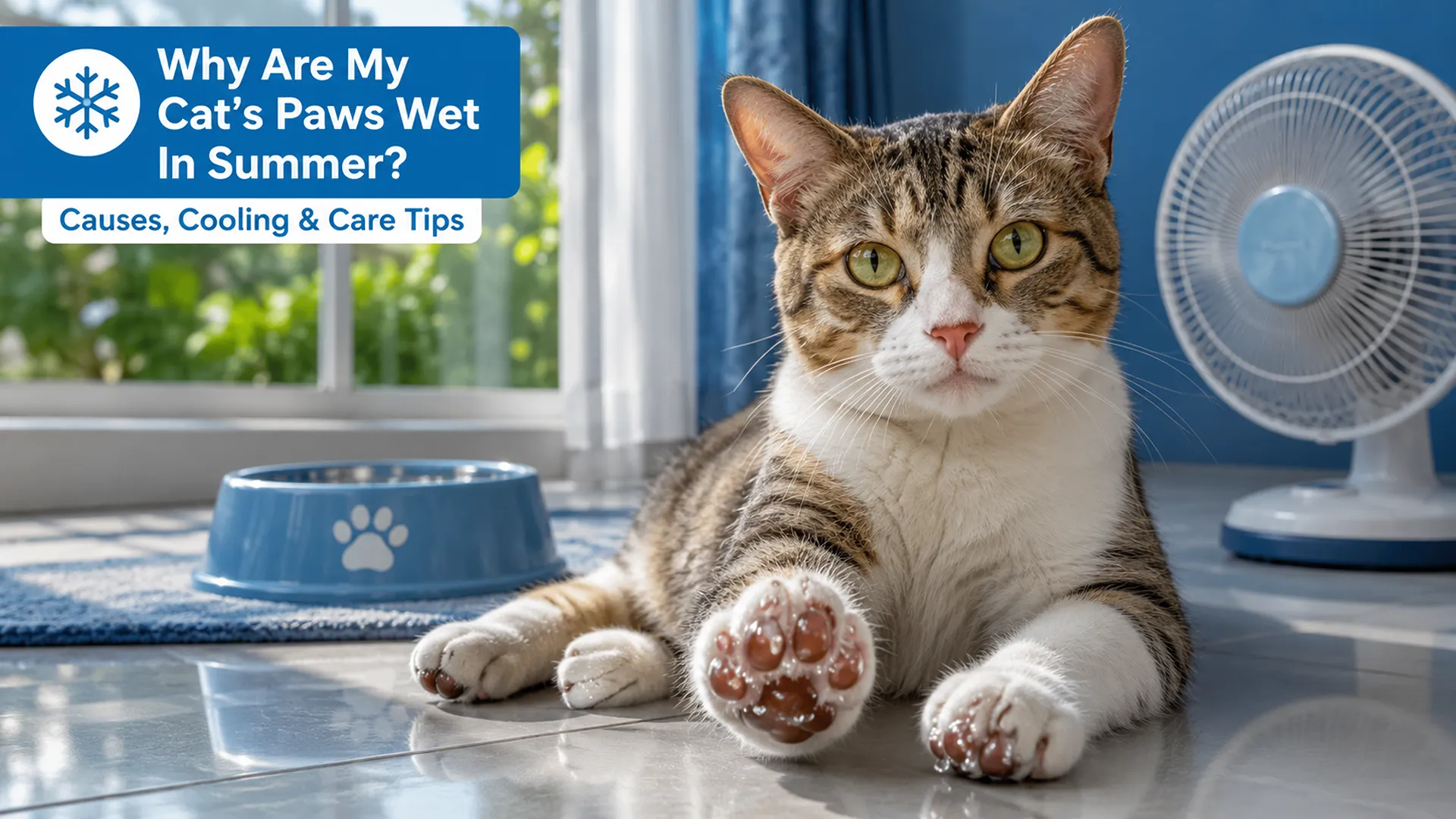
Cats have sweat glands, but they’re confined to one place: their paw pads. Known as merocrine glands, these release a small amount of moisture when a cat is overheated, stressed, or anxious — nowhere near enough to cool the whole body the way sweating does for people.
The reason comes down to anatomy. Human skin is covered in sweat glands, which let moisture evaporate and pull heat away from nearly the entire body. A cat’s fur coat makes that kind of evaporative cooling impractical, so over time cats evolved alternative strategies for managing heat instead.
Where Do Cats Sweat?
If you’ve ever spotted faint, damp paw prints on a hot sidewalk or tile floor, that’s the paw pad glands doing their job — one of the only visible signs that a cat is sweating at all, and a perfectly normal one.
A few related myths are worth clearing up. Cats don’t sweat through their fur, since their coat lacks the glands found in their paw pads. A wet nose isn’t a sweat indicator either; nose moisture comes from unrelated causes. And warm ears don’t signal overheating on their own, as ear temperature naturally fluctuates for harmless reasons.
How Do Cats Cool Themselves Without Sweating?
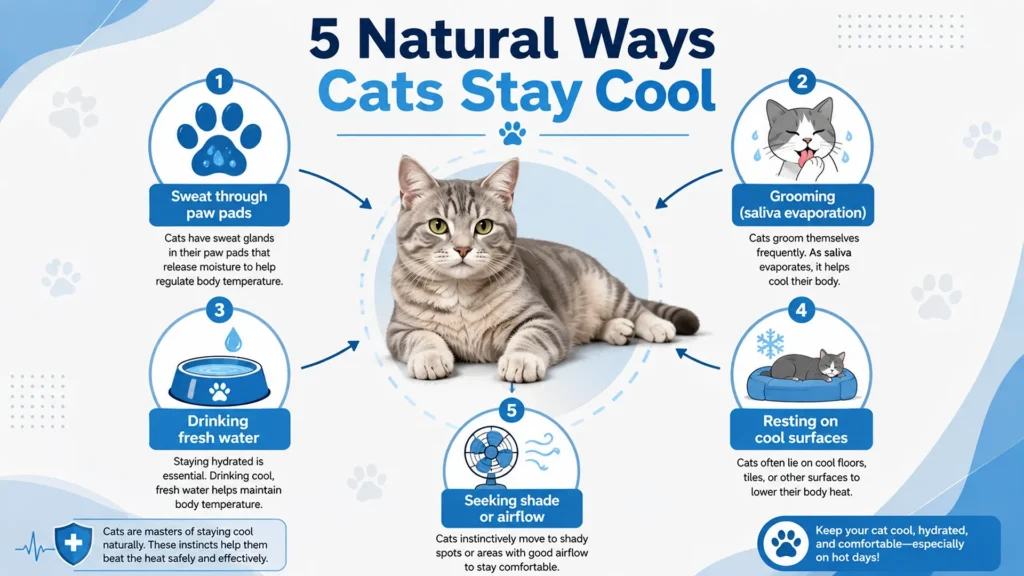
Grooming is one of the most effective tools cats have: saliva left on the fur evaporates off the skin, producing a mild cooling effect, which is why cats groom more frequently in warm weather.
Behavior shifts help too. Cats seek out tile floors, shaded corners, and the coolest room in the house — not out of laziness, but as a deliberate way to lower body temperature. They also tend to move less when it’s hot, since reduced activity means less internal heat production. Staying hydrated plays a role as well, so fresh water should always be available, particularly during the summer months.
Panting shows up far less often in cats than in dogs, but it can happen after play, during stress, or in extreme heat. A brief bout isn’t cause for concern, though panting that continues or comes paired with other signs of distress deserves closer attention.
Signs Your Cat May Be Overheating
Overheating tends to progress in stages. Early on, a cat may simply seek out cooler surfaces, groom more than usual, or seem mildly lethargic. As things escalate, watch for rapid breathing, panting, or excessive drooling. At the emergency stage, symptoms include bright red or pale gums, vomiting, weakness, collapse, or confusion.
When to seek veterinary care: Any moderate or emergency symptom warrants an immediate call to your vet. Overheating can escalate fast, so it’s not something to wait out.
Can Cats Get Heatstroke?
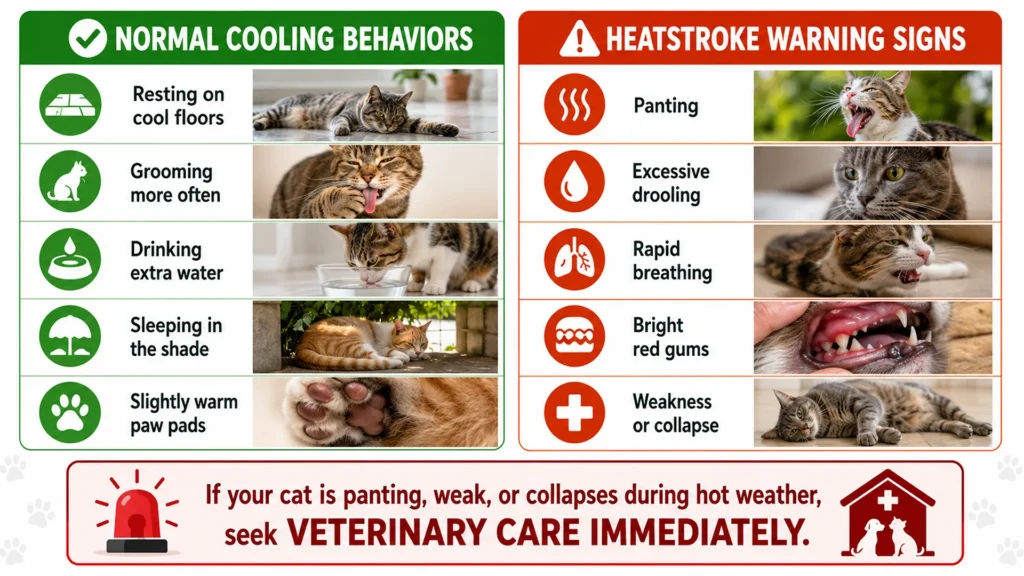
Heatstroke can develop from hot weather with no shade or cool retreat, poor indoor ventilation, being trapped in a car or other enclosed space, or high humidity that makes it harder for the body to release heat.
What makes it dangerous is speed: body temperature climbs quickly, and without prompt intervention the result can be serious organ damage. This is a genuine emergency, not something to monitor from a distance.
If you suspect heatstroke, act immediately. Move your cat to a cool, shaded area, offer cool (not ice-cold) water, and apply cool, damp towels to bring the temperature down gradually. Call a veterinarian right away, even if your cat seems to be improving.
How to Keep Your Cat Cool During Hot Weather
A few practical habits go a long way. Set out multiple water bowls so hydration is never more than a few steps away, and give your cat access to tile floors, shaded rooms, or spots near air conditioning where it can retreat when needed. Fans or securely screened open windows keep air circulating and prevent rooms from feeling stuffy.
If your cat spends time outdoors, limit that access during the hottest stretch of the day, and never leave a cat unattended in a parked vehicle — interior temperatures can spike dangerously fast even with the windows cracked. Cooling mats or elevated beds are also worth considering, since they help dissipate heat and give your cat a more comfortable place to rest.
Frequently Asked Questions
Do cats sweat through their fur?
No — sweating happens only through the paw pads, not the fur or skin elsewhere on the body.
Why are my cat’s paw pads wet?
It’s typically just normal sweat gland activity, more noticeable during warm weather or moments of stress.
Is panting normal in cats?
Occasional panting after activity or in the heat is usually fine, but frequent or heavy panting can signal overheating and is worth monitoring closely.
Can indoor cats overheat?
Yes. Poor ventilation, direct sunlight, or a lack of cool resting spots can cause overheating even without any outdoor exposure.
Should I shave my cat during summer?
It’s generally not a good idea. A cat’s coat helps regulate temperature and protects the skin from sunburn, so shaving often causes more harm than good.
Conclusion
Cats sweat only minimally, and almost exclusively through their paw pads, which is why they lean on grooming, cool resting spots, and reduced activity to manage body heat. Recognizing the early signs of overheating gives you a chance to intervene before things turn serious — and if heatstroke is ever a possibility, prompt veterinary care can make all the difference.