Cats don’t use words to tell us how they feel — they rely on posture, movement, and a handful of physical tells that most owners never learn to read. Once you know what to look for, though, those signals are surprisingly consistent. Learning to interpret them is the fastest way to understand what your cat actually wants, and it can spare both of you a lot of needless friction.
Why It Matters
A meow or a purr might grab your attention, but it’s the body that tells the real story. Cats layer meaning across posture, tail, ears, and eyes in ways that are far more precise than their vocalizations — a cat who looks relaxed but is growling is telling you something different than one who looks tense and silent.
The payoff for learning this language is practical, not just sentimental. Catching the early signs of discomfort — a flattened ear, a stiffening tail — lets you back off before a stressed cat feels cornered enough to scratch or bite. Over time, that awareness turns your home into a calmer place for everyone in it.
What to Watch
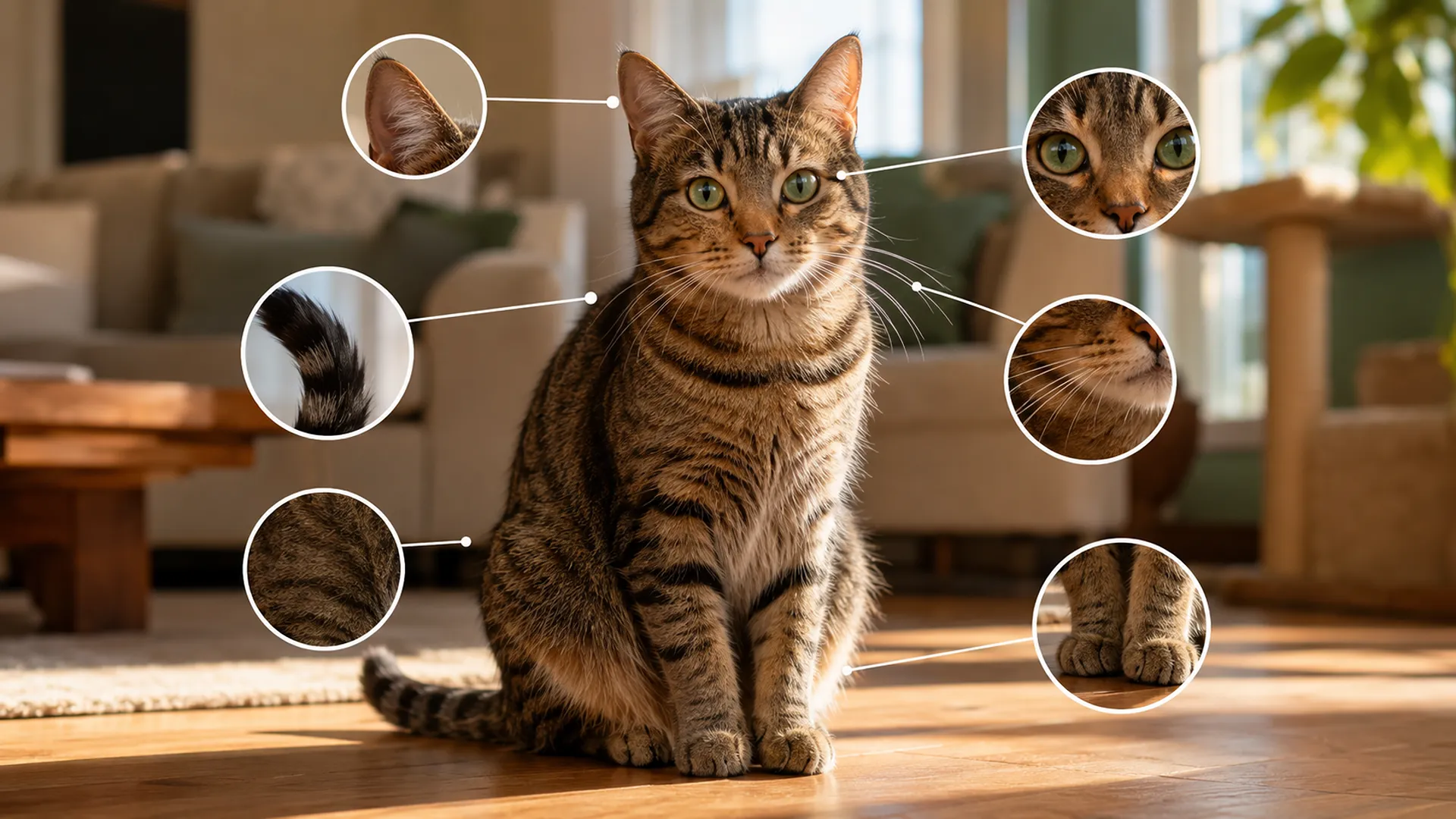
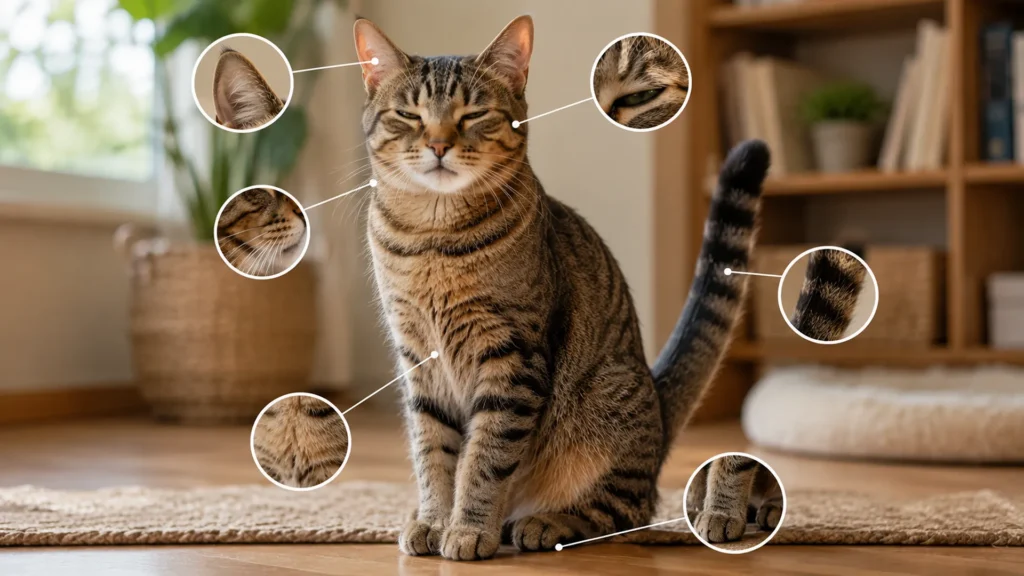
Five parts of a cat’s body do most of the talking: the tail, ears, eyes, whiskers, and overall posture. None of them tell the whole story alone. A twitching tail can mean excitement or irritation depending on what the ears and eyes are doing at the same time, so the real skill isn’t memorizing single cues — it’s reading them in combination.
Reading the Signs
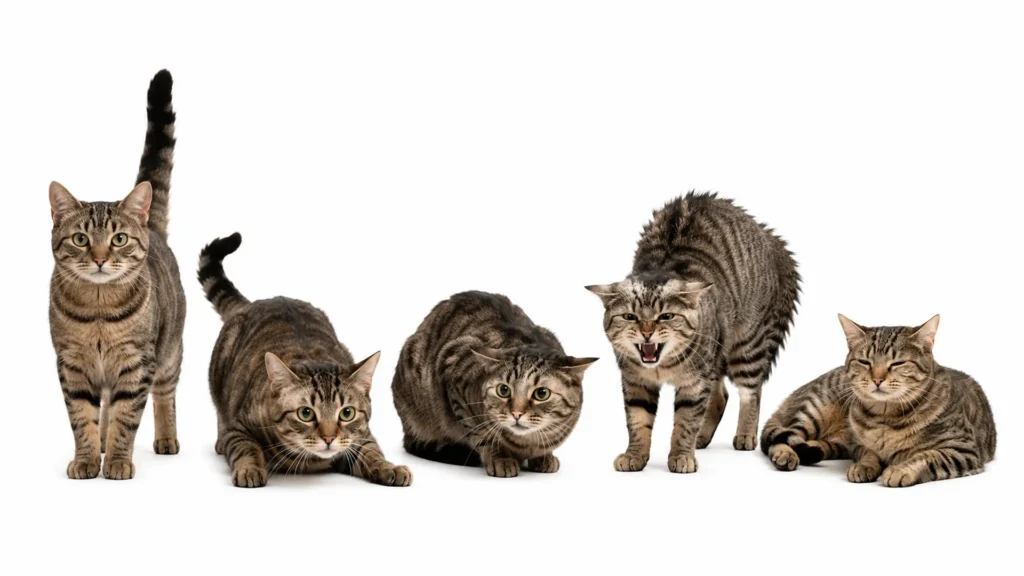
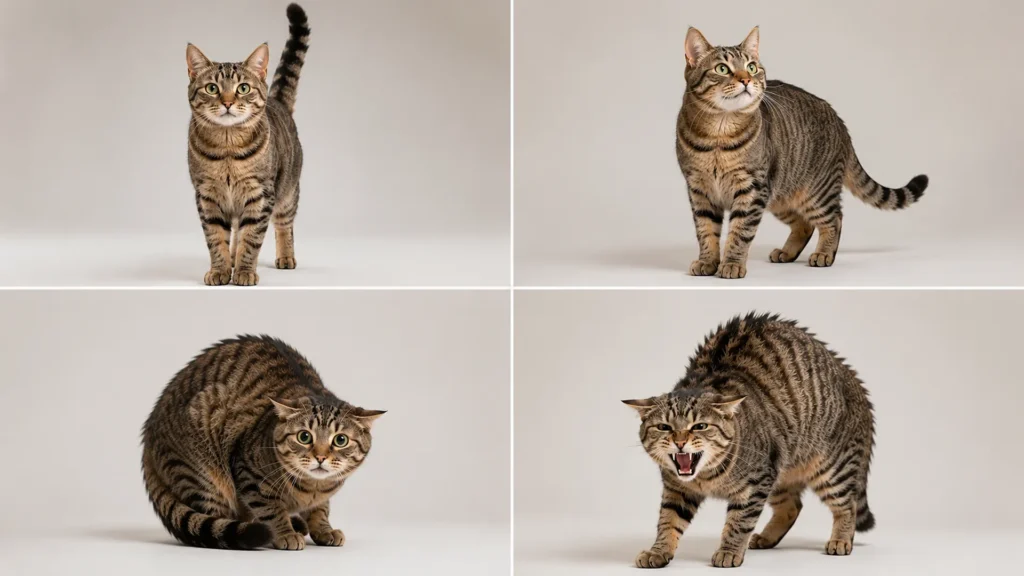
A happy, relaxed cat carries her tail upright, often with a gentle curve at the tip, and moves with a loose, easy posture. She might offer a slow blink or settle into a steady, rhythmic purr.
A cat who wants to play shows a different kind of energy: wide eyes with focused pupils, a tail that twitches with anticipation, and quick, springy movements. Right before pouncing on a toy, she’ll often drop into a low crouch.
A scared or anxious cat tries to disappear. Ears flatten against the head, the tail tucks in tight, and the pupils dilate. She’ll crouch low and close to the ground, or look for somewhere to hide entirely.
An angry or defensive cat does the opposite — she wants to look bigger, not smaller. Expect an arched back, puffed fur along the body and tail, and a hard, unblinking stare, often paired with hissing, growling, or a tail that swishes fast and sharp.
Trust shows up as vulnerability. A slow blink, a cheek rub against your leg (head bunting), or a cat who trails you from room to room are all signs she feels safe with you. Sleeping close by and kneading her paws on your lap are some of the clearest signals of affection a cat can give.
Sickness and pain are harder to spot, because cats are built to hide both. Watch for a stiff or hunched posture, less movement than usual, flattened ears, and a sudden preference for hiding in odd places. Any of these, especially in combination, is worth a vet visit.
Reading Signals Together
A single cue rarely tells you enough on its own — a twitching tail could mean your cat is winding up to play or winding up to swat you, and the only way to tell the difference is to check what the rest of her body is doing, along with what’s happening around her.
A few combinations worth knowing:
- Upright tail + relaxed ears — friendly and approachable
- Flattened ears + puffed fur — defensive, possibly about to fight
- Slow blink + relaxed body — completely at ease
- Dilated pupils + crouching — could be fear or excitement, depending on whether she’s staring down a toy or a loud noise
When in doubt, zoom out: look at the room, think about what just happened, and read the whole cat rather than one body part in isolation.
Mistakes People Make
Most misreadings come from applying human — or dog — logic to a cat. An exposed belly is the clearest example: it signals trust, but touching it often triggers a defensive swipe, since the belly is the most vulnerable part of a cat’s body. A wagging tail is another trap. In dogs it means joy; in cats, a thumping tail is far more likely to mean rising annoyance.
Purring is just as easy to misread. Cats purr when they’re content, but they also purr to self-soothe when they’re injured or afraid, so a purring cat isn’t automatically a happy one. And a hiss isn’t necessarily aggression — more often, it’s a cat asking for space, not looking for a fight.
Frequently Asked Questions
What does it mean when a cat slowly blinks? Often called a “cat kiss,” a slow blink signals deep trust — your cat feels safe enough to close her eyes in front of you.
Why does my cat flick its tail? A flicking or swishing tail usually points to arousal, frustration, or some kind of internal conflict. It’s a good sign to give her space.
Why are my cat’s ears flat? Flat, “airplane” ears mean fear, anxiety, or defensiveness — pinning them back protects her ears from whatever she perceives as a threat.
Does a cat showing its belly want belly rubs? Usually not. It means she feels secure enough to expose a vulnerable spot, but actually touching it can make her feel trapped and provoke a defensive grab.
Can body language indicate illness? Yes. A permanently hunched back, squinting eyes, a lowered head, and withdrawing from the family are common signs that a cat is in pain or unwell.
Final Thoughts
Reading a cat well means looking at the whole animal, not chasing a single signal. Spend a little time watching how your cat moves through an ordinary day, and the patterns start to become obvious — which makes the two of you a lot easier to live with, together.