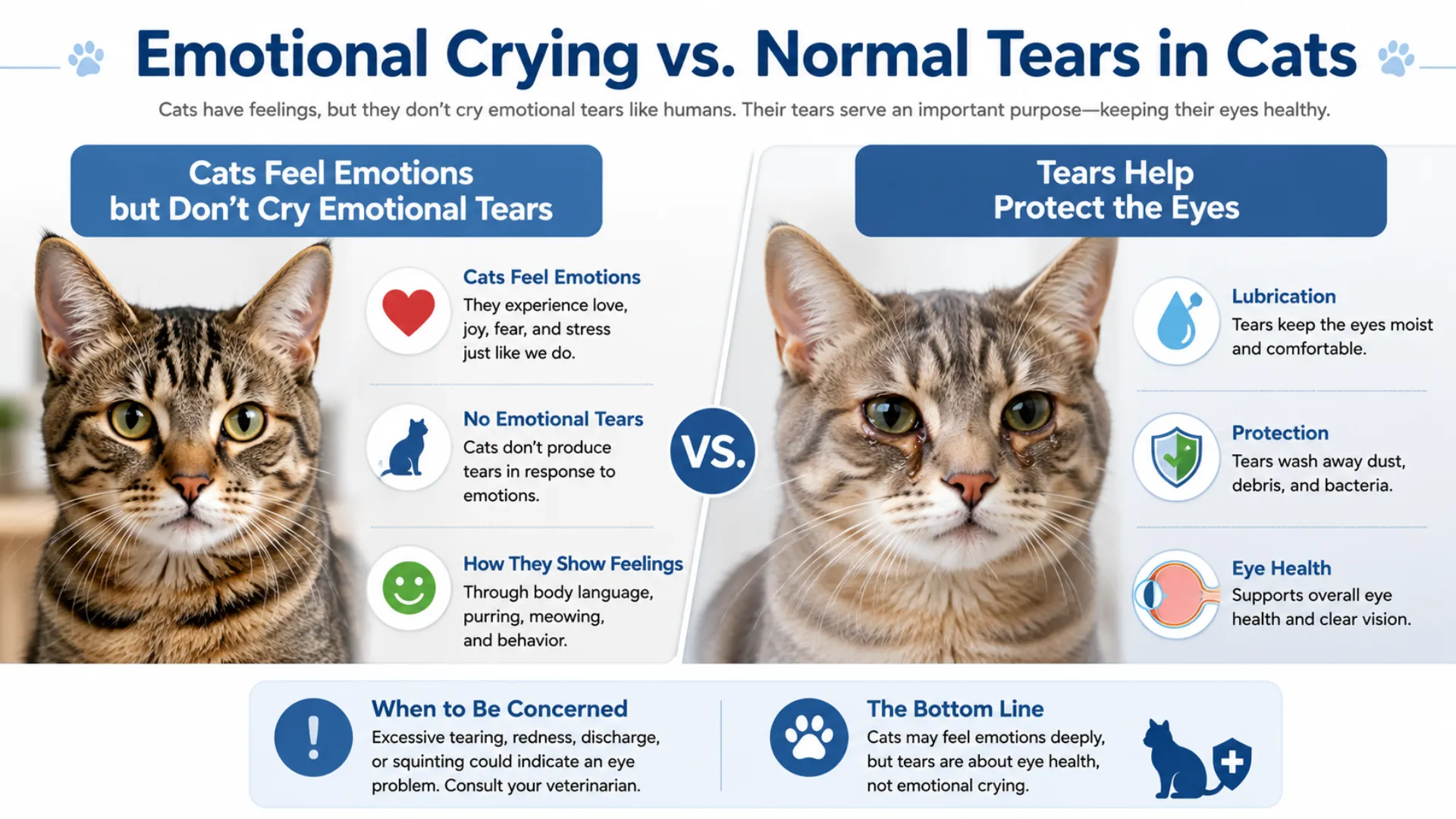
No, cats don’t cry emotional tears the way humans do. They do produce tears, but the job of those tears is to keep the eyes healthy, not to express sadness. So if you’ve noticed your cat’s eyes looking a bit wet, it’s almost certainly a physical cause rather than an emotional one — anything from dust to a genuine eye condition. Here’s what’s actually going on, how cats really show their feelings, and when watery eyes are worth a trip to the vet.
Can Cats Cry Like Humans?
Do Cats Produce Tears?
Cats do make tears, just not for emotional reasons. Their tear glands are constantly working in the background, keeping the eye’s surface moist, clean, and shielded from dust, debris, and bacteria. This tear film also nourishes the cornea, so the eye stays healthy overall. Normally, these tears drain away through small ducts at the inner corner of the eye before you’d ever notice them. Visible wetness or staining only shows up when tear production ramps up or that drainage gets blocked.
Do Cats Cry Because They’re Sad?
Cats clearly feel emotions — fear, stress, contentment, and something close to sadness are all part of their range. What they don’t have is the biological link between emotion and tear production that humans do, so none of that comes out as crying. If your cat is anxious or upset, you’ll see it in how they act, not in wet eyes. Body language and behavior are simply a far more reliable read on what’s going on with a cat than anything happening around their eyes.
How Do Cats Show Their Emotions Instead of Crying?
Because tears aren’t part of the picture, cats lean entirely on physical cues and behavior to communicate. Learning to spot these signals will tell you more about your cat’s mood than watching their eyes ever could.
Signs of a happy, relaxed cat:
- Loose, relaxed posture
- Slow blinking (often called a “cat kiss”)
- Purring during rest or affection
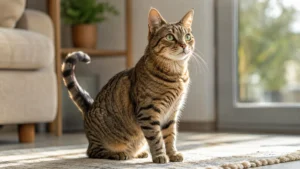
- Tail held upright, sometimes with a slight curve at the tip
- Staying close by or rubbing against you
Signs of stress, fear, or sadness:
- Hiding more than usual
- Excessive meowing or vocalizing
- Eating noticeably more or less
- Sleeping more than normal
- Sudden aggression or withdrawal
- Overgrooming, sometimes to the point of bald patches
If several of these show up together, that combination — not tears — is your real signal that something’s bothering your cat, and it’s worth figuring out what changed in their environment or routine.
Why Are My Cat’s Eyes Watering?
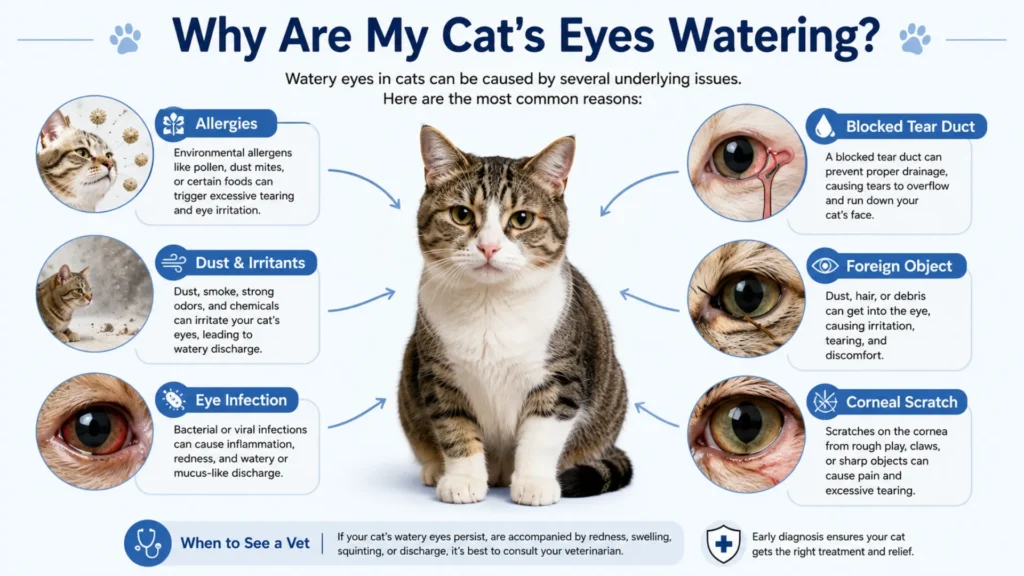
When a cat’s eyes do water, emotion is rarely the reason. The cause is almost always physical, and it can be anywhere from harmless to something that needs a vet’s attention.
Mild, everyday tearing is usually caused by:
- Dust or debris in the air
- Wind exposure, especially outdoors
- Minor irritation from grooming or rubbing
- Breed characteristics — flat-faced breeds like Persians are more prone to blocked tear ducts because of their facial structure
Frequent or heavy tearing may point to something medical, such as:
- Eye infections
- Allergies
- Blocked tear ducts
- Corneal scratches
- A foreign object stuck in the eye
- Conjunctivitis (eye inflammation)
Watch for these symptoms alongside the tearing, since they help you judge whether it’s minor or something more serious:
- Redness around the eye
- Swollen eyelids
- Squinting or a partly closed eye
- Yellow or green discharge
- Repeated pawing at the eye
When Should You Take Your Cat to the Veterinarian?
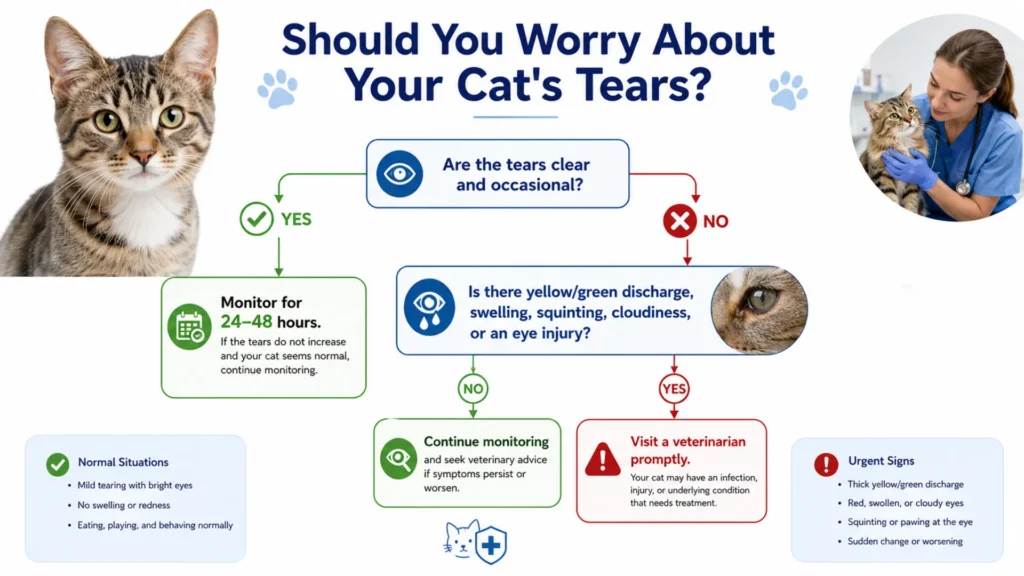
Occasional mild tearing generally isn’t cause for concern, but a few warning signs mean it’s time to book an appointment:
- Tears that last more than 24–48 hours
- Thick or colored discharge
- A cloudy-looking eye
- Swollen eyelids
- One eye suddenly watering more than the other
- Any visible injury to the eye
- Changes in vision, like bumping into things
- Signs of pain, such as pawing at the eye or avoiding light
Eye problems in cats can progress quickly, so it’s better to get an early opinion from your vet than to wait and hope it resolves on its own.
How to Comfort a Cat That Seems Sad or Stressed
If your cat seems down or on edge, small changes at home can make a real difference:
- Keep daily routines consistent
- Offer quiet hiding spots they can retreat to
- Build in regular interactive play
- Add enrichment like scratching posts or puzzle feeders
- Give affection on their terms, not yours
- Avoid sudden changes to their environment when you can
Alongside that, keep track of the basics — eating habits, litter box use, and how they’re interacting with you and other pets. If those patterns keep shifting and don’t settle down, that’s your cue to loop in your vet.
Common Myths About Cats Crying
Myth: Cats cry tears when they’re heartbroken. This one shows up a lot online, but it doesn’t hold up. Cats can genuinely grieve after losing a companion — they just don’t express that grief through visible tears the way people do.
Myth: Watery eyes always mean the cat is sad. In reality, watery eyes are almost always physical in origin: irritation, allergies, or infection, not emotion.
Myth: Cats fake crying for attention. Cats are excellent communicators, but they get your attention through meowing, posture, and behavior — not through manufactured tears.
Frequently Asked Questions
Do cats cry when they’re in pain?
Not with tears, but pain often shows up as squinting, hiding, a smaller appetite, or more vocalizing than usual.
Can kittens cry tears?
Kittens can have watery eyes, usually from minor infections or irritation common at that age, but it isn’t an emotional response.
Can cats cry from loneliness?
They can feel lonely, and that will show in their behavior — just not in actual tears.
Why does my cat meow while its eyes water?
That combination usually signals discomfort or irritation, so it’s worth having a vet take a look.
Is occasional watery eye discharge normal?
Mild, occasional tearing can be normal. Frequent or heavy discharge is the point where it’s worth getting checked.
Final Verdict: Can Cats Cry?
Not in the emotional sense we associate with the word. Cats run the full range of feelings — happiness, stress, something like sadness — but none of it comes out as tears. When their eyes do water, it’s almost always irritation or a medical issue doing the talking, not their mood. The best approach is simple: keep an eye on both their eye health and their behavior, and check in with your vet whenever something looks off or doesn’t clear up on its own.