So your cat just walked over and bonked its head into your leg, or your face, or your laptop while you were trying to work. That’s not your cat being weird or pushy. It’s called bunting, and it’s basically your cat telling you they trust you. Most of the time, that’s all it is. But there’s a lookalike behavior called head pressing that looks similar on the surface and means something completely different — and that one’s worth knowing how to spot.
What Cat Headbutting (Bunting) Actually Means
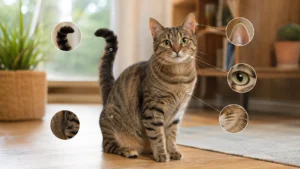
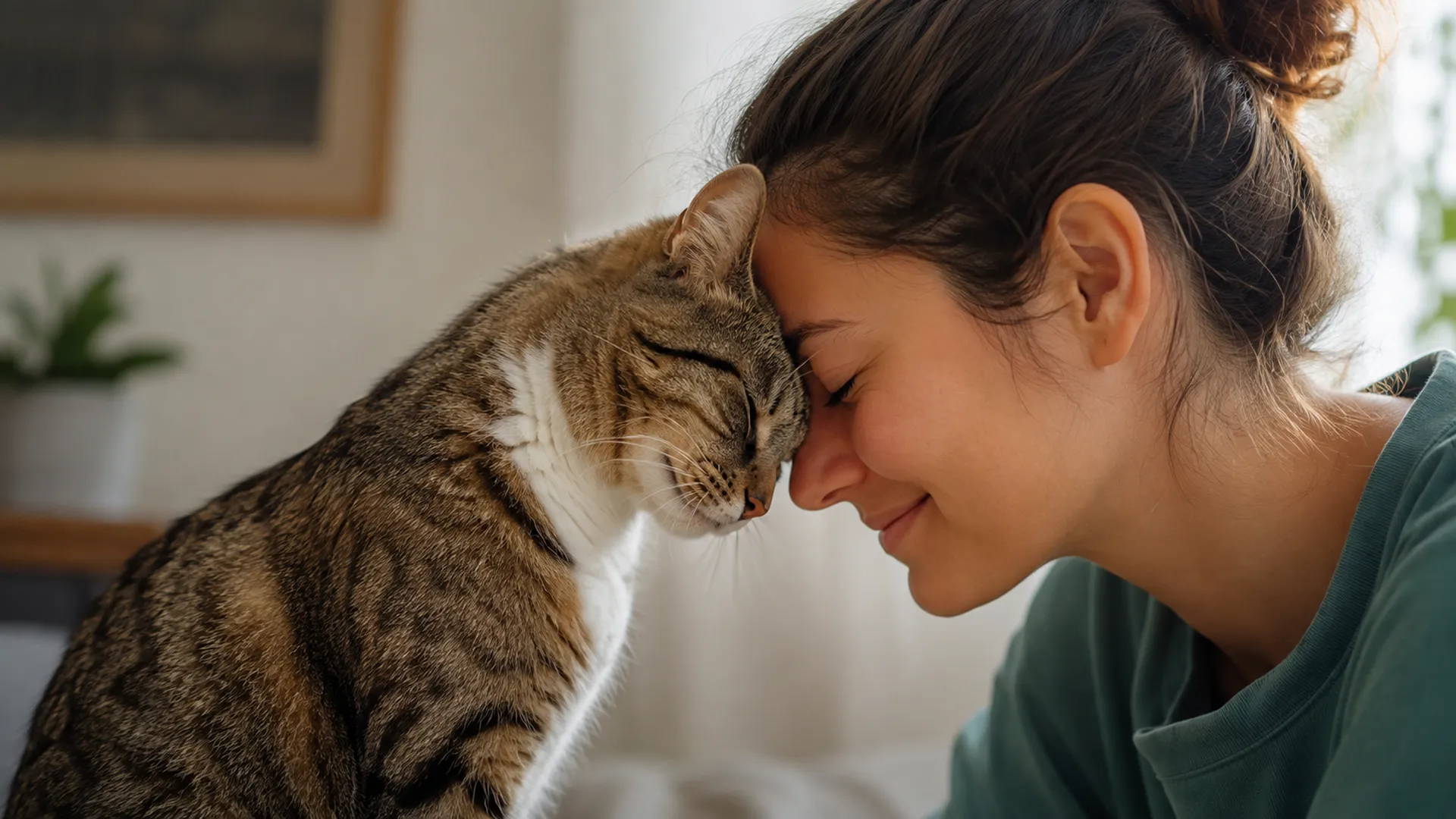
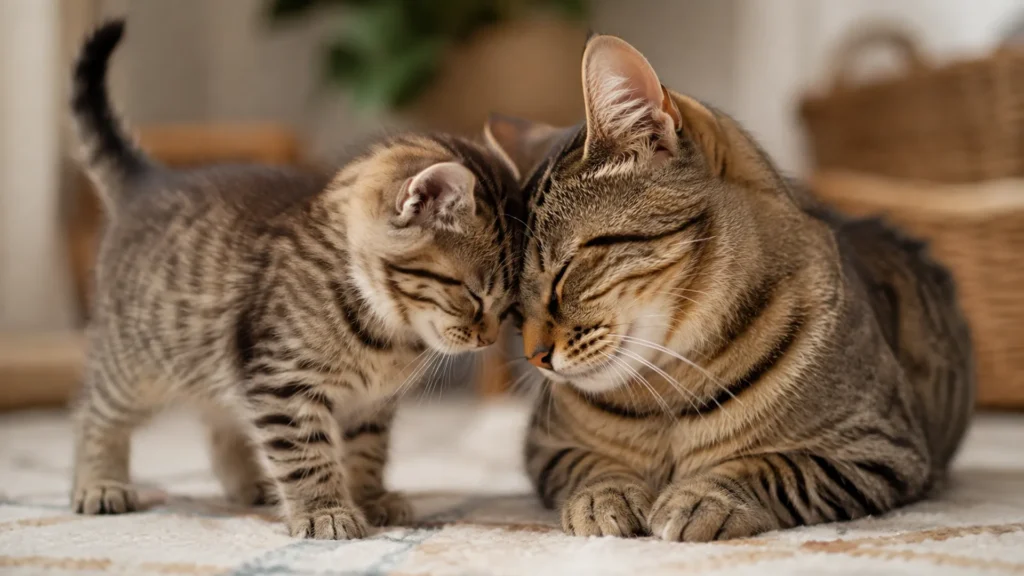
Cats have scent glands on their cheeks, forehead, chin, and around the base of their ears. When they headbutt you, they’re rubbing those glands on you and leaving their scent behind. It looks cute, sure, but it’s really a form of communication. Your cat is marking you as theirs — familiar, safe, part of the group.
This goes back to how cats behave in colonies. Rubbing heads and bodies together is how they build and keep social bonds with each other. Pet cats do the exact same thing with people they’ve decided to trust. And a cat won’t do this with just anyone. If your cat headbutts you, you’ve earned something.
There’s actual research behind this, not just cat-lady folklore. Shelter studies have found that cats who rub against people more often get adopted faster, probably because it makes them seem friendlier and more approachable to whoever’s looking. So when your cat bonks your head, it’s not just a cute moment — it’s them telling you, in cat language, that they’re bonded to you.
Bunting vs. Head Pressing: How to Tell the Difference
Here’s something almost every article on this topic gets wrong, or at least gets lazy about: they’ll mention head pressing as the “scary version” of headbutting and then just… move on. They never actually tell you how to tell the two apart. That’s not helpful if you’re standing there genuinely unsure which one you’re looking at.
Bunting is quick. Your cat leans in, nudges you with their head or cheek, then wanders off to do something else — rub against your leg, purr, ask for pets. Head pressing doesn’t look like that at all. Instead of nudging you, the cat presses its head against a wall, a piece of furniture, anything solid, and just… holds it there. Sometimes for minutes. No clear reason, no interaction with you.
Here’s how to tell them apart at a glance:
| Sign | Bunting (Normal) | Head Pressing (Concerning) |
|---|---|---|
| Body posture | Relaxed, loose | Stiff, tense |
| Eyes | Soft, may half-close or blink slowly | Glazed, dilated, or unfocused |
| Duration | A few seconds, then moves on | Prolonged, sometimes minutes |
| Force | Gentle nudge | Firm, sustained pressure against an object |
| What’s involved | Pressed against you, purring, affectionate | Pressed against a wall or furniture, not you |
| Other behaviors | Purring, kneading, rubbing along your body | Circling, pacing, disorientation, appetite changes, seizures |
When to Call the Vet
If your cat is pressing its head into a wall or furniture — not you — and you’re also noticing disorientation, pacing in circles, appetite changes, or anything that looks seizure-like, don’t wait around. Head pressing can point to a neurological problem. Get them seen the same day.
Why Is My Cat Headbutting Me More Than Usual?
Cats run on routine, so when they suddenly start headbutting way more than normal, it’s usually because something in their world shifted, even something small you might not have noticed.
A few things that tend to trigger it:
- A new person, pet, or piece of furniture in the house. Cats sometimes headbutt more while they’re adjusting, almost like they’re re-marking their space to feel steadier.
- You’ve been away. Come back from a trip, and don’t be shocked if you get bonked in the face the second you walk through the door. They’re re-establishing that scent connection.
- Stress or anxiety. Some cats lean on headbutting to self-soothe, or to pull a bit of reassurance out of you.
- Bouncing back from illness or a vet trip. Cats sometimes get extra affectionate when they’re not feeling 100%.
A short burst of extra headbutting usually isn’t a big deal. If it turns constant, or shows up with other behavior changes, that’s when it’s worth paying closer attention — more on that further down.
Does Headbutting Change With Age or Personality?
Headbutting isn’t something that stays the same your cat’s whole life. It shifts.
Kittens
Kittens pick up bunting early, usually from their mom and littermates. It’s part of how they bond within the litter. If your kitten’s already headbutting you, that’s a genuinely good sign — you’ve made it into their trusted circle young.
Adult Cats
By adulthood it usually turns into a routine thing. A greeting at the door. A way of asking for attention. Just part of the daily back-and-forth you’ve built together.
Senior Cats
Older cats sometimes headbutt less, mostly because joint pain or reduced mobility makes the movement harder on them. Others actually do it more, especially if they’re seeking extra comfort as they get older.
Breed and Personality Tendencies
Siamese, Maine Coon, and Ragdoll cats have a reputation for being more physically affectionate than most. That said, I wouldn’t put too much weight on breed here. I’ve met plenty of “independent” cats who headbutt just as much as the cuddly breeds. Personality beats pedigree on this one.
Headbutting in Multi-Pet Households
Got more than one pet? Headbutting doesn’t stop at you.
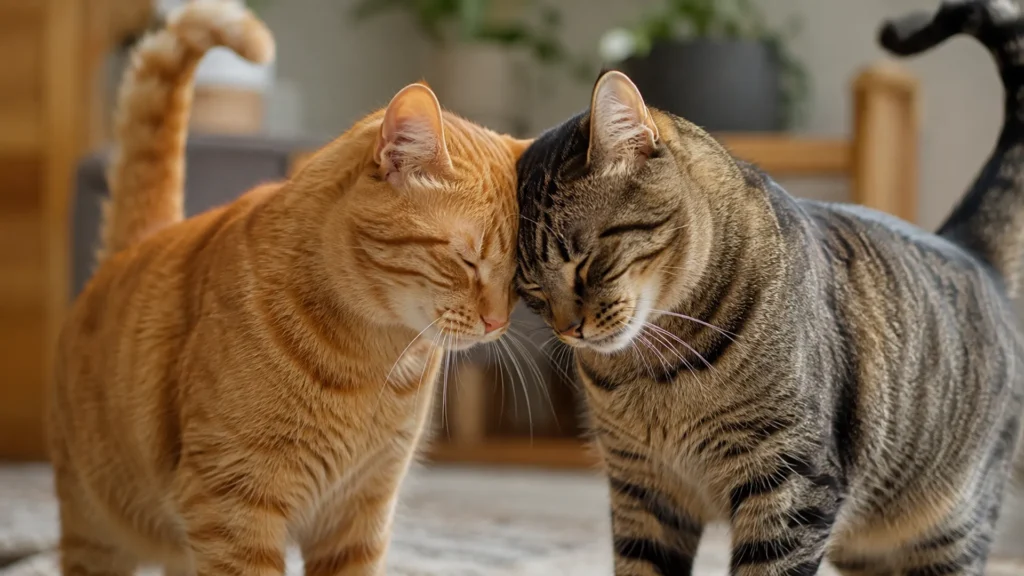
Cats headbutt each other too, especially cats who already get along well. It’s the same scent-marking, trust-building move, just aimed at a housemate instead of a human.
It happens between cats and dogs as well, particularly in homes where the two grew up together. When a cat headbutts a dog, it usually means the dog’s been accepted into their “safe” circle.
You might also notice your cat headbutts one person in the house a lot more than everyone else. That’s less about picking favorites and more about routine — whoever spends the most calm, consistent time with the cat is usually the one getting bonked the most.
My Cat Headbutts Too Hard or Won’t Stop — What Do I Do?
Headbutting is sweet right up until your cat’s doing it constantly, or hard enough to actually hurt, or picking the exact moment you’re on a work call to start.
Why It Happens
Nonstop or overly intense headbutting usually comes down to overstimulation, attention-seeking, or a bit of insecurity underneath it. Cats also catch on fast. If headbutting got them attention once, they’ll keep running that play.
How to Redirect Gently
You don’t need to shut it down completely. Just steer it a bit:
- Give them a few minutes of real play or attention earlier in the day, so they’re less likely to demand it mid-task later.
- Keep a toy or scratcher nearby to redirect their energy when you genuinely can’t stop what you’re doing.
- Reward the calmer greetings. A soft bump followed by settling down deserves a treat or some praise, so your cat learns that calm affection works just as well as the intense version.
When Excessive Headbutting Signals Anxiety
If it’s constant, feels frantic, or shows up with other anxiety behaviors like over-grooming, hiding, or eating less, this is probably more about stress than affection. A steady routine plus a bit more enrichment — playtime, somewhere to climb, predictable feeding times — usually helps. If it doesn’t get better, bring it up with your vet.
Should You Headbutt Your Cat Back?
Go for it. Most cats genuinely enjoy it. Just let your cat lead: lean your head toward them, or offer a soft bump back once they’ve already started it. Skip the hard bumps, and don’t force it if they’re clearly not in the mood. That turns a nice moment into an unwanted intrusion pretty quickly. Slow and soft works best here.
Frequently Asked Questions
Is headbutting a sign of love?
More accurately, it’s a sign of trust. Cats don’t headbutt just anyone, so it means they feel safe with you specifically.
Why does my cat headbutt me at night?
Usually just attention-seeking or comfort-seeking before they settle in to sleep. Pretty common with cats who like sleeping near their owners.
Why does my cat only headbutt me and not others in the house?
Comes down to routine and familiarity. Whoever spends the most calm, consistent time with the cat usually gets the most headbutts.
Is it bad if my cat headbutts too hard?
Not usually. A firm headbutt is still completely normal. What you actually want to watch for is head pressing against objects, not you, paired with disorientation or other odd symptoms. That’s the version worth a vet visit.