A curled-up ball can mean your cat is cold, or just running on old instinct. On its own, a sleeping position doesn’t tell you much. The real answer shows up when you look at the position alongside the tail, the ears, the breathing, and — more than anything — how your cat normally sleeps compared to today. This guide covers the common positions, the body language that goes with each one, and how to actually notice when something’s changed. Treat it less like a dictionary and more like a way to learn your own cat’s normal.
Quick Answer: What Each Sleeping Position Means
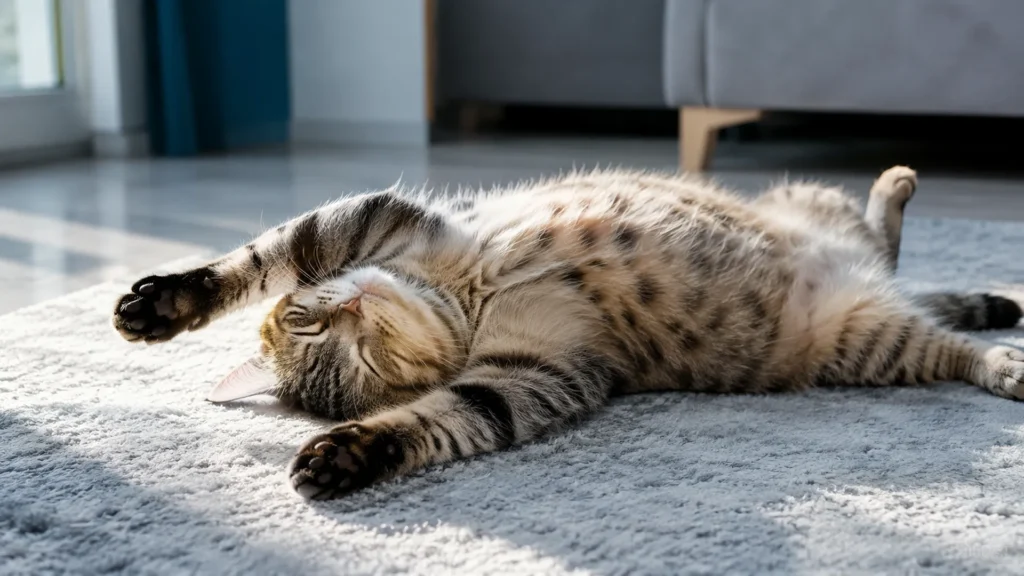
If you’re just here for the fast version, here it is:
- The Loaf – Relaxed, but still alert enough to move fast if needed.
- The Curl (Crescent) – Holding onto body heat, and a little guarded even when comfortable.
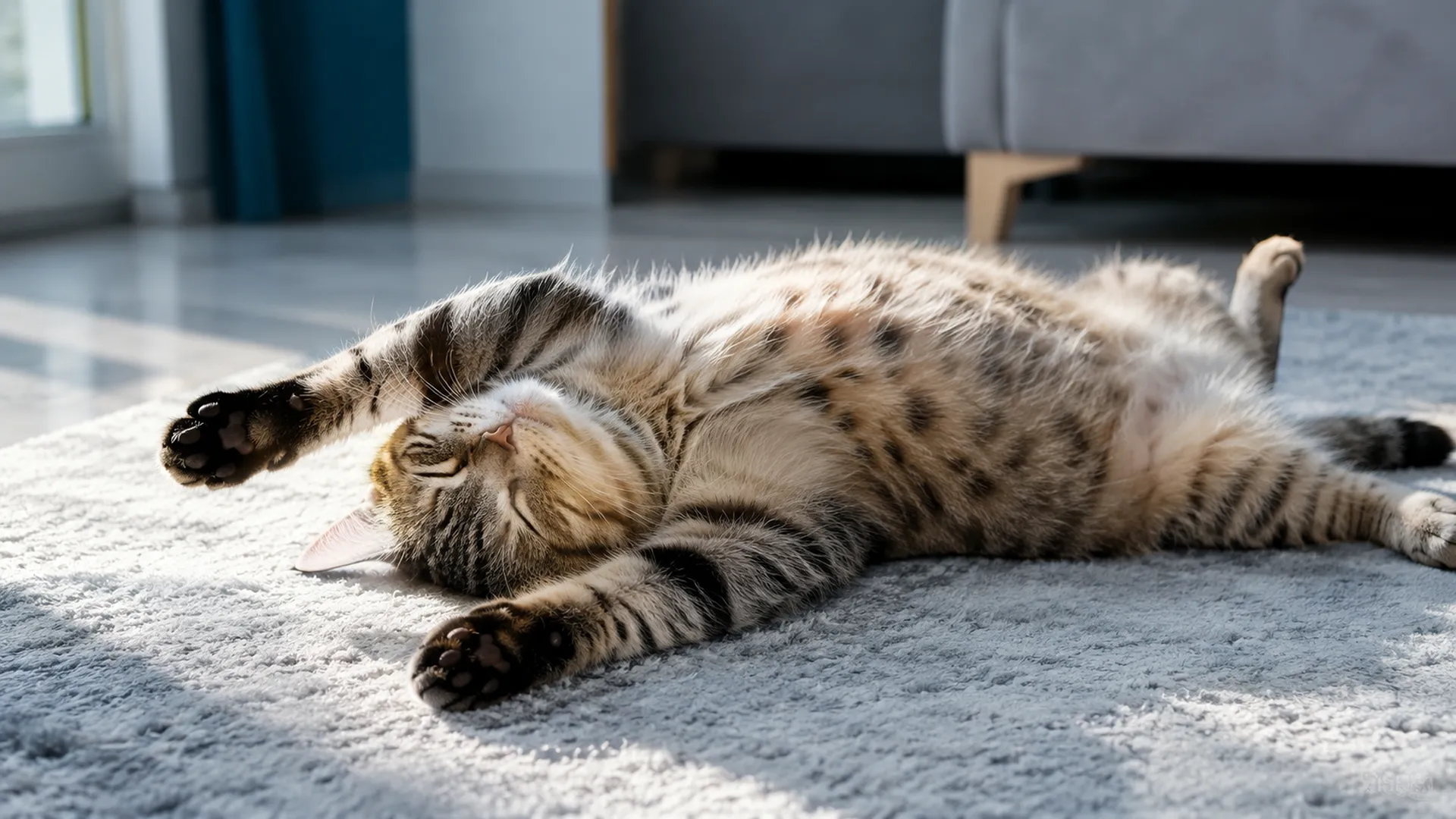
- Belly-Up – Usually deep trust and full relaxation. Sometimes just a cat trying to cool down.
- Side Sleeper – Fully relaxed, deep sleep cycle.
- Tucked-In / Buried – After warmth, security, or quiet.
- Paw-Over-Face – Blocking light or noise, working toward deeper sleep.
- Sleeping On or Near You – Bonding and trust in your presence.
These are patterns, not rules. Cats are individual enough that any one of these can mean something slightly different for your cat than for the next one. The sections below dig into each position, plus how to read the rest of your cat’s body while they’re out.
Interactive Cat Sleeping Position Identifier
Not sure which pose you just walked in on? Pick the one that matches what your cat’s doing right now, and it’ll walk you through what it usually means and what else to check.
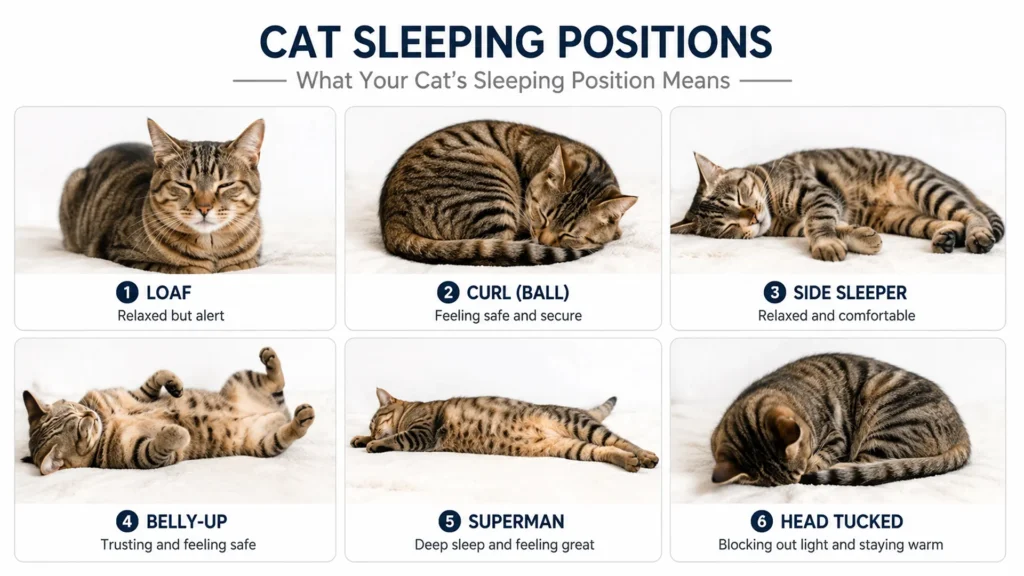
The 7 Most Common Cat Sleeping Positions, Explained\
The Loaf
Paws tucked under the body, tail wrapped in close, sitting upright like a little loaf of bread. It looks relaxed because it is, but it’s a lighter kind of relaxed. Cats loaf when they’re comfortable enough to rest without fully letting their guard down. Think of it as their “resting, not sleeping deeply” stance. If a cat loafs almost exclusively and rarely drops into deeper positions, that’s worth noting as part of who they are. Some cats just prefer it.
The Curl (Crescent)
The classic ball, nose tucked near the tail, body folded into a crescent. This one’s mostly about heat conservation, which is why you’ll see it more in cold rooms or cool weather. It also protects the vital organs, so there’s a thread of old instinctive self-defense in it even inside a perfectly safe home. Occasional curling is nothing to think twice about. If it becomes the only way your cat sleeps, even in a warm room, pay attention to that shift.
Belly-Up
Belly exposed, paws in the air, completely loose. People love calling this the ultimate trust signal, and it usually is, since the belly is the most vulnerable part of a cat’s body. But not always — some cats flop belly-up because they’re overheated and it’s the coolest position on offer. Check the room temperature and the rest of the body before deciding it’s purely about trust. I’d rather owners read it as one data point than treat it as a guarantee.
Side Sleeper
Stretched out on one side, legs extended, fully let go. This shows up during deep sleep cycles, once your cat has settled in for the long haul. It’s a solid sign — it means your cat feels secure enough in the space to fully switch off. There’s no hidden catch here. Paired with slow, even breathing, it’s one of the more reliable “everything’s fine” positions you’ll see.
Tucked-In / Buried
Burrowed under a blanket, wedged in a box, or pushed into a corner with just part of the body showing. This is about warmth and security — a smaller, enclosed space holds heat better and feels safer. It’s common in more cautious cats, in cold months, or in busy households where a hidden spot means fewer interruptions. If a normally out-in-the-open cat suddenly starts hiding to sleep, don’t wave that off as a new habit. It’s worth watching.
Paw-Over-Face
One or both paws draped over the eyes or nose, sometimes with the face pressed into the body. Cats do this to block light or muffle sound, especially somewhere bright. On its own it’s rarely a concern — it usually just means your cat is chasing deeper, less interrupted sleep. If it shows up alongside a lot more daytime sleeping or a new reluctance to be touched near the face, that combination is worth a second look.
Sleeping On or Near You
Curled on your lap, pressed against your leg, or claiming your pillow. This is bonding behavior. Your scent and body heat both pull them in, and choosing to sleep near you is a straightforward trust signal. It’s also just practical — you’re warm and familiar. A sudden jump in this behavior isn’t a red flag by itself, but paired with clinginess or pulling back from other normal activities, it can sometimes mean your cat feels less secure than usual.
Read the Whole Cat, Not Just the Pose
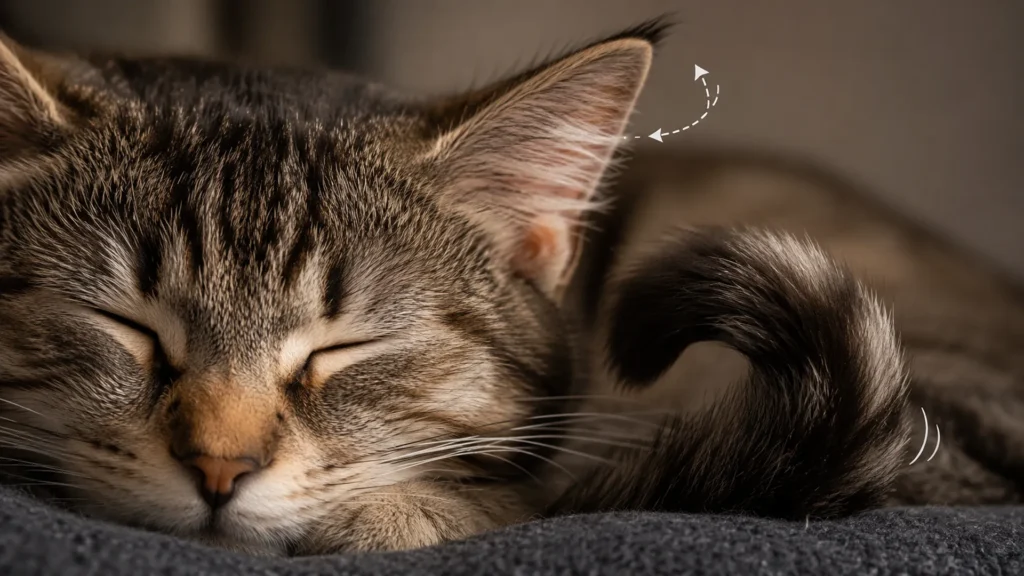
A sleeping position is one piece of the picture. The rest of the body fills in the context, and this is the part most guides skip.
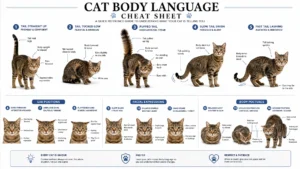
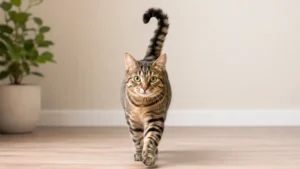
Tail position while asleep. A loosely wrapped tail means calm. A tail held tight against the body, twitching, or thumping on and off means your cat is dozing lightly and still somewhat switched on, even mid-nap.
Ear position and twitching. Soft ears, slightly turned outward, go with relaxed sleep. Ears pinned flat or swiveling toward every sound mean your cat hasn’t fully clocked out. They’re still monitoring the room.
Breathing rate and rhythm. Slow and even breathing is a good sign of deep, comfortable sleep. Rapid, shallow, or irregular breathing at rest is one of the more useful things to catch, since changes here can point to stress or a health issue your vet should know about.
Whisker and paw movement. Twitching whiskers, light paw paddling, soft sounds during sleep — this is usually just dreaming, similar to REM sleep in other mammals, and completely normal. The line between dreaming and distress mostly comes down to intensity, and whether your cat wakes up disoriented or upset. A twitch here and there is nothing. Sustained, jerky movement followed by an agitated wake-up is less common and worth noting.
Know Your Cat’s Baseline — and When a Change Actually Matters
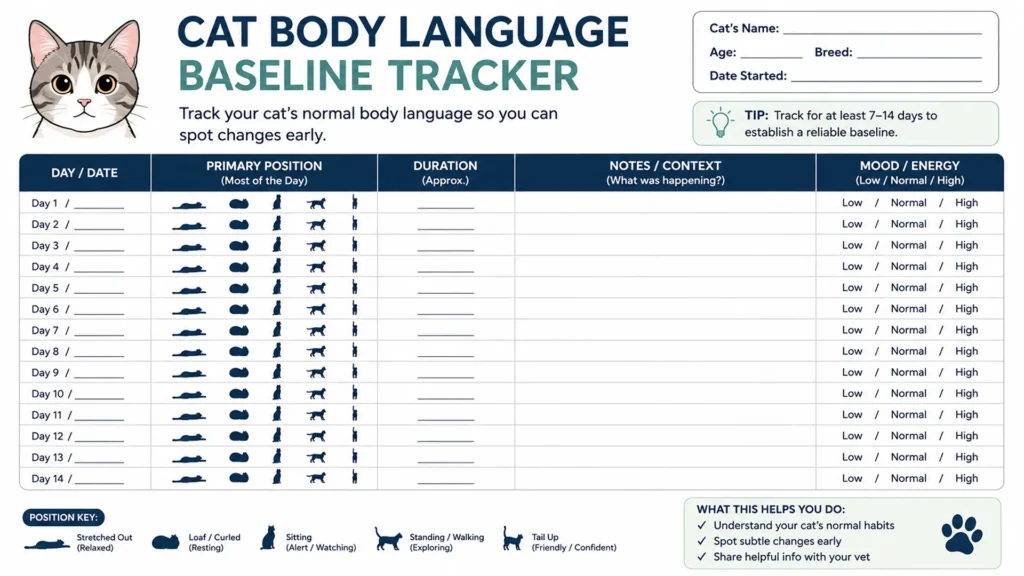
The most useful thing you can do isn’t memorizing what each position means in general. It’s knowing what’s normal for your cat. A cat that always sleeps belly-up and suddenly starts curling tight every night is telling you something different than a cat who’s always been a curler. Same position, completely different meaning, depending on the baseline.
How to figure out your cat’s normal
For one week, jot down a quick note once or twice a day — what position, roughly how long they’ve been out, anything odd about where they chose to sleep. Nothing fancy. A notes app or a basic printable tracker does the job. By the end of the week you’ll have an actual baseline instead of a guess: their go-to positions, favorite spots, typical sleep stretches.
Signs a shift might be pain, stress, or illness
Once you know the baseline, changes are easy to spot. Watch for:
- A sudden, lasting switch to a more guarded position (tight curling) in a cat that usually sprawls
- Avoiding a favorite sleeping spot for no obvious reason
- More total sleep paired with less interest in play or food
- Trouble getting into or out of a usual sleeping position
- Restlessness, repositioning constantly instead of settling
One odd day usually isn’t cause for alarm. A pattern that holds for several days is the one worth acting on.
Real Case: How a Sleep Posture Change Revealed Early Arthritis
Vets who work in senior cat care point to resting posture as one of the earliest visible clues to joint pain, since cats are good at hiding discomfort everywhere else. A cat that used to sprawl out on its side may start favoring tighter, more guarded positions, or stop jumping up to a favorite elevated spot altogether — not because the spot changed, but because getting in and out of certain postures has started to hurt.
This is the whole argument for baseline-tracking over memorizing a list of meanings. One odd sleeping position tells you almost nothing. A consistent move away from a cat’s normal pattern, especially in an older cat, is a reasonable thing to bring up at the next vet visit even if nothing else seems wrong. Feline arthritis is under-diagnosed partly because the signs are quiet, and sleep posture is one of the few visible ones an owner can actually track from home.
Why Sleep Positions Change: Life, Home, and Season
Not every shift is medical. A lot of it is just life happening around your cat.
New pets or babies in the house. New sounds, new smells, a different rhythm to the day. Cats often respond by picking more enclosed, tucked-away spots until they adjust.
Moving or environment changes. A new home, rearranged furniture, a renovation — any of it can push a cat toward more guarded positions and fewer exposed spots until they feel oriented again.
Multi-cat households. Sleep position can shift with the social dynamics between cats. A cat lower in the pecking order might pick smaller, hidden spots, while a more confident cat sprawls out somewhere visible.
Seasonal temperature shifts. Warmer weather brings out open, sprawled positions like belly-up or side-sleeping, since they help release heat. Cooler weather means more curling and tucking in. Both are completely normal and not something to worry about.
FAQ
Why does my cat sleep with one eye open?
It’s a light-sleep state that keeps them partly alert to their surroundings even at rest. It’s instinct, not a sign they feel unsafe.
Do cats change sleeping positions with age?
Yes. Older cats sleep more overall and often shift toward positions that are easier on the joints, which is exactly why tracking posture over time is useful for catching age-related changes early.
Is belly-up always a sign of trust?
Not always. It’s often a trust signal, but it can just as easily mean your cat is warm and trying to cool off. Check the room temperature and the rest of the body language before assuming it’s only about trust.
When to Call the Vet
Most changes in sleeping position are harmless. Call your vet if you notice:
- A consistent, lasting shift away from your cat’s usual sleeping posture
- Trouble settling into or getting up from a sleeping position
- More sleep paired with less appetite, play, or grooming
- Avoiding jumps to normally favorite spots
- Labored, rapid, or irregular breathing at rest
- Any of these lasting more than a few days
When in doubt, a quick call to your vet costs almost nothing. Catching something early is always easier than catching it late.