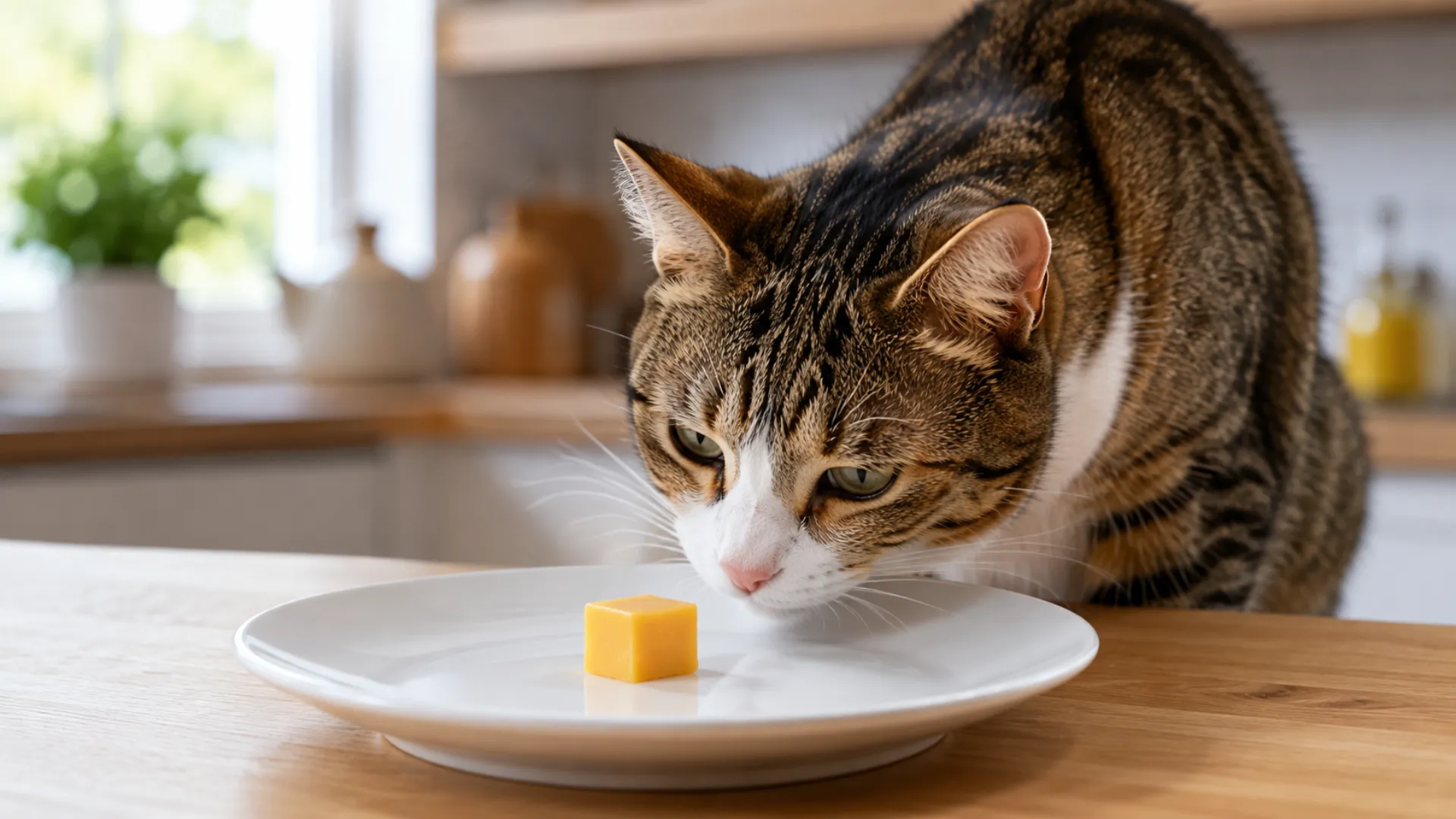
If your cat has ever materialized at the sound of a cheese wrapper crinkling, you already know the pull dairy has on them. The short answer to whether they can indulge is yes—in small amounts, occasionally. Cheese won’t poison your cat, but it isn’t a great treat choice either, mostly because the average adult cat’s gut has quietly lost the ability to handle dairy well.
Is Cheese Actually Dangerous?
Plain cheese isn’t toxic to felines. If your cat swipes a stray crumb of cheddar off the counter, there’s no cause for alarm—most healthy adult cats tolerate a small taste without incident. The real issue isn’t acute danger; it’s that cheese has nothing to offer a cat nutritionally and a fair amount to offer in fat and calories. Cats are obligate carnivores, built to run on nutrients from animal meat, so dairy sits outside what their bodies actually need. Make it a habit rather than a rare exception, and you’re looking at a straightforward path to weight gain.
The Lactose Problem
The idea that cats love a saucer of milk is mostly folklore. Kittens produce lactase, the enzyme that breaks down milk sugar, so they can digest their mother’s milk just fine. But that production tapers off sharply after weaning, leaving most adult cats with limited ability to process lactose. Cheese contains less lactose than milk, thanks to the fermentation process, but it can still be enough to unsettle a sensitive stomach.
When a cat’s system can’t keep up, the signs usually show up within a few hours: diarrhea, vomiting, excess gas, bloating, or a drop in appetite. Individual tolerance varies widely—some cats handle a bite of cheese without any reaction, while others get an upset stomach from a single crumb. There’s no way to predict which category your cat falls into without watching how they respond.
Choosing the Right Cheese—and Avoiding the Wrong One
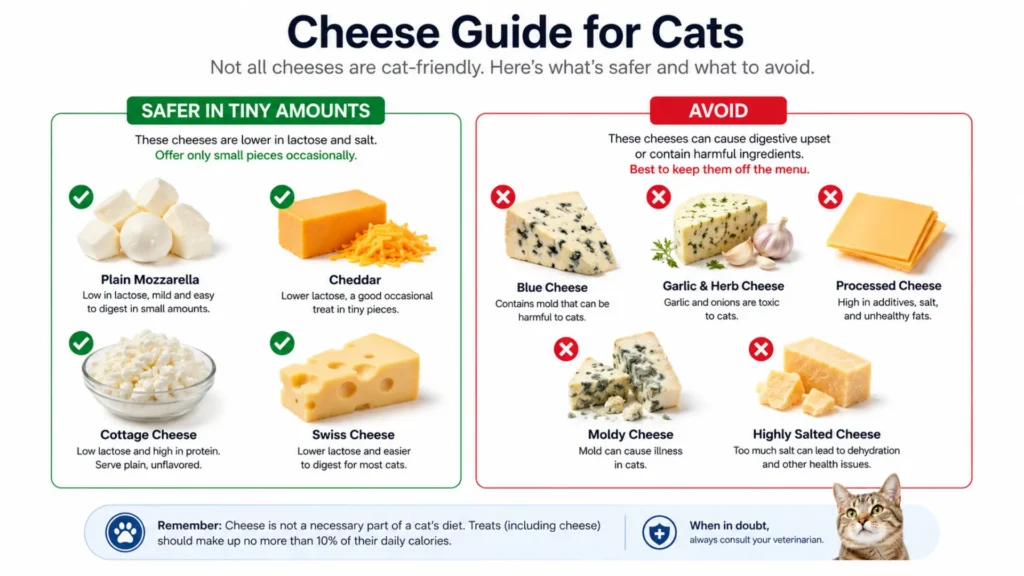
Not all cheeses carry the same risk. Hard, aged varieties tend to be the safer picks because the aging process breaks down much of the lactose:
- Cheddar — aged versions contain very little lactose
- Swiss — low in lactose and generally gentle on digestion
- Mozzarella — mild and lower in sodium than many alternatives
- Plain cottage cheese — easy to portion in tiny amounts
Some cheeses, though, go beyond mild digestive upset and pose real health risks:
- Blue cheese and other mold-ripened varieties — the cultures used can be toxic to cats
- Garlic- or onion-flavored cheese — both belong to the allium family, which damages a cat’s red blood cells
- Herb-seasoned cheese — many common herbs trigger severe stomach upset
- Processed cheese slices — loaded with preservatives and additives cats don’t need
- Heavily salted cheeses — excess sodium can lead to salt poisoning
Getting the Portion Right
If you decide to share, think in terms of a single small cube or pea-sized piece—not a handful. This is an occasional reward, useful for masking a pill or marking a special moment, never a substitute for a proper meal. Once every few weeks is a reasonable ceiling; daily cheese isn’t safe territory for a cat’s waistline or digestion. As with any new food, introduce it in a small amount first and watch your cat closely over the following 24 hours for any signs of trouble.
What About Kittens?
Kittens deserve even more caution than adults. Their digestive systems are still developing and thrown off balance easily, and their small stomachs are better used for nutrient-dense kitten food than for a food with no real benefit to them. Commercial treats formulated specifically for kittens are a safer bet, and if you’re ever uncertain, a quick check with your vet before offering any dairy is worth the peace of mind.
If Your Cat Overdoes It
Should your cat get into a larger stash of cheese than intended, start by watching them closely for lethargy or heavy panting, and make sure fresh water is always within reach—the sodium in cheese can leave them noticeably thirstier than usual. Most mild dairy reactions resolve on their own within a day. Call your veterinarian, though, if you notice persistent vomiting, severe watery diarrhea, extreme weakness, a loss of appetite lasting more than 24 hours, or signs of dehydration like dry gums or skin that doesn’t spring back when gently pinched.
Better Alternatives
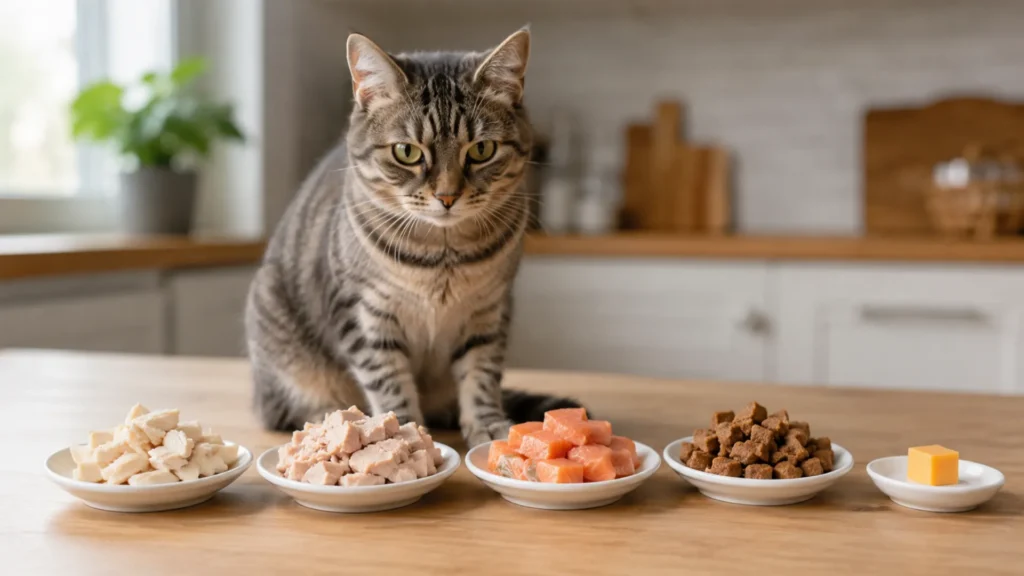
Since cats are wired to thrive on meat, treats built around protein make far more sense than dairy. Consider:
- Plain, unseasoned cooked chicken
- Skinless, boneless cooked turkey breast
- Freeze-dried meat treats, such as beef liver or chicken breast
- Small pieces of plain cooked salmon
- Commercial treats formulated for feline nutrition
Frequently Asked Questions
Can cats eat cream cheese?
It’s best avoided. Cream cheese carries more fat and lactose than hard, aged cheeses, making it more likely to trigger digestive upset.
Why are cats drawn to cheese in the first place?
Cats can’t taste sweetness, but their sense of smell easily picks up on the fat and protein in dairy—which is likely what draws them in, rather than any nutritional need.
Is it ever okay to give cheese daily?
No. Regular cheese consumption adds up quickly in fat, calories, and sodium, raising the risk of obesity, heart problems, and chronic digestive issues over time.
The Bottom Line
Cheese isn’t dangerous to cats, but it isn’t doing them any favors either. If you want to share a bite now and then, keep it small, keep it infrequent, and lean on hard, aged varieties. For everything else, meat-based treats and balanced cat food will serve your cat’s health far better in the long run.