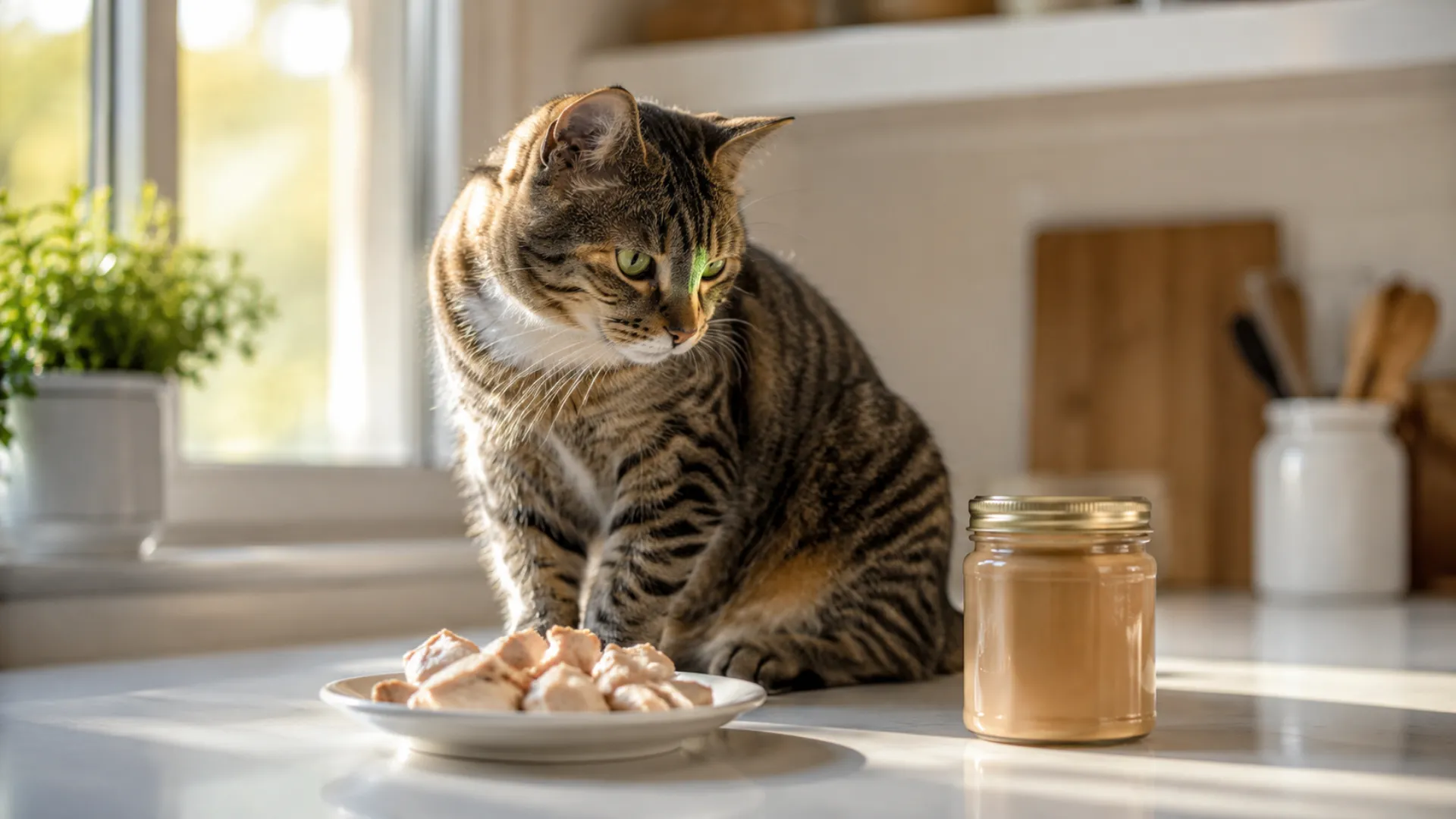
If your cat has ever shown interest in an open jar of peanut butter, you’ve probably wondered whether it’s safe to share. The short answer: no. A single accidental lick won’t send most cats to the emergency room, but peanut butter offers no nutritional benefit to felines and carries several real risks — from hidden toxins to a texture that can make swallowing genuinely dangerous. Here’s what’s actually going on, and what to reach for instead.
The Quick Answer
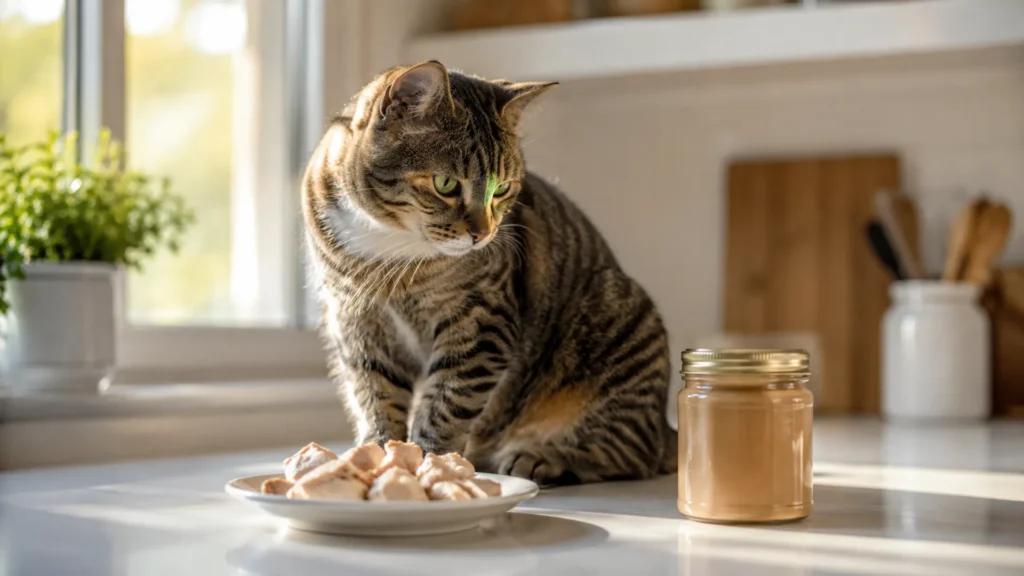
Veterinarians generally advise against feeding peanut butter to cats at all. Dogs often treat it as a high-value reward, tolerating a spoonful with no issue — but cats gain nothing from it nutritionally. Its sticky texture is a choking hazard, its calorie density contributes to weight gain, and some brands contain sweeteners that are outright toxic to animals. The safest approach is to skip it entirely and stick to treats made for cats.
Why Cats Can’t Benefit From Peanut Butter
Cats are obligate carnivores: their digestive systems evolved to process animal tissue, not nuts, seeds, or plant fats. This isn’t a preference — it’s biology. A cat’s body simply isn’t built to extract much value from peanut butter’s plant-based protein and fat, even though those same nutrients are considered healthy for humans.
That mismatch shows up clearly when you look at what peanut butter actually contains:
- Fat — Cats need animal-derived fat in modest amounts; the dense vegetable fat in peanuts is a poor substitute and easily overwhelms their system.
- Protein — Plant protein sounds beneficial, but it’s missing taurine, an amino acid cats can only get from meat and need for heart and eye health.
- Carbohydrates — Peanut butter’s starches serve no purpose in a feline diet and are harder for cats to digest than they are for omnivores.
- Calories — A single spoonful can account for a disproportionate share of a cat’s daily calorie needs.
The Real Risks of Feeding It to Your Cat
Fat overload and pancreatitis
Because peanut butter is so fat-dense, regular servings — even small ones — can lead to weight gain over time. More urgently, a sudden dose of rich fat can trigger pancreatitis, a painful inflammation of the pancreas that often requires veterinary treatment.
Sodium and added sugar
Most commercial peanut butters are formulated for human taste buds, which means extra salt and sugar. That sodium load strains a cat’s kidneys, while the sugar adds nothing but empty calories, dental problems, and a higher risk of diabetes over time.
Xylitol: the real danger
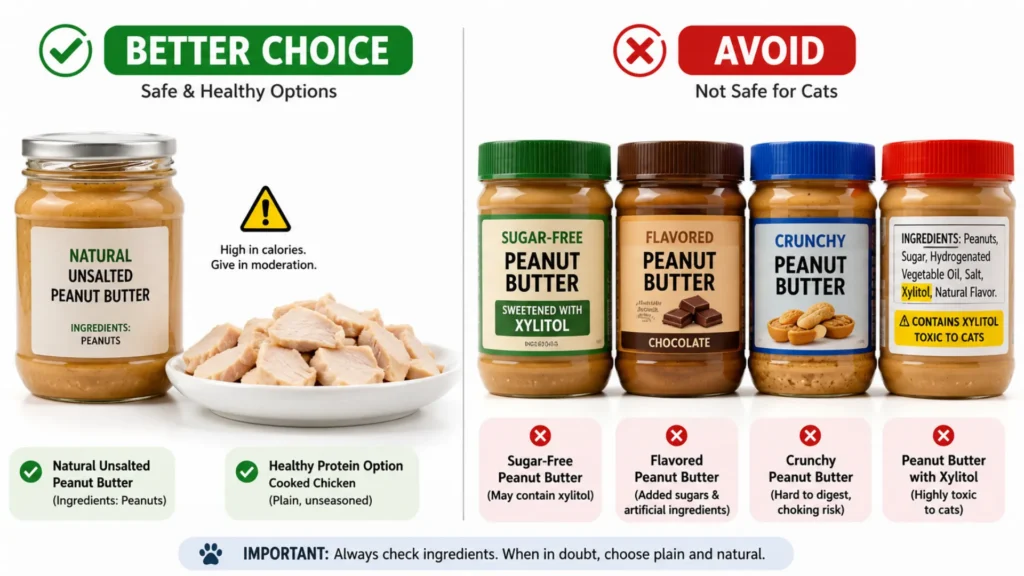
The biggest concern isn’t fat or salt — it’s xylitol, a sugar substitute used in many “natural” or sugar-free peanut butter brands. Xylitol is harmless to people but extremely toxic to pets: even a small amount can cause a sudden crash in blood sugar and lead to liver failure. Always check the label before letting any pet near a jar, regardless of how “healthy” it’s marketed as.
A genuine choking hazard
Peanut butter’s thick, sticky consistency clings to the roof of the mouth and throat — something most humans have experienced firsthand. Cats have smaller mouths and a different swallowing mechanism than we do, which makes gagging or airway blockage a real possibility, not just a theoretical one.
What to Do If Your Cat Eats Some
How worried you should be depends almost entirely on quantity and ingredients.
A small, accidental lick — off a spoon or countertop — usually isn’t cause for alarm, assuming the product doesn’t contain xylitol. Keep an eye on your cat for an hour or two to confirm they’re swallowing normally and not showing signs of distress.
A larger amount, such as from a raided open jar, is more likely to upset their digestive system. Watch for vomiting, diarrhea, appetite loss, or unusual lethargy in the hours that follow.
Call your veterinarian right away if your cat ate a significant quantity, if you’re unsure what’s in the product, or if xylitol exposure is even a possibility. The same goes for severe symptoms like persistent vomiting, breathing trouble, or visible choking — these warrant immediate attention, not a wait-and-see approach.
What About Kittens?
Kittens should never be given peanut butter. Their digestive systems are still developing and are far more sensitive to rich or unusual foods than an adult cat’s. At this stage, they need precisely balanced nutrition from kitten-formulated food to support rapid growth — introducing something as dense, oily, and nutrient-poor as peanut butter risks dehydration, severe diarrhea, and choking, all of which escalate faster in a small animal.
Comparing Peanut Butter Varieties
Not all peanut butters carry equal risk, though none qualify as a good choice:
| Type | Risk Level | Why |
|---|---|---|
| Natural peanut butter | Lower, but still not recommended | No additives, but fat content alone makes it a poor treat. |
| Unsalted peanut butter | Slightly better | Removes excess sodium; still nutritionally empty for cats. |
| Crunchy peanut butter | Avoid | Nut pieces add a serious choking risk on top of the usual concerns. |
| Flavored peanut butter | Avoid | Often contains chocolate, added sugar, or other harmful extras. |
| Sugar-free peanut butter | Never | High likelihood of xylitol; one of the most dangerous options for pets. |
Better Ways to Treat Your Cat
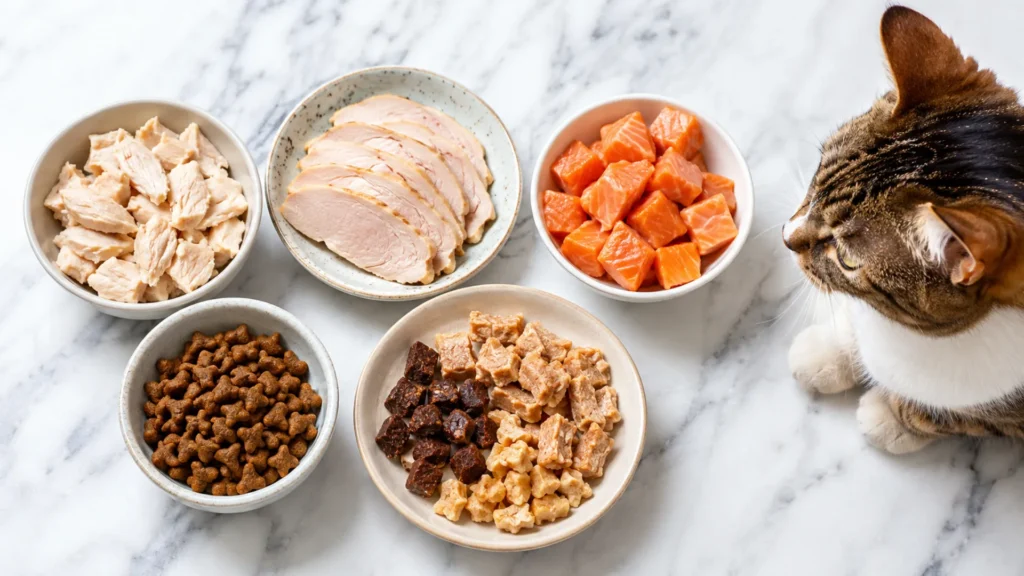
Skip the nut butter and reach for something that actually matches your cat’s biology. These options deliver real protein without the added fat, sodium, or choking risk:
- Plain cooked chicken, unseasoned
- Skinless, boneless cooked turkey
- Small pieces of cooked salmon or whitefish
- Freeze-dried meat treats, such as chicken breast or beef liver
- Commercial treats formulated specifically for cats
Because these are animal-based, they supply the amino acids — including taurine — that peanut butter simply can’t offer, without any of the downsides.
Frequently Asked Questions
Can cats lick peanut butter?
An accidental lick of plain peanut butter is generally harmless, but it shouldn’t become a habit — the texture alone makes it a poor choice for intentional feeding.
Can cats digest peanuts?
Not well. Cats lack the enzymes needed to efficiently break down the plant proteins and fats in peanuts.
Can peanut butter cause diarrhea in cats?
Yes — the high fat content is often enough to irritate a cat’s digestive tract, leading to vomiting or diarrhea even in small amounts.
Why are some cats drawn to it at all?
Cats can’t taste sweetness, so it’s not the sugar that appeals to them — it’s the strong aroma and fat content, which resembles the richness of meat.
Can I hide medication in peanut butter?
It’s better not to. The sticky texture can cause a cat to panic or choke while trying to swallow. Commercial pill pockets or a bit of plain wet food work far better for this purpose.
Conclusion
An occasional, accidental taste of plain peanut butter isn’t likely to send your cat to the vet, but it’s not a treat worth offering on purpose. Between the fat content, sodium, choking risk, and the possibility of xylitol, there’s little upside and real potential for harm. Choose meat-based treats instead — your cat will find them more appealing anyway, and they actually support feline health rather than working against it.